Verizon (Engadget's parent company) has opened pre-orders for the Samsung Galaxy S10 5G. You'll need access to 5G connections to get the most out of the device of course, so the provider has also named 20 more cities in which it will turn on its mobile 5G network this year.
The 256GB model of the S10 5G costs $1,300 and the 512GB option will set you back $1,400 ($54.16 or $58.33 per month respectively for 24 months on Verizon Device Payment plans). It'll be available in Verizon stores May 16 -- though Samsung will surely be hoping for a smoother launch than it's had with the Galaxy Fold.
The S10 5G is a Verizon exclusive for a limited time and those who pre-order one will snag a free set of Galaxy Buds and a Samsung Wireless Charging Battery Pack. Verizon also noted access to its 5G Ultra Wideband network, which will typically cost $10 per month, will be included with Above and Beyond Unlimited plans for a limited period.
Verizon previously said it would open its 5G mobile network in parts of more than 30 US cities this year. It has already opened up the network in areas of Chicago and Minneapolis and it plans to do the same in the following 20 cities in 2019: Atlanta, Boston, Charlotte, Cincinnati, Cleveland, Columbus, Dallas, Des Moines, Denver, Detroit, Houston, Indianapolis, Kansas City, Little Rock, Memphis, Phoenix, Providence, San Diego, Salt Lake City and Washington DC. It will roll out 5G home broadband service in some of those cities too.
Verizon owns Engadget's parent company, Verizon Media. Rest assured, Verizon has no control over our coverage. Engadget remains editorially independent.
As part of Nintendo's latest financial report, which revealed that the Switch has now shifted 34.47 million units, the company released an updated list of its best-selling games for the hybrid console.
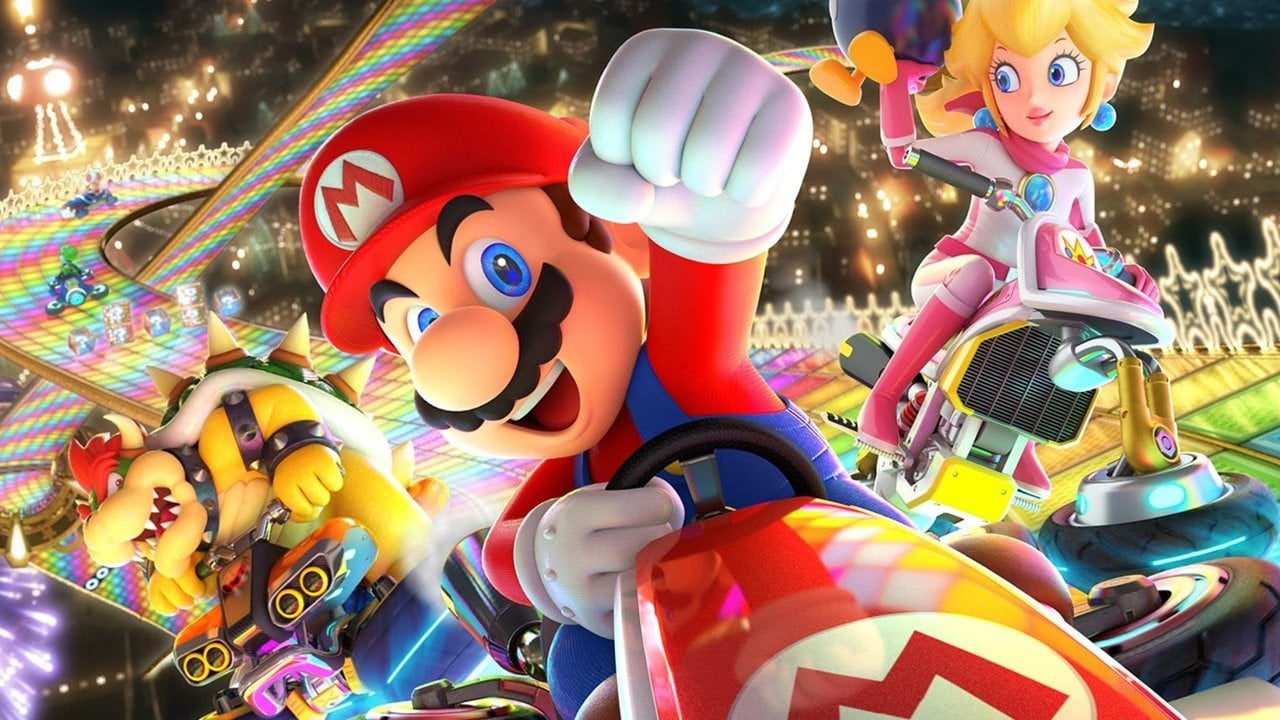
Sitting right at the very top of the list, currently serving as the best-selling game on Switch, is Mario Kart 8 Deluxe. The game has already amassed a very tasty 16.69 million sales, which is already almost double the number achieved by Mario Kart 8 on Wii U. Turns out porting Wii U games to Switch was absolutely the right decision.
You can see the full top ten below (bear in mind that the data only references Nintendo-published titles).
Top Ten Best-Selling Nintendo Switch Games (as of 31st March 2019):
It's worth noting that those numbers above are worldwide sales and include retail, digital, and copies bundled with hardware all combined.
Any surprises? Do you think Mario Kart 8 Deluxe will stay at the top of that list forever, or will something else come along and beat it? Share your thoughts with us below.
I've been pretty ambivalent towards folding phones since I first heard of the concept years ago. It's a cool idea in theory, but I'm still completely content with my boring, functional, flat-faced smartphones that fit easily in my pocket and don't come with a laundry list of problems like the potential for damage and incompatible software. But while that's still true, I was a lot more content with flat phones before I spent a day with the Galaxy Fold.
Last week, I flew into New York City along with my colleague Andrew Martonik to get our hands on the Galaxy Fold for the first time, after we were teased by a display unit behind glass back at MWC. We shot our initial coverage and, to our surprise, every press outlet in attendance ended up leaving with a unit, giving everyone time to formulate full reviews.
Getting to take the Fold home for a day made all the difference.
As it turned out, this ended up badly for a number of units, including one of our own as a major hardware issue of the Fold quickly made itself known, but luckily the unit that Andrew and I left with is still doing fine (knock on wood). While Andrew was tasked with writing Android Central's review, I ended up taking the Fold home to shoot for the day before overnighting it back his way.
I spent most of that day pointing a camera at the Fold, but between shots, I really got to appreciate the insane hardware design that went into making this crazy first-gen device possible, both good and bad. Samsung's predictably excellent build materials, surprisingly loud dual speakers, and impressive series of cameras all shine on this gadget — and the huge notch, crease, and frustratingly slim fingerprint sensor that just as frustratingly doubles as a Bixby button are all here, too.
That crease really didn't bother me at all (though I'm not thrilled to be seeing reports that it quickly becomes both more pronounced and less even), because I couldn't stop thinking about how wild it is that this folding phone concept is finally a reality. That reality is coming with some growing pains, sure, but it's one that I'm much more willing to be a part of now that I've gotten to actually use the Fold.
I didn't expect the smaller screen to be as usable as it turned out to be.
The outer screen is hilariously ugly and tiny, there's not much getting around that, but … it's functional. I was surprised by how much scrolling around on apps like Twitter felt totally fine, and for as outdated as those massive bezels look, they're part of the reason behind that, since they keep my thumb from having to reach way up to the top of this extremely tall phone. I do wish the Fold didn't feel monstrously thick when closed up like this, but it is what it is.
Of course, the extended screen is the most compelling part, and while it was a bit clumsy to use at times, both because of its physical size and the somewhat lacking software, two things made me absolutely fall in love with the idea of having a huge pocketable screen like this: reading and photography.
Whether it's an online article or a Kindle book, the Fold felt like a nearly perfect size for fitting ample text and images, and if all you're doing is scrolling through pages, it can even be used one-handed. I absolutely loved having all of that space, and it made going back to my comparatively tiny Pixel 3 feel … cramped.
Taking photos was another thing altogether; you can use the outer screen in a pinch, but it's way too small to comfortably shoot with. With the screen folded out, you get a huge viewfinder that lets you see every detail of your shot and I loved having it. Yes, some people will joke and compare you to iPad photographers, but honestly, who cares? It's a delight to shoot with, and even better to edit with. I shoot a ton of photos on my phones, so this was definitely what won me over the most about the Fold.
With all that being said, I'm not so sure I'd spend actually buy a Fold, even if they weren't breaking left and right. $1980 is a lot to ask for a device as impermanent as a phone, and I'm not sure those two features alone can make me look past other factors like my preference towards the Pixel's software and main camera performance. Still, I'm finally ready to embrace a folding future.
The Galaxy Fold is a stunning look at a future full of folding phone/tablet hybrid devices. It's significantly more expensive than Samsung's other flagships, and it's currently facing a number of #bendgate issues, but the future doesn't always come easy.
This post may contain affiliate links. See our disclosure policy for more details.
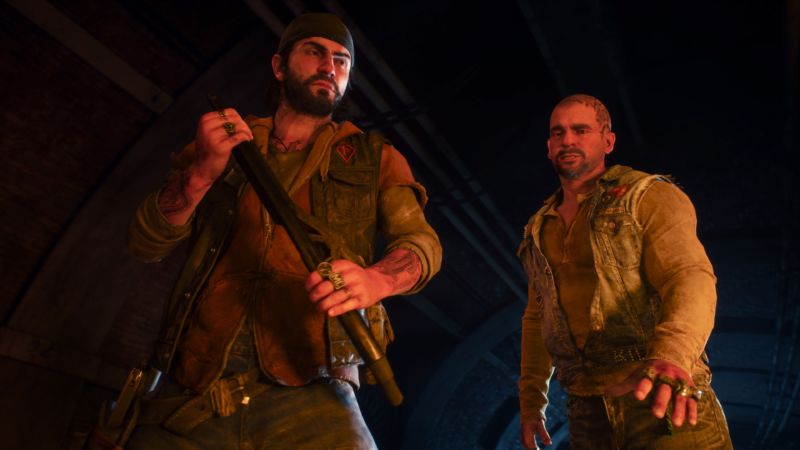
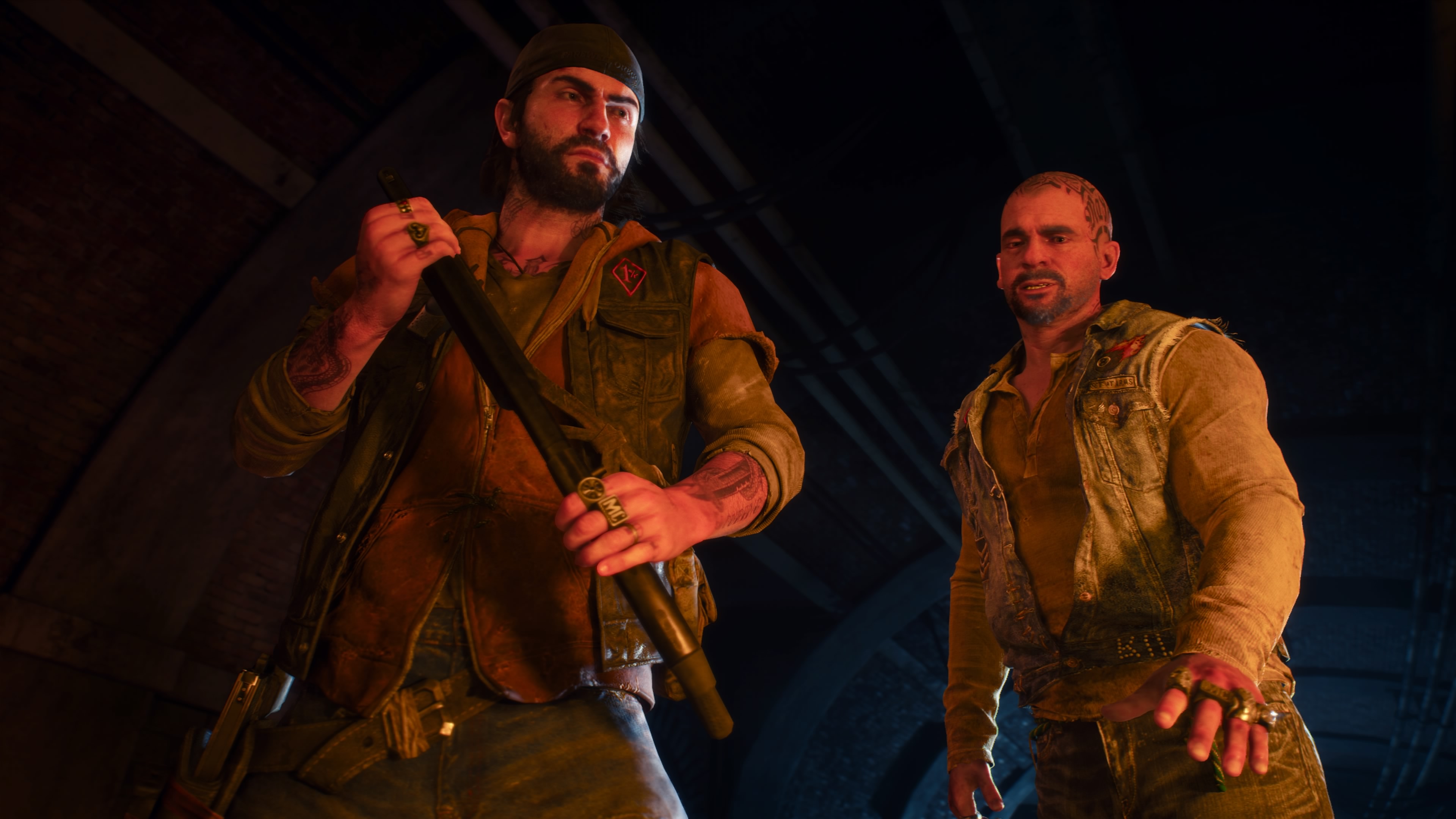
Enlarge/ Your hopes for a lengthy, charisma-filled biker romp in Days Gone should be tempered for many reasons. One of them is the fact that main character Deacon (left) doesn't interact nearly as much with his buddy Boozer as we'd originally hoped.
Sony Interactive Entertainment
Game details
Developer: Bend Studio Manufacture Publisher: Sony Interactive Entertainment Platform: PS4 Release Date: April 26, 2019 ESRB Rating: M for Mature Price: $60 Links: Amazon | Official website
Sony's streak of must-play, open-world video games does not necessarily come to a grinding halt with this week's new PS4 exclusive Days Gone. But it's absolutely a tougher elevator pitch than the likes of Spider-Man, God of War, and Horizon Zero Dawn.
Each of those Sony exclusives has some game-changing gem I can use to insist that they're worth investing in for dozens of hours—that sort of unmistakable highlight to finish the sentence "polished open-world adventure and," including massive-city web-slinging, polished story, and robo-dino safaris, respectively. The special sauce in Days Gone, which arrives with the baggage of "yet another zombie game" as a loud descriptor, is a lot tougher to extract. It's there, but it's mild.
What follows is not a comprehensive Days Gone review, but rather my take after 10 hours of the game convinced me I had seen enough to declare this a fine-enough game rental—nothing more, nothing less.
A Boozer, a user, and a loser
You can easily get lost with Days Gone's scenery. A nice photo mode, similar to those in other Sony first-party games, lets you play with exposure, focus, and other tools to take whatever screens you want.
You can probably guess that this bit of dialogue, from an opening sequence, doesn't exactly come true.
As it turns out, we are the monsters.
Actual gameplay: the opening motorcycle-driving mission includes flora, fauna, and flames.
A few inactive sequences let you catch up on dialogue while cruising.
Probably shouldn't get gas here.
No service today.
One particular brand of "human" emerges early on to blur the line between humans and diseased "freakers."
Various camps include NPCs with solid dialogue and voice acting, like this tough-as-nails camp leader.
When you approach a tunnel in Days Gone, chances are you'll need to clear out a freaker nest. Grab your flashlight and your molotov cocktails.
Tell me if this sounds familiar: in an alternate-reality version of the United States, a mysterious plague has begun turning people into flesh-eating monsters. Those who avoided the plague but missed a wave of evacuation helicopters were left behind to rebuild miniature societies and fend for themselves. Days Gone sees you taking control of Deacon, a "one-percenter" in the forests of Oregon, with a motorcycle, a buddy, a missing wife, and a network of post-apocalyptic contacts. These people send Deacon out to do odd jobs (pick up supplies, reconnect electric generators, kill people) while he contends with unraveling truths and unavoidable tragedies.
We've done this kind of thing before, which hasn't stopped us from praising recent zombie-filled retreads like Resident Evil 2. But that doesn't mean the zombie conceit doesn't come with expectations. My favorite modern zombie video games have hinged on two major elements: partnership and disturbing monsters. I can't help but notice that Days Gone fails to nail either of these elements—and doesn't make up for it with other unique or perfectly polished twists.
I'll start with "partnership" and come back to the monster stuff later. In zombie games, partnership can come in the form of literal co-op mechanics (Left 4 Dead, Killing Floor) or figurative story-driven ones (Resident Evil, The Walking Dead: A Telltale Story). We can already toss co-op out the window, since this is a single-player quest, which is by no means a complaint. (Unplug your console from the Internet and enjoy a long zombie-biking adventure, by all means.) But the game's opening sequence is all about riding alongside your biker-gang buddy Boozer, which establishes an expectation that you might have a chatty, computer-controlled friend along for this journey. That's not really the case.
For one, Boozer is quickly out of the picture. He rides ahead during your second mission to distract a crowd of zombi—er, pardon, "freakers"—so you can grab some supplies, and he almost immediately succumbs to an ambush. His injured self is soon relegated to "voice in your headset" status, as are most of the allies you come across. Let's set aside the fact that the game never establishes what kind of satellite technology keeps Deacon connected with voice comms within dense, remote forests. The issue is that most of the plot is fed via in-game chatter, which is paused and interrupted whenever zombies start snarling nearby, or rival humans pop up, or Deacon approaches a question-mark indicator on his mini-map.
Days Gone doesn't anchor its plot with regular trips to a home base of any sort, because the "friendly" camps in the game are realistically spread out across the forest (and require infrequent visiting to claim quests, turn in scrap, or buy major gear upgrades). Instead, most new plot beats are fed by this frequently interrupted in-ear chatter. I regularly arrived at cut scenes and met characters who were apparently introduced or explained by radio chatter, only to be confused by why I'd driven to them or what backstory the characters shared. These scenes are bolstered by solid voice acting and Sony-caliber dialogue, but the characters simmer with silence and furrowed brows, as if they're all looking at me with their scarred, road-weary faces and wondering, "Why don't you know what we're all pissed off about, you little dork?"
And while the game positions itself as a story of friendship, it mechanically plays out as a very isolated experience. On the road, you'll rarely run into anyone other than NPCs with broken animations who are trapped by zombies and rattle off generic, randomly shuffled "help!" and "thank you" dialogue. They appear in the form of emergent tasks, marked by question marks on the mini-map. You'll also find traces of destroyed camps (which you follow by clicking a "spidey sense" button and following visible footsteps) to find scrap and resources of varying value and "raider" encampments of humans with painfully stupid AI in "normal" difficulty. In the case of the latter, Deacon will mutter some dialogue about hating the more selfish and evil humans who have survived, which is apparently reason enough to murder them and take whatever supplies and crafting recipes they're hiding.
Zen and the annoyance of motorcycle maintenance
I love when the game renders tons of zombies, synced up with incredible, snarling audio, but these moments are too infrequent to break up much of Days Gone's monotony.
While the game looks gorgeous, you'll spend much of your time hiding in tall grass and waiting for very small crowds of zombies to turn their backs to you so you can insta-kill them with a single stealth blow.
Sometimes, you'll hang back.
Tapping the "R3" joystick button will bring up a "scouting" view, which you'll use to track footprints and find crafting supplies.
The cover system is on par with the likes of Grand Theft Auto V, which isn't a ringing endorsement.
The game's three skill trees take a long time to fill out.
Fast travel is unlocked when you clear out enough zombie clusters in zones.
Quests are split up into various storylines.
One of the control guides.
The best thing you get to do in Days Gone is ride a motorcycle across a beautiful, dense forest and its abandoned, rustic towns. Had the game shipped with an "unlimited gas" mode, I'd recommend renting the game on that feature alone, much like I did for Spider-Man's zen-like web-slinging system last year.
Buggin'
What kind of glitchy experience can you expect from Days Gone? In addition to possible issues with the standard PS4 (which I didn't test), I ran into a few severe audio glitches, one of which made all audio vanish other than music and the protagonist's voice. (This made the game impossible to play, since zombie audio cues are crucial to the experience.) This problem, along with some weird animation issues with NPCs, came up even after the game received two massive patches in the preview window, one weighing 12GB and the other 16GB. Sony reps say another patch will come before launch to fix the issues we saw. Proceed with caution.
Bend Studio needed a while to get the game up to a solid 30fps refresh while rendering a variety of open plains, hilly trails, and shadow-soaked forests, and I'm glad to say they reached that threshold. Impeccable sound design sells some of the game's best-looking sequences as well, particularly when rain pours all around (thus helping Deacon sneak-walk past more zombies). But these accolades only apply to the PS4 Pro, as I didn't test the game on a standard PS4. Notes provided to pre-release testers warned that Bend is working on standard PS4 performance for the eventual day-one patch, so I can't confirm whether that version is yet up to a crisp 30fps refresh.
But in bad biking news, Days Gone frequently pesters you out of that bike-zen mode. The motorcycle runs out of gas very quickly, even after its first gas-tank upgrade, and it incurs physical damage whenever it bumps into anything, which you must stop and "repair" by spending the game's scrap currency while holding a "repair" button.
Deacon's bike-driving prowess is pretty decent, but certain primary routes teem with objects to bump into, and the controls glitch out every so often—especially when you park the bike in a place that the game decides isn't ideal, thus making it bump into stuff in a glitchy-physics way and racking up damage in the process. That's by no means a game-breaking issue, but the bike-repair aspect weighs down the experience, as if the developers are always whispering into players' ears, "We're going to punish you when our game's bike controls work against you."
In a few missions, you'll get access to an aim-lock button option to shoot guns at foes' bikes while driving, and, sure enough, these drive-and-shoot romps are fun. But most missions ask you to get off the bike, at which point you're in well-trod open-world territory.
A GTA comparison—and not a good one
Oh, the glitchiness. Here's one moment where a quest wouldn't trigger at the right point on the map. The game kept nagging me about fueling up my bike, even though I wasn't on my bike and there was no easy fuel source near this quest's start. This single text prompt was unclear—and indicative of the kind of vague roadblocks you'll find on a regular basis in this game.
This enemy somehow ran directly up to my position, shouting, "I found you!" yet didn't go so far as to drop down or aim a gun at me. It sums up my feelings on the wonky AI found throughout the game.
I also frequently ran into "trapped" NPCs who just stood still in the middle of the wilderness.
Many of them looked like this guy, whose mouth and face barely moved as he repeated the same weird rotation of "help me!" and "thank you!" shouts.
Your inventory includes three gun slots (pistol, rifle/shotgun, sniper/crossbow), traps, explosives, and "distraction" items (stones, noisemakers, etc.). You can run, sneak, and engage in third-person combat, but between a clumsy cover system and floaty, auto-aim shooting, the gunplay feels a lot like the ho-hum stuff of Grand Theft Auto. (I'll take this moment to clarify that the game bears some visual and tonal similarities to various Far Cry games, but the unsatisfying combat, more than anything, nukes that comparison point.)
In a few cases, you'll have to deal with giant fields of zombies, at which point your combination of gear comes into play. You'll sneak around, set up some remote-detonation explosives, and move to a hiding hole before setting off noises and distractions. Dozens of snarling zombies will mindlessly move into position, set off the kabooms, and you'll decimate a good number of monsters at once. Seeing so many zombies rendered on-screen with an emphasis on realism and terror (as opposed to Dead Rising-esque campiness) is palpably tense, and dispatching them with the big booms is exciting.
But that's a tiny portion of the Days Gone experience. Most of the time, you're seeing one to three zombies at once, which can be dispatched with the game's melee weapons (which fall apart after some use but can be easily replaced or repaired), and it's always quieter and more efficient to melee small crowds to a quick death. Should you be ambushed by more zombies than that, you can easily run away, hop on your bike, drive a bit, wait, and try again. The game's zombies only make chase for so long before giving up, returning to their previous zone, and resetting. In the case of human foes, meanwhile, they're coded to run to one of a few hiding positions in each "encampment" they occupy, so you can expect to sneak to each cover point, make a noise, and wait for humans to run like idiot lemmings to each pre-coded point for easy kill line-ups.
That's really it for challenge: dealing with zombie and human threats alike. Sometimes, you'll have to sneak around armies of armored humans, who cannot be attacked, to spy on their stories and thus unlock new quests, but that's the only real variance to the encounters on offer (there are no real puzzles, let alone moments of brain-busting stealth-strategy).
And that's where I get to my issues with Days Gone's monsters: there's seriously zero zombie variance to break up the combat. Bend Studio's idea of "gritty, realistic" zombies is to skimp on the Left 4 Dead archetype of monster variety. It's the same mindless creature, over and over, albeit sometimes in the form of a wolf or a bear, as opposed to having "super" zombies serve as chiefs or zone-controlling barf machines. (You'll find a screaming zombie a la L4D's "witch" character, at least, but not on a frequent basis.) Days Gone doesn't make up for this lack of enemy diversity with the zany, combat-shifting stuff of the Dead Rising series, which lets players craft and combine all matter of implement to take out screen-filling zombie mobs.
And, yes, crafting is also worth mentioning, if only because the game's "normal" difficulty means players never run out of supplies. This virtual Oregon has no shortage of elements needed to make your own bandages, molotov cocktails, and melee weapons. As a result, the game teaches you to take advantage of extra supplies and glitchy enemies to engage in straight-up combat—in ways that The Last Of Us so brilliantly taught its players not to do, for survival's sake.
Deacon doesn’t bring the religious experience
My incomplete run-through of Days Gone included just enough solid plot and tense battles to leave me with a somewhat positive experience. But the plot I treasured the most—particularly the stuff about Deacon and his partner—comes almost entirely through lengthy, non-interactive cut scenes, which all strike a serious tone while including jokes, levity, and heartwarming acting.
That seriousness was met with all too much jank in the real-time gameplay. In addition to bugs mentioned in the earlier sidebar, the game's open world either triggered enemies too randomly, forcing them onto my position with laser-sharp precision, or had them stare me down in open fields (humans and zombies alike) while doing nothing. The most telling moment came when I stealth-crawled through a town to avoid dozens of zombies, only to reach a final moment: a bear insta-spawned into the city, and I had to pump burning explosives and bullets into it to live. In addition to the bear's jarring, random appearance, none of the nearby zombies reacted to this insane encounter.
That kind of busted-quest moment happened often enough to color most of my Days Gone impressions. It's a great time to be a fan of open-world video games, and if you still haven't played the likes of Assassin's Creed Odyssey, Metro Exodus, or (in zombie terms) Dying Light, each of those imbue more plot, variety, and open-world possibilities into their lengthy adventures. Plus, if console exclusivity is a drag, all of those are available on Xbox One and Windows PC, in addition to PS4.
That being said, I went into Days Gone with an open mind, having seen the game's performance and bugs creep up in preview press events, and was pleasantly surprised to see that Bend fulfilled its goal of delivering a stunning, massive virtual Oregon. I got creeped out by solid sound design, saw satisfying flashes of gore upon pummeling zombies to death, took in a few moments of Sons of Anarchy-caliber dialogue, and paused to enjoy sweeping views between my satisfying motorcycle drives.
Also, give credit where it's due: If Days Gone were an Xbox exclusive, some might have praised Microsoft for finally turning its reputation around, having gone for so long without a good single-player adventure (its disappointing open-world zombie survival game State of Decay 2 doesn't count). Sony's other first-party fare has set a much higher bar for this kind of game, which is no fault of Bend's.
If you're hungry for a new weekend-filling zombie adventure on PS4, Days Gone is an easy rental recommendation. If you're already working your way through a big-game backlog, on the other hand, you should probably spend your days on other fare.
The world comes for you is an incredibly apt slogan for Bend Studio’s apocalyptic sandbox. The latest in a long line of Sony-published story-driven exclusives, Days Gone doesn’t quite have the character of a Game of the Year contender like God of War, but it’s just about imaginative enough to set itself apart from the many open worlders already on the PlayStation 4 – even if it lifts ideas from virtually all of them.
As alluded to above, it’s the white-knuckle tension of the sizeable Oregon-inspired map that sets this debut current-gen effort apart. Playing as mercenary biker Deacon St. John, you’ll rarely feel truly equipped for what the world is about to throw at you. This means that preparation is key when you’re out in the field: run out of fuel or ammunition, and you’re going to find yourself Freaker fodder faster than you can say, “They’re zombies, actually!”
There’s just enough survival horror in this otherwise formulaic open world experience to distance it from the likes of Far Cry, and that can help to ease fatigue. The motorcycle is your sanctuary out in the field: the only place you can save, and the fastest means of escape. But it’s delicate: gas is in short supply, and one bad crash will leave you hunting for scrap. Actually tending to the bike is straightforward, but factoring it into your plans is essential.
The same is true of your artillery. Ammunition is generally easy to come by, but weapons are weak in the early exchanges, and the headline hordes are devastating. They’re so brutal, in fact, that the game takes its sweet time introducing the really deadly undead armies – it gives you some time to hone your craft, so that you can build traps and get creative with how you want to bring the bleeders down. All this preparation is the most entertaining part of the game.
Unfortunately, the missions don’t really involve enough of it. There are some excellent objectives here: some inspired by Uncharted as you work alongside another AI character, and others which subscribe to that popular “black box” style of design, where you have multiple opportunities in order to fulfil the task at hand. And then there are the fetch quests – so many fetch quests, many of which are anti-climactic and borderline inconsequential.
You can’t fault the effort that the developer’s invested here: it wants to go toe-to-toe with Naughty Dog and Sony Santa Monica and feast at the top table of PlayStation’s first-party developers. But the story drifts like its protagonist, wasting time with far too many sub-par supporting characters and trying your patience in the process. The cut-scenes look impressive, but the direction is sometimes weak and the script is as ham as a hog roast.
That’s not to say it’s bad by any stretch of the imagination: it’s entertaining in a popcorn flick kind of way. And there’s some cool lore here that will keep you engaged about the nature of the world that you inhabit: what actually happened to Oregon, and how do those still living survive without any good tattoo parlours lying around? It just takes far too long to get to the point sometimes, which may kill your interest all together.
This is a sizeable game, with multiple plot threads to uncover and a hearty selection of open world busy-work to keep you occupied. You’re looking at a good 30 hours to see the campaign through, and that’s going to be extended depending on how you play. Mechanically it’s dense enough to support many different play styles, so while stealth and caution is generally recommended, a guns-blazing approach is a possibility – assuming you have the requisite resources.
Perhaps second to the way the bike is implemented is just how many layers there are to the gameplay. There are encounters where you’ll need to clear out enemy camps, but if you want to get creative you can craft a little radio alarm and use it to alert nearby Freakers, pitching the living against the living dead. Of course, if you’re approaching during the day then there’ll be less zombies to leverage – but at night the larger swarms will generally be weaker.
It feels like there’s an ecology to the undead, which is neat. But there’s also a logic to the world itself, like the way snow muffles your footsteps or rain affects the handling of your chopper. It’s just a shame that the developer falls into copy-and-paste mission objectives, as tasks like eavesdropping on scientists in insta-fail stealth sections and burning down nests feel like they’re going through the motions – sometimes less is more, we’d suggest.
At least there’s plenty of eye candy to ogle while you’re ticking boxes, though, as at its best this is a visual feast. Naturally it never hits the highs of a Horizon: Zero Dawn, but the sandbox itself is extremely varied, spanning dense forests to deserts and snow-capped mountains. It’s a fun location to traverse with some unique, authentically American landmarks – it’s just a shame the framerate’s prone to failing as it streams in certain areas of the map.
Bugs can be problematic as well – at least in the review build we played. One side-quest completely glitched out on us, rendering it unsolvable; clipping, sound issues, and other minor technical hiccups also detracted from our experience. The game generally suffers from a lack of direction at times, too: we don’t expect to have our hand held every step of the way, but when you’re running around in circles looking for the entrance to a bunker for 25 minutes, we’d argue that’s dodgy design.
There’s heart here that’s easy to admire, though. Forgive us for trotting out clichés in order to accommodate a more favourable rating, but you really feel Bend Studio poured its all into this project. Beyond the long load times and the occasional signs of creative bankruptcy, there’s something here – a moreish kind of comfort food, with just enough identity of its own to set it apart from its many contemporaries.
Conclusion
Days Gone’s survival horror underbelly gives it just enough personality to distance it from the dozens of other open worlders already available. A dense selection of overlapping gameplay mechanics make for entertaining action, even if the title’s unremarkable mission design doesn’t always make the best of them. The story can drift, and the overall package isn’t quite as polished as its PS4 exclusive counterparts – but as far as gaming comfort food goes, you could feast on much worse snacks than this.
Please note that some of the links on this page are affiliate links. If you click them and make a purchase we may receive a small percentage of the sale which helps support the site. Please read our FTC Disclosure for more information.
Verizon said it would deploy 5G in more than 30 cities in 2019. Today it’s naming 20 cities, in addition to Chicago and Minneapolis where the service has already been activated. It’s also opening up preorders for the Samsung Galaxy S10 5G handset with a few incentives tossed in.
The new cities stretch from the east coast to the west, and from the north to south, and will be receiving Verizon’s millimeter wave 5G Ultra Wideband service before the year is done. The 20 cities are:
Atlanta, Boston, Charlotte, Cincinnati, Cleveland, Columbus, Dallas, Des Moines, Denver, Detroit, Houston, Indianapolis, Kansas City, Little Rock, Memphis, Phoenix, Providence, San Diego, Salt Lake City, and Washington DC.
Verizon says additional 5G cities will be announced later this year.
Verizon is also opening preorders for the Galaxy S10 5G today. It’s offering up to $450 for trade ins on eligible phones, and a $200 prepaid Mastercard if you 1) switch to Verizon, 2) purchase a Galaxy S10 5G on a device payment plan, and 3) sign up for Verizon Unlimited. The company says it will also wave the $10/mth 5G Ultra Wideband access fee. The phone starts at $1,299.99 if purchased outright, and can be purchased from Verizon stores on May 16th.
Our experience with Verizon’s millimeter wave 5G service in Chicago was less than stellar. We found it blazingly fast but difficult to find a signal. Now company executives have started to explain why, while offering little hope for US residents living in rural areas.
“Millimeter wave (mmWave) spectrum has great potential in terms of speed and capacity, but it doesn’t travel far from the cell site and doesn’t penetrate materials at all,” said T-Mobile CTO Neville Ray on Monday. “It will never materially scale beyond small pockets of 5G hotspots in dense urban environments.”
“We all need to remind ourselves this is not a coverage spectrum,” said Verizon CEO Hans Vestberg a day later.