A New York man filed a $1 billion lawsuit against Apple, claiming the tech giant’s facial-recognition software wrongly blamed him for stealing from Apple stores.
Ousmane Bah, 18, claims someone used a stolen ID to pass themselves off as him when they were busted stealing $1,200 worth of merchandise from an Apple store in Boston on May 31, 2018, according to papers filed in Manhattan federal court.
The ID listed his name, address and other personal information — but did not include a photo. Bah believes Apple took the perp at his word, and then programmed its security systems to recognize the man’s face as Bah’s.
The thief then ripped off Apple stores in New Jersey, Delaware and Manhattan — incidents Bah was blamed for, the suit claims.
He only learned about the mix-up after receiving a Boston municipal court summons in the mail in June, according to court papers.
The NYPD arrested him on Nov. 29, but a detective working the case viewed surveillance footage from the Manhattan store and concluded that the suspect “looked nothing like” Bah, his lawsuit states.
Charges against Bah have been dropped in every state except New Jersey, where the case is still pending.
Apple’s “use of facial recognition software in its stores to track individuals suspected of theft is the type of Orwellian surveillance that consumers fear, particularly as it can be assumed that the majority of consumers are not aware that their faces are secretly being analyzed,” the lawsuit states.
Apple did not respond to a request for comment.
This story originally appeared in the New York Post.
The screen on the CNET review unit of the Galaxy Fold hasn't malfunctioned. But that doesn't mean there aren't problems.
Angela Lang/CNET
Samsung should be taking a victory lap right now for its innovative Galaxy Fold. Reviewers should be singing the praises of the first major foldable smartphone, which was supposed to launch Friday. The only controversy should be whether that $1,980 is really worth it.
But we don't live in that reality. Instead, Samsung on Monday delayed the launch of the Fold following reports that some of the small number of devices seeded to reviewers began to malfunction or break. The CNET review unit, handled by editor Jessica Dolcourt, hasn't suffered the same issues.
Now playing:Watch this:
Will Galaxy Fold screen flap derail the foldable phone...
4:40
The delay is not just a black eye for Samsung, but for consumer confidence in foldable phones in general. These flexible and bendable devices are supposed to represent a revolution for smartphones, but they can hardly take off if people are worried about their durability. And given the high prices for these devices (just look at the $2,600 Huawei Mate X), you have a right to expect that this phone, well, actually works.
But here's the thing: This whole mishap could have been so much worse.
Samsung should be thanking every reviewer who played with an early unit of the Fold. Just imagine if units got out to the wider public. The outcry would be far greater, as would the criticism that Samsung rushed out a half-baked product just to be "first."
The knee-jerk reaction would be to compare this incident to the Galaxy Note 7 debacle, where Samsung slowly responded to the initial reports of the devices catching fire, only to have it blow up, quite literally, in its face. That Samsung is taking the high-profile, if embarrassing step of delaying the launch shows it's learned its lesson.
"Samsung delaying the Galaxy Fold shows maturity," Avi Greengart, an analyst at Techsponential, said in a tweet.
Samsung, which has built over 4 billion phones since 1988, was caught by surprise by the Note 7 problems. Like most companies in the mobile industry, Samsung had counted on its battery suppliers to conduct safety tests before putting the batteries in devices. As it turned out, those suppliers didn't catch the errors that caused the Note 7 to overheat.
The Note 7 debacle caused Samsung to be a bit more cautious with its subsequent devices. It packed a smaller battery into 2017's Galaxy S8 and instituted a more rigorous battery testing process. But its new procedures, largely designed to detect battery problems, didn't uncover the issues experienced by the Galaxy Fold's display.
The inward fold of the Galaxy Fold adds strain to the device.
Angela Lang/CNET
The screen failures would've been amplified had they reached consumers and not just early reviewers. The foldable phone market is on wobbly, hype-filled legs, and the first impressions so far have been mixed. The Royole Flexpai was an interesting, but buggy product. The Mate X impressed people at MWC 2019, but it wasn't widely available to test. Now, there's this controversy. A few bad products could blow this trend before it has a chance to become a thing.
Ahead of the launch, other industry players noted that the inward fold of the Samsung device adds strain on the display, which is why Huawei and Royole opted to do displays that folded out. Samsung reduced some of the tension on the fold by including the large gap in between the two folded sides, as well as added that screen protector that we only now know is something you absolutely need to keep on the phone.
Samsung says it's identified a possible early cause. The company said the initial findings from its investigation found potential damage from the impact of the exposed areas of the hinge at the top and bottom of the phone. It also said substances found inside the device might be affecting the display performance.
"We will take measures to strengthen the display protection," Samsung said in a statement. "We will also enhance the guidance on care and use of the display including the protective layer so that our customers get the most out of their Galaxy Fold."
While there aren't any victory laps in Samsung's near future, the company has the opportunity to fix its issues with the Fold early and preserve the prospects for the broader foldable smartphone market -- assuming it's nothing catastrophic that requires a full redesign.
It only took a handful of defective review units. That's a small price to pay.
Shara Tibken contributed to this story.
The story originally ran on April 22 at 11:28 a.m. PT.
We have our (tentative) verdict on Samsung's Galaxy Fold, as the launch date for the foldable turns into a giant question mark. Tesla is promising a future filled with its robo-taxis, and Pepsi is trying to reinvent the soda fountain, minus the calories.
After spending a week with the Galaxy Fold, Christopher Velazco found a lot to love about its groundbreaking design. The only problem is it comes with so many compromises that he concluded "almost no one should consider buying one." We couldn't score the $1,980 device without testing a US production unit first (ours was a European model), but as we found out a few hours later -- that might not happen for a while.
On Monday afternoon, Samsung said in a statement that "While many reviewers shared with us the vast potential they see, some also showed us how the device needs further improvements that could ensure the best possible user experience. To fully evaluate this feedback and run further internal tests, we have decided to delay the release of the Galaxy Fold. We plan to announce the release date in the coming weeks."
Initial tests pointed to damage at the top or bottom of the hinge as a possible problem, and one issue with "substances" found inside the display. Samsung plans to strengthen the display protection and "enhance the guidance" on care for the display, to prevent people from removing the vital top layer of the screen. So how long will it take to actually release the Galaxy Fold? Right now, your guess is as good as ours.
Two days ahead of its first-quarter earnings disclosure, Tesla hosted an event to explain its autonomous technology to investors. It showed off the customized chip built to enable Full Self-Driving in its cars (using the cameras and radar they already have instead of LiDAR) that Elon Musk called "the best chip in the world." Musk promised that Teslas will be capable of self-driving by the end of this year and self-driving robo-taxis will be on the road in 2020. The plan is to undercut Uber and Lyft with the cost per mile of a robo-taxi being less than $.18 a mile, compared to their usual $2 to $3 per mile.
The 2019 lineup of TVs from Sony is getting closer to release, so now we finally have prices for those big screens shown off at CES. They range from the eye-popping 98-inch 8K set that has a sticker reading $69,999, down to a 4K 43-inch LCD that's $650. In between, its top-of-the-line A9G OLED starts at $3,500 for a 55-incher. The really good news is that on more reasonably priced sets, you can still expect features like Netflix Calibrated mode, as well as support for Apple AirPlay 2 and HomeKit.
Now that Pepsi owns SodaStream, it's trying its hand at a make-your-own-drink station -- though it's not for the company's usual sugar-laden fare. It's unveiled a water-dispenser system that lets you create your own zero-calorie beverage, no more bottles, and fewer calories and health concerns.
Epic Games is again linking up with the Marvel Cinematic Universe as the developer has teased a Fortnite and Avengers: Endgame crossover. Other than a start date of April 25th, we don't know much. Oh, but it might have something to do with Captain America's shield.
Yes, it is unavoidable. Fortnite, Avengers. Either or both.
Bowers & Wilkins, best known for its luxurious range of speakers, is launching a new wireless audio system called Formation. The company is starting with a soundbar, two bookshelf-style speakers, a cheaper single speaker, a standalone subwoofer and an audio box that gives older devices streaming capabilities. The Formation line went on sale yesterday in the US, with the Wedge costing $899 while the Duo speakers and Bass subwoofer will set you back $3,999 and $999, respectively. The Bar, meanwhile, will go for $1,199, and the Audio box will be pitched at $699. If you've been keeping up, that's a combined price of $7,795.
Platform PC, Xbox One, PlayStation 4, Nintendo Switch
Publisher Warner Bros. Interactive
Developer NetherRealm Studios
Mortal Kombat X was a landmark release in the long-running skull-crushing series, selling more than any previous entry and proving NetherRealm’s fighters could stand toe-to-toe with Street Fighter, Tekken and other competitors in terms of depth and polish. NetherRealm then upped their game another notch with the almost shockingly-good DC Comics brawler Injustice 2. Ed Boon and company have gone from the silly blood ‘n’ guts guys to arguably the leading fighting game developers on the scene.
Given NetherRealm’s recent successes, Mortal Kombat 11 has a lot to live up to. Does the game continue their winning streak or is there nowhere to go but down after the achievements of Mortal Kombat X? Time to find out if Mortal Kombat 11 is a Flawless Victory or just a bloody mess…
A fighting game is nothing without good base mechanics and Mortal Kombat 11 is built on a rock-solid foundation. This is Mortal Kombat as you know it, which is to say, only four attack buttons (back punch/kick and front punch/kick) and forgiving, easy-to-remember special attack inputs. No thumb-blistering half-circle special moves here. That said, a few significant tweaks have been made.
Running has been axed, and lengthy, strung-together combos have been dialed back in favor of shorter attack chains and mixing up your specials. The Super Meter from earlier MK games has been split into separate shorter Offense and Defense meters, discouraging players from leaning too heavily in either direction. Your Offense Meter charges can be used to power up your specials, while your Defense Meter is depleted when you use specific defensive moves (combo-interrupting Breakers have got the boot this time around). It feels like NetherRealm wants players to use a wider array of special moves and techniques, rather than sticking to the same old reliable strategies. The result is a game that’s a touch slower than some previous entries in the series, but, ultimately, more varied. But not all the changes are entirely successful – the new Fatal Blows (essentially the MK version of Injustice 2’s Super Moves) are impressive, but they interrupt the flow of matches and eventually get tiresome once you’ve seen them 100 times.
Beyond the fundamentals, there’s a ton of complex stuff for hardcore competitive types to chew over. Combos, special strengths and weakness, situational strategies – it can be a lot to take in, but if you just want to throw fireballs and bicycle kicks with Liu Kang, you can do that too, as Mortal Kombat 11 has a wide range of difficulty options. The game also offers up an impressively deep tutorial that can get pretty much anybody started on their path to becoming a Mortal Kombat master. This is an admirably accessible bit of blood sport.
Once you get a handle on the basics, the first thing you’ll probably jump into is Story mode, which plunges into full-on time-travel craziness this time around. It turns out everything that’s happened thus far in the Mortal Kombat games has been secretly manipulated by an evil time lord named Kronika, but Raiden’s meddling has become too much for her to tolerate, so she’s decided to reboot time and erase the thunder god in one fell swoop. This, of course, leads to all sorts of shenanigans, as the current mostly-middle-aged MK cast come face-to-face with their younger counterparts and the Lin Kuei, Shaolin monks, and various NetherRealm factions vie for power.
None of the time-travel details make much sense if you think about them for more than a minute (this type of stuff never does), but if you can ignore that, this is a nice tribute to Mortal Kombat history. Some long-mistreated characters like Liu Kang get some redemption in what feels like a bit of a mea culpa by NetherRealm, and we even get a sort of sweet, sort of weird love triangle between Sonya Blade, Johnny Cage, and Johnny’s obnoxious younger self. This is a fun comic-book-style crossover tale (NetherRealm has learned a lot doing the Injustice games) and the writing is, dare I say it, kinda clever? Also, how weird is it that Mortal Kombat now has some of the most impressive cutscenes in all of gaming? This is a great-looking game, featuring some fantastic character models and facial animations. The game’s score and voice acting is also very good (a few clunky line readings from new Sonya Blade actress Ronda Rousey aside).
Once you gobble up Story mode, you’ll likely move on to character Kustomization, or at least that’s what NetherRealm would like you to do. Each of Mortal Kombat 11’s 24 fighters (25 if you get pre-order character Shao Kahn) can be tinkered with extensively, but I never felt particularly drawn to it. Unlike Injustice 2, where the gear you collected had both a function and unique appearance, MK11 splits things between purely cosmetic skins and functional gear. Skins are a full-body thing, meaning you can’t create your own looks, and while each fighter has 60 skins, many are just simple color variations. Meanwhile, each fighter only gets three gear slots (compared to five in Injustice) and, overall, the helmets, shields, weapons and other accoutrements just don’t feel that important. You can also tweak individual moves, animations, add augments to gear, and more, but for all the depth, I never felt like I was doing much.
Maybe I would have been more excited by Kustomization if the flow of new goodies was a little more generous, but, as it is, Mortal Kombat 11 is a slow grind. You can earn stuff by beating arcade-style Towers, but the easiest way to collect loot is to hit up The Krypt. This 3D version of Shang Tsung’s Island doesn’t have any enemies to fight, but it does feature the occasional puzzle and a whole lot of treasure chests that can be opened by spending in-game currency earned in other modes. NetherRealm has been doing The Krypt for a while, and I’ve always found it a rather odd concept, although I suppose it helps disguise the fact that the chests you’re opening are, essentially, loot boxes. Blind loot boxes that are flooded with useless junk like character icons and backgrounds for your Kombat Kard. I’ve poured over 20 hours into Mortal Kombat 11 and am still just scratching the surface when it comes to unlocks, with most of my fighters only having maybe five or six skins to choose from. You don’t have to pay real-world money to open any of the chests in The Krypt, but MK11 will have a store at launch that will let players buy cosmetics using “Time Crystals,” the game’s new premium currency. NetherRealm is already promising to fix Mortal Kombat 11’s grindiness, but I have the feeling any changes they make will be relatively minor.
But hey, as much as NetherRealm wants players to focus on Kustomization, you can still largely avoid the drudgery if you want. Between Story mode and the “Klassic Towers” you can play through to earn character endings, there’s a solid dozen-or-more hours of traditional single-player content here. Once you’re done with that, you can jump into online multiplayer, which is quite robust. If all you really care about is ripping spines, this game never has to be a grind.
This review was based on a PS4 copy of Mortal Kombat 11 provided by publisher Warner Bros. Interactive.
8.5
Mortal Kombat 11 is a first-class fighting game experience, featuring rock-solid core mechanics, impressive production values, and a story that wouldn’t be out of place alongside the summer’s biggest blockbusters. Of course, the game also suffers from some of the drawbacks of big-budget game development, including grindy customization and tacked-on microtransactions, but that stuff is largely superfluous. Beneath the triple-A fat, Mortal Kombat’s bloody heart still beats as strong as ever.
Pros
Tweaks the action in smart ways
Wonderfully kooky time-travel story
Top-of-the-line presentation
Robust online multiplayer
Accessible for all skill levels
Cons
Fatal Blows are all flash
Kustomization is uninspired
Getting new gear is a grind
The links above are affiliate links. As an Amazon Associate, Wccftech.com may earn from qualifying purchases.
Apple is being sued for $1 billion in damages by an 18-year-old college student who blames the company’s facial recognition software for his false arrest and for wrongly tying him to thefts at Apple stores in several states.
The plaintiff said the incidents adversely affected his education and reputation and caused him stress and hardship. His complaint accuses Apple of negligence, infliction of emotional distress, slander, libel and fraudulent concealment.
The complaint takes issue with Apple’s facial recognition software, Face ID, which replaced Touch ID that required a user’s fingerprint as a way to open an iPhone, open apps within the iPhone that are enabled with Face ID and make payments through Apple Pay.
“Until the present, any examination of Face ID has presupposed that the iPhone user is not being deceptive about his identity. However, when a name is mismatched to a particular face, the security benefits of the Face ID software become a criminal’s weapon,” says the complaint on behalf of Ousmane Bah.
According to the complaint, Apple accepted as identification an interim driver’s permit that Bah had lost and that had Bah’s name, address, date of birth, sex, height and eye color on it but not his or any photo.
Police later said they suspect that the person who committed the crimes that Apple blamed on Bah presented Bah’s interim permit as identification during one of his multiple offenses against Apple. Apple then matched that personal information with a photo of the real Bah. As a result, Apple’s security technology thereafter identified the perpetrator as Bah.
The complaint alleges that Apple relied so heavily on its facial recognition software that it “failed to consider the possibility of human error in its identification procedures, despite the fact that there was a clear discrepancy between the height described on the learner’s permit for Bah, and the suspect’s height.”
Once Apple tied Bah’s name with the wrong face, Bah had no way to correct the error and Apple failed to match the information provided by the stolen interim permit to the true suspect’s identity, according to the complaint.
Video surveillance, claimed as missing by Apple’s security firm, eventually played a role in clearing Bah of charges.
The suit also names a security company, Security Industry Specialists Inc., as a defendant.
What Happened
According to the complaint, in March 2018, Bah got his interim driver’s permit, which had his name, address, date of birth, sex, height, and eye color. It did not include a photo. The document specifies it is not to be used for identification purposes. Bah lost the interim permit but did not report the loss to police because he knew he would be receiving the actual permit shortly and because the non-photo interim permit indicated it was not to be used for identification.
Bah later received a summons arraignment from Boston municipal court alleging a larceny over $1,200.00 with an alleged date of offense listed as May 31, 2018. The crime took place at an Apple store in Boston’s Back Bay and involved the theft of multiple Apple pencils, which retail for $99.00 each. Bah had never been to Boston before the arraignment took place on June 27, 2018. He also says he was at his senior prom in Manhattan on the date of the alleged offense.
At his arraignment in Boston, a loss prevention associate employed by defendant Security Industry Specialists Inc. said he witnessed a suspect steal Apple pencils on a security video. He told police that he knew Bah because, he claimed, Bah was previously arrested for thefts from another Apple store. When Bah’s attorney asked to see the video, the security witness said it no longer existed.
After returning home to New York from Boston, Bah received notification at his parents’ home accusing him of several other charges. Among these were similar allegations of larceny from one of Apple’s New Jersey store locations. Apple also made new criminal allegations against Bah in Delaware and in New York City.
On November 29, 2018, New York City police arrested Bah at his home at four o’clock in the morning. The arrest warrant was obtained based on the Apple’s allegations pending against Bah for larceny from one of its Manhattan stores. The police warrant included a photo of a suspect that did not resemble Bah, but police nevertheless executed it.
However, police later realized that Bah was not the suspect of the crimes and that he was wrongfully arrested. A detective had viewed surveillance video from the Manhattan store and concluded that the suspect “looked nothing like” Bah.
At that point, the detective explained that Apple’s security technology identifies suspects of theft using facial recognition technology and that he suspected that the person who had committed the crimes must have presented Bah’s interim permit as identification during one of his multiple offenses against Apple which took place over many months and in multiple states.
Based on the information provided by New York police, Bah’s attorney was able to explain the situation to the district attorney in Boston. The DA obtained the surveillance footage of the crime originally giving rise to the charges made against Bah in Boston, the same footage that the loss prevention firm previously said did not exist. The Boston DA dismissed the case against Bah after viewing the surveillance footage and concluding that he had not committed the crimes.
Currently, there is still a case in New Jersey pending against Bah, but all other charges have been dismissed.
The complaint alleges that the identification of Bah and subsequent charges filed against him, as well as the traumatic arrest which took place at his home, were “completely preventable” by Apple. “All of these events were caused by Defendant’s negligent acceptance of an interim permit, which did not contain a photo, did not properly describe the suspect presenting it, and clearly stated that it could not be used for identification purposes, as a valid form of identification,” the complaint says.
Additionally, the plaintiff claims that Apple could have taken action to correct its error after it became aware that its facial recognition technology had repeatedly wrongfully implicated Bah.
The negligence charge accuses Apple of breaching its duty to “carefully and accurately identify perpetrators of crime so as to avoid false accusations against innocent individuals.”
The security firm and Apple should have realized that the height listed on the interim permit did not match the height of the suspect, that the interim permit was not intended for identification purpose, and there was at least some likelihood that the permit did not belong to the suspect because the document did not include a photo, according to the complaint.
The case is Bah v. Apple Inc., 19-cv-03539, U.S. District Court, Southern District of New York (Manhattan).
Related:
Was this article valuable?
Here are more articles you may enjoy.
Want to stay up to date?
Get the latest insurance news sent straight to your inbox.
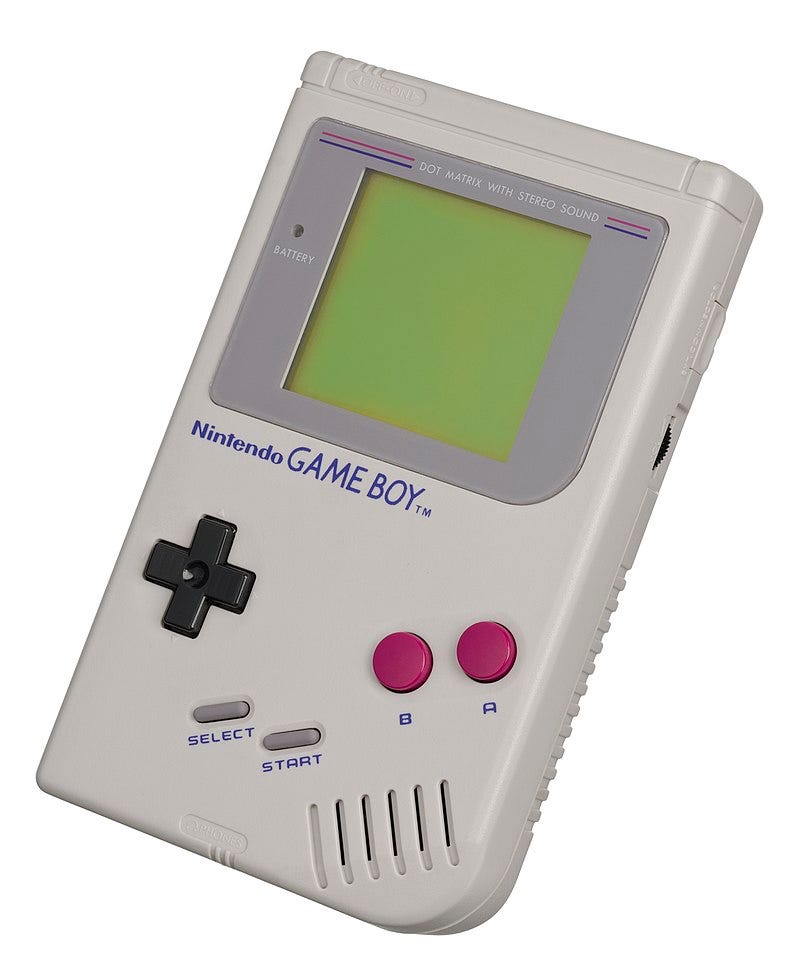
Gamer World News Entertainment host Tian Wang on the new version of the Mortal Kombat video game and the 30th anniversary of the Game Boy.
Thirty years ago, Japanese company Nintendo released the Game Boy - a handheld device that would pave the way for the current $63.2 billion gaming industry.
Continue Reading Below
Gamer World News Entertainment host Tian Wang told FOX Business' Stuart Varney that the Game Boy was "significant in so many different ways," opening up the world to handheld gaming and becoming a major revenue stream for the video gaming company.
“The Game Boy was also incredible because the original 8-bit versions sold about 119 million copies,” Wang explained on Monday. “That makes it the third best-selling console of all time - next to PlayStation 2 and the Nintendo DS. And it ended up becoming a cultural icon.”
MORE FROM FOXBUSINESS.COM...
Nintendo improved upon the Game Boy's design with the Game Boy Color in 1998, the Game Boy Advance in 2001 and the Game Boy Advance SP in 2003. In 2004, Nintendo dropped the words “Game Boy” from its line of handheld devices for its double-screen model, the Nintendo DS.
Wang joked that part of the original Game Boy's appeal stems from “Tetris,” the famous puzzle game designed in the Soviet Union.
“It had an incredible game that was packaged with it - Tetris, which was arguably the greatest cyber-weapon that Russia has ever deployed against the world," he said. “Costs millions of lost productivity hours that continue to this day, and it helped make the Game Boy incredibly popular because it made developers want to make more games for it.”
Google’s Pixel 3 and Pixel 3 XL weren’t the flashiest phones of 2018, but they’re still two of the best Android flagships devices on the market. Plus, the Pixel is one of the few phones to receive every major Android update the day it rolls out, which means you’ll always have the latest and greatest version of the mobile operating system.
Unfortunately, if your phone budget is relatively tight, the quadruple-digit price of the Pixel 3 XL might have scared you away, but on Monday, April 22nd, in celebration of the fourth anniversary of Google Fi’s launch, Google is slashing the price of both Pixel 3 models in half. The catch? You have to buy the phone on Google Fi.
If you buy and activate a Pixel 3 or Pixel 3 XL from fi.google.com between the hours of 12:00 AM PT to 11:59 PM PT today, you can get any model of either phone for 50% off. Here are all the details of the sale:
Pixel 3 64 GB is discounted from $799 to $399.
Pixel 3 128 GB is discounted from $899 to $449.
Pixel 3 XL 64 GB is discounted from $899 to $449.
Pixel 3 XL 128 GB is discounted from $999 to $499.
In order to qualify for the 50% discount, you have to be a new or existing Google Fi customer, which is Google’s own MVNO service. The discounted price will automatically be applied at checkout, but you’ll have to activate the phone within 30 days of receiving the shipping confirmation email. If you don’t, the discounted amount will be charged to your Google Payments account, and you’ll end up paying full retail price for the phone.
Google is likely just weeks away from unveiling its midrange Pixel 3a and Pixel 3a XL, but if you’re in the market for a modern flagship, you will be hard-pressed to find a better deal than this anywhere online.