Cuphead was the talk of the town back when it came out in 2017, thanks to its unique combination of pixel-perfect platforming and Fleischer Brothers-style animation. Now it’s gotten a surprise update that adds some new features, new animation, and a bunch of localization.
With Cuphead 1.2, you can now select either Cuphead or his blue-nosed pal Mugman to play as at the start of each campaign. Previously, Mugman was only available to play in co-op, but now he can be the star of the show from the jump.
Speaking of the show, Cuphead’s cutscenes are now fully animated, so there’s more of that 1930s-style animation to enjoy as you make your way from boss battle to boss battle. There are multiple new fight intros for both Cuphead and Mugman, and Developer Studio MDHR has added additional animations throughout the game.
The studio has also added localization text in 11 additional lanaguages. The game now supports French, Italian, German, European Spanish, Latin Spanish, Brazilian Portuguese, Polish, Russian, Japanese, Korean, and Simplified Chinese.
Here’s a VOD of streamer Waltz checking out version 1.2.
Studio MDHR says it’s also done some bugfixing and tweaks, but it doesn’t get into specifics about those in the Steam announcement.
It’s worth noting that the fixes introduced necessitated moving Cuphead to a newer version of Unity, which means the game no longer supports DirectX 9 – you’ll need DirectX 11 or later to run it now. That’s probably not a huge issue for most players, but be aware of that if you’re using an older machine.
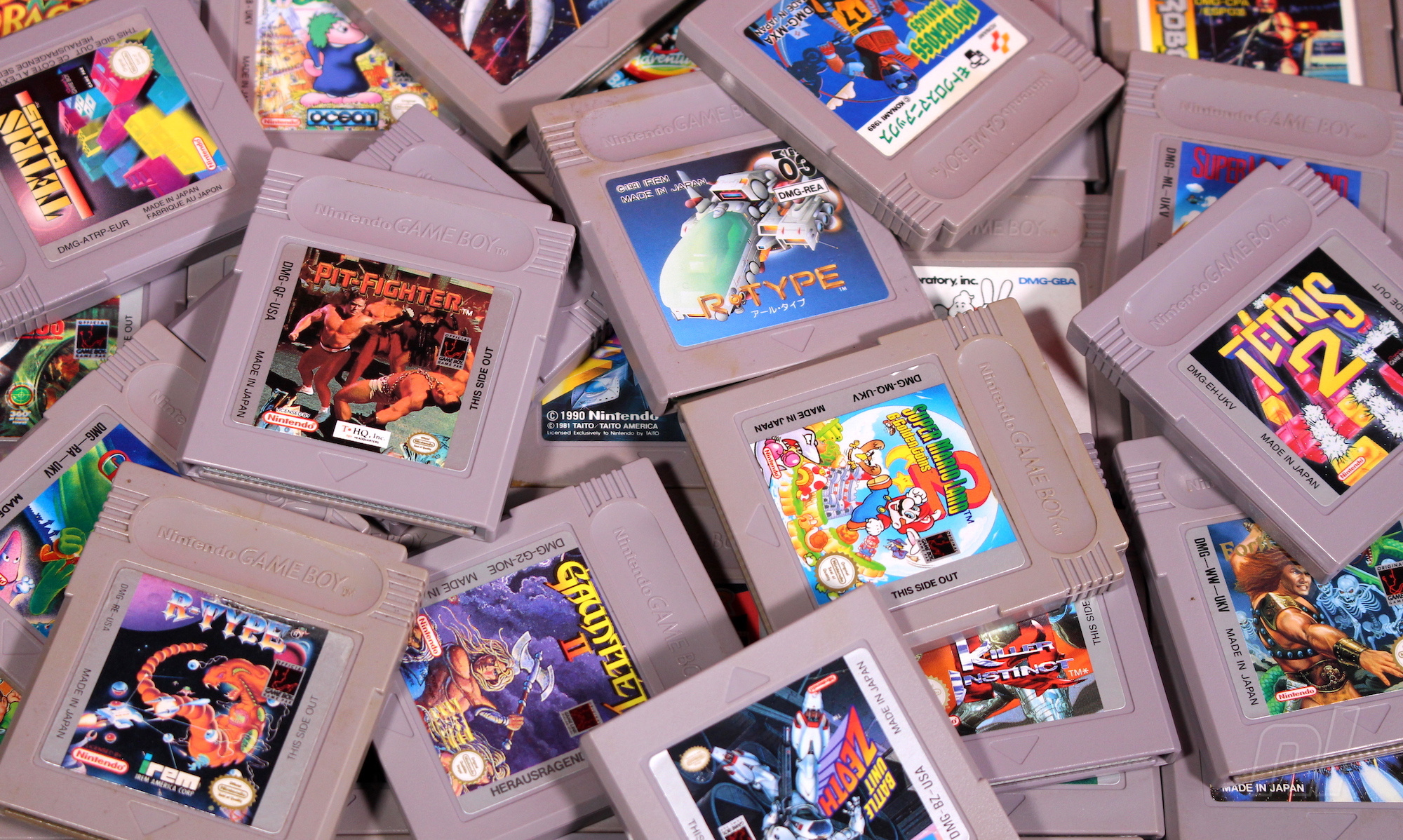
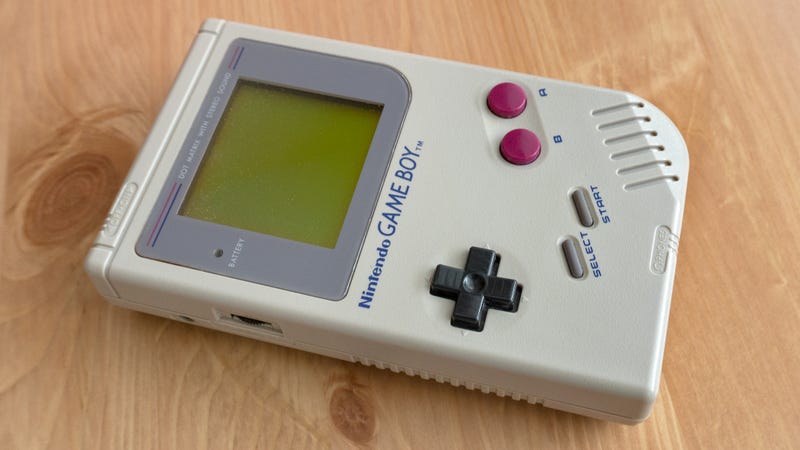
The Nintendo Game Boy turns 30 this Sunday, and to celebrate this amazing occasion we'll be running a series of related features this week, right up to the big day.
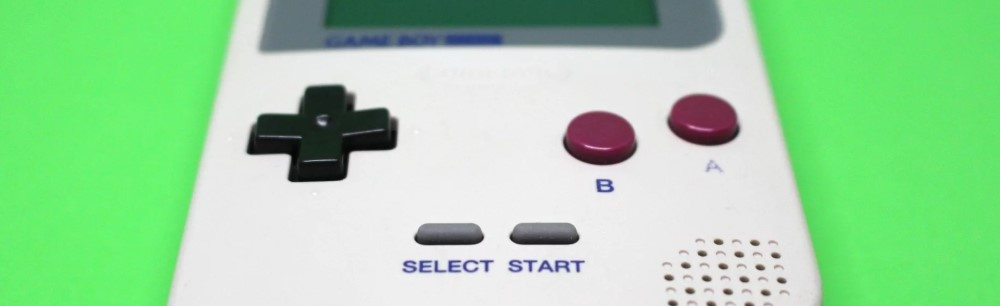
As the 30th anniversary of the Game Boy’s Japanese debut approached, we here at Nintendo Life Towers were thinking a lot about the ol’ DMG-01. The appeal of that chunky lump of grey plastic endures to this day, despite multiple hardware revisions and being superseded by umpteen portables. Yes, it’s bulky by modern standards, and these days you’ll find a better screen on your average set of bathroom scales, but the OG Game Boy remains a reassuringly solid and comfortable bit of kit in your hands.
A quick survey around the office reveals that a few staff members are too young to have owned the original version of the console, but thanks to the backwards compatibility of the Game Boy line (right up to the Micro variant of the Game Boy Advance), there’s nobody that doesn’t get a dose of the warm fuzzies at the mention of the classic system and its huge library of games.
We’ve already heard what developers thought of the all-conquering handheld and now it’s time to listen to us blather on for a paragraph or two about what makes the Game Boy so special. So, grab a fistful of double-As and saddle up for a nostalgia trip…
Ryan Craddock, staff writer
Sadly, I’ve never owned an original Game Boy, but the Game Boy Color (close enough, right?) was my very first gaming console. I vividly remember being painfully jealous of my next door neighbour who had a Game Boy with a copy of Pokémon Blue, and my little, six-year-old self would go round every day, play on it for as long as I could (without saving over his progress) and then do it all over again the next day.
Eventually, my mum treated me to my very own Game Boy Color (which had only been out for a year or two) and a copy of both Pokémon Red and Blue. I’m not exaggerating when I say that Pokémon took over my entire life as a kid – it was everything – and that love for the series, and later Nintendo, has led me right to where I am today on this very site.
Being so young meant that I couldn’t collect the sheer number of games I do for consoles these days, so I can’t declare myself as a ‘super fan’ of the system as such, but the Game Boy family of consoles kickstarted my love for a hobby which has always stayed with me and I can’t give them any better praise than that.
Dom Reseigh-Lincoln, reviewer
The Game Boy wasn't just a flashy toy to me. It was the start of a lifelong love of handheld gaming. And every game - even the bad ones - felt that bit more important because I could play them anywhere. It even got me into genres I might otherwise have never played. The cryptically named Soccer sent me football mad (including it's amazing soundtrack). The Legend of Zelda: Link's Awakening cemented the series into my being long before Ocarina of Time. And, of course, I spent endless hours playing WWF Superstars. My love of PSP, Vita and Switch all come back to that big yellow Game Boy that meant so much.
Gavin Lane, staff writer
It's only very recently that I tracked down an original Game Boy of my own - back in the day I briefly played on a red Game Boy Pocket (which has since been lost to time or, possibly, distant relatives) before upgrading to a beautiful turquoise Game Boy Color at the same time I swapped Pokémon Blue for the enhanced Yellow version. It was on that which I played my select library of original Game Boy games. The one that really stands out in my memory (besides the brilliant Super Mario Land 2: 6 Golden Coins, of course) is the simply named Tennis.
No, this game didn't have any 'Super' prefix or a new-fangled colon-subtitle to get you excited! Back in those days you could name your game after the sport it emulated and that was quite enough, thank-you-very-much; no bells, no whistles, just tennis. Even today I find the control you have over your shots impressive, and - blasphemous as it may be - it's not Tetris I turn to for a bite of retro-relaxation, it's Tennis.
Quiet, please.
Gonçalo Lopes, contributing writer
My experience with the original Game Boy is hard to compress in just a few short paragraphs but I am not one to shy away from the challenge. While I was a very happy Commodore Amiga owner at the time (1991), it was not the ideal digital entertainment platform in a world where my parents ruled the TV screen (never got a monitor for it, they were expensive).
I stumbled upon the first news of the Game Boy like pretty much everything else in a pre-internet connected world: through the magic of foreign press. A Game & Watch with interchangeable games and the innards of a souped-up ZX Spectrum with a 20+ hour battery life? You can keep your colour games, Game Gear and Lynx, I need something that could last me 300-kilometre bus trips and doctor appointment waiting rooms while still fitting in my pockets. Portugal was going into the transitional period of enforcing EU copyright laws (i.e. the end of over-the-counter piracy) and video game consoles were starting to at last show up in local toy stores. Sega nearly immediately took over the country with its usual flare and aggressive marketing, but Nintendo eventually began sneaking into toy stores and the Game Boy arrived fashionably late along with the outdated 8-bit NES.
As you might imagine, things on the playground weren't easy for Nintendo fans; games became extremely expensive overnight and none of us could afford more than one system and maybe a game every couple of months. Most of my friends turned to SEGA and they simply could not comprehend why I was so happy to return to 8-bit and a system with only 4 colours and no backlit screen. However, thanks to my monthly investment in foreign press I knew exactly what was happening in the US and Japan, with companies like Capcom and Konami releasing portable miracles every other month. Even better, local toy shops began sneaking in (thankfully region-free) Game Boy imports onto their inventory so it wasn't long before my humble collection grew outside of official European offerings.
I am still discovering nowadays new Game Boy games by exploring the Japan-only catalogue and I have played so many brilliant titles it is truly impossible for me to pick a single game as "the one". But like most wonderful journeys it all began with my first game and to most people's surprise it was neither Super Mario Land nor the packed-in Tetris (which I still replay often). It was a very humble first-party developed shmup called Solar Striker. I played it so much I reckon I still know every pattern and safe spot needed to defeat all end-of-level bosses. Further proof of my eccentricity, I never played or owned any Pokémon games; when those came out I was already knee-deep into Japanese Super Famicom imports.
Besides the undeniable staying power of the system, the beauty of the Game Boy remains that there is no 'right way' to enjoy its fantastic game library. There is something for everyone if you look beyond the obvious choices. Who knew that 30 years later it would find a whole new life as the weapon of choice among chiptune music artists? It was a luxury back then and obsolete or not, a luxury today and tomorrow; you simply can't put down this brick.
Alex Olney, video producer
My brother and I both got a Game Boy Pocket each one Christmas back in what must have been the mid-nineties, which considering our age was unthinkable, as we usually had to share everything. Both of them are still both going strong today, but mine was certainly put through its paces in its heyday.
One fine-ish day, I was feeling rather unwell and so stayed home from school so as not to infect all the other small humans. Naturally the shiny electronic brick was used whenever this happened, but this was before I properly understood how to take care of the things that I owned and didn’t want to be damaged. As I was given some cold medicine from my mum, I didn’t really want to pause the game, so I dried drinking it from the tiny plastic cup hands-free. What resulted was the sticky syrup slipping southwards and landing on my console’s D-pad. It soaked in beautifully, and not wanting to let my family know what a complete boob I’d been, I tried to hide it and clean it up as well as I could. Over the coming weeks the D-pad was getting stickier and stiffer all the time, making Alleyway even more unplayable than it was before.
I’d resigned myself to the fact that it was broken, and nothing was going to fix it short of some miracle my dad could perform with some power tools behind closed doors. After a few weeks in a drawer however, the sugary glue had completely hardened, and although it could still be seen through the clear body of the device, one quick press snapped its bonds in twain, and although slightly gritty, the system was working perfectly again. These little buggers are borderline invincible.
Liam Doolan, news writer
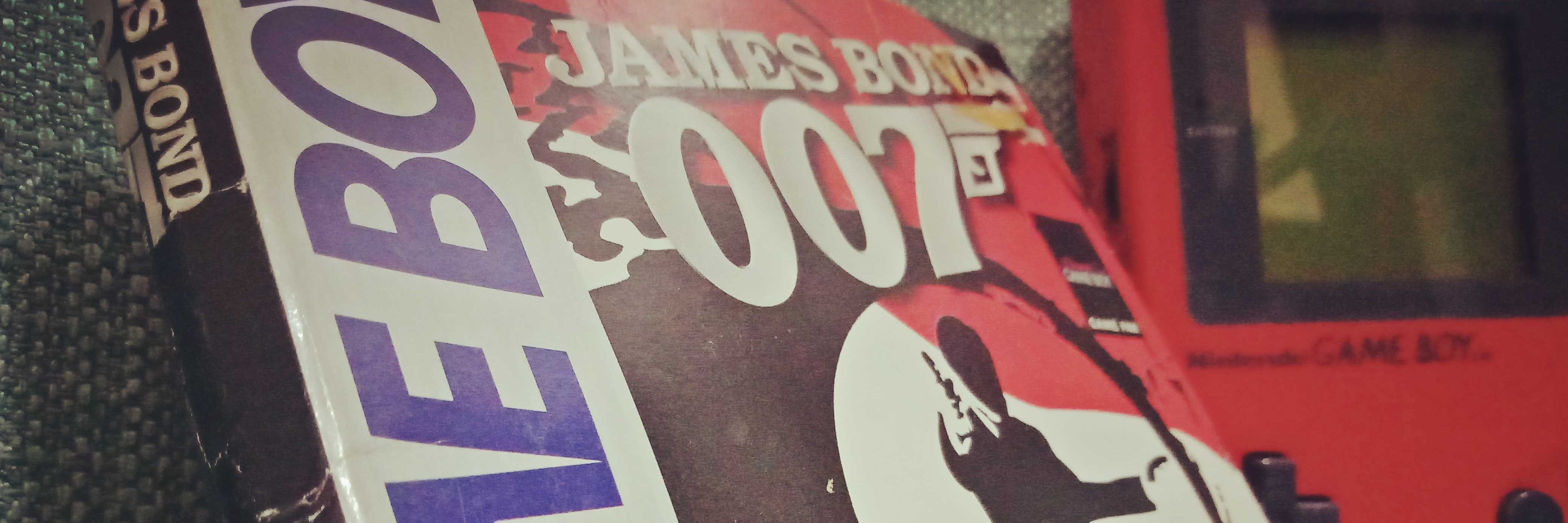
I played a wide variety of releases during the original Game Boy generation, but one game I’ll always cherish is the 1998 action-adventure title James Bond 007, created by the now-defunct developer, Saffire Entertainment.
While the Pokémon craze was growing in popularity here in the west, somehow I found myself playing this on the side, on a regular basis. Compared to various other Game Boy games at the time – such as Pokémon Red and Blue – the design of James Bond was a little rough around the edges. Long story short, I ended up getting stuck in a number of difficult segments throughout the game due to its design but managed to persevere.
I eventually saw the credits roll and to this day, it’s still one of my favourite Game Boy games – and memories – of all-time.
Austin Voigt, contributing writer
All these crisp emulator screen caps everywhere... THIS is what we saw in the old days!
My first experience with the Game Boy was in my next-door neighbor’s kitchen, and I remember it like it was yesterday. While my friend was my age, their parents allowed them to have a Game Boy, and mine did not (because they thought videogames were the devil’s work, apparently). I’d played the SNES copiously in my youth on my uncle’s system, but this was the first time I’d experienced handheld gaming that could just move anywhere with you - mind-boggling! We played Super Mario Land while listening to the Lion King soundtrack (yeah, it was quite a few years after the initial release - I’m a youngster), and I remembered thinking: “This is the future, people. Handheld gaming, music on CDs… what next?!” Ah, if only Little Austin could see what Nintendo’s doing now…
Darren Calvert, operations director
As I started my gaming life as something of a Sega kid with the Master System, like so many others my age in the UK, I have fond memories of the Game Boy as it introduced me to all the great Nintendo franchises long before I would go on to pick up a battered old Mattel NES for myself. While many of my cherished Game Boy memories were playing Vs Tetris against my best friend outdoors via the game link cable, I also remember being completely addicted to Super Mario Land at that time too.
A local video game store which we frequented used to have the latest issue of Famitsu on the counter for customers to browse and I remember how excited we were to see the first screenshots for Teenage Mutant Ninja Turtles: Fall of the Foot Clan which we promptly imported a whole year before it arrived officially in the UK. Gargoyle’s Quest was another fond import in 1990; we had no idea what was going on in the RPG section of the game, but it didn’t matter. We muddled through until we could get to the next slice of Firebrand platforming action.
The Game Boy was always with us wherever we went for many years, along with a stash of AA batteries of course. While the Sega Game Gear and the Atari Lynx did their best to challenge the humble Game Boy, nothing could beat its vast selection of games which were ideally suited to its small monochrome screen. 30 years later, many of these classic games are still great fun to dip into.
Those are just some of our memories, but that unassuming lump of grey plastic stokes the old nostalgia fires like Doc Brown's Presto logs - share your own memories in the comments below and let's all bask in the warm green glow of the (backlight-modded) DMG-01...
Welcome to Hitting the Books. With less than one in five Americans reading just for fun these days, we've done the hard work for you by scouring the internet for the most interesting, thought provoking books on science and technology we can find and delivering an easily digestible nugget of their stories.
Infinite Powers by Steven Strogatz
Calculus has provided humanity a window into the inner workings of the world around us since the fateful day Isaac Newton got conked by a falling apple. But we've only ever really applied these mathematical tools to our "hard" sciences, like physics or chemistry. Heck, we probably wouldn't have discovered Neptune if not for calculus. That's changed in recent years as the studies of between the discipline and big data, computer learning, AI, and quantum physics have increasingly overlapped.
In the excerpt from Infinite Powers: How Calculus Reveals the Secrets of the Universe below, author Steven Strogatz examines a novel application of calculus to the "soft" science of biology. Previously used to model how HIV spreads and overwhelms infected immune systems, calculus can now help researchers better understand the process by which nature manages to twist, fold and condense an entire double-helix strand of DNA into a package small enough to fit inside the nucleus of a cell.
Calculus has traditionally been applied in the "hard" sciences like physics, astronomy, and chemistry. But in recent decades, it has made inroads into biology and medicine, in fields like epidemiology, population biology, neuroscience, and medical imaging. We've seen examples of mathematical biology throughout our story, ranging from the use of calculus in predicting the outcome of facial surgery to the modeling of HIV as it battles the immune system. But all those examples were concerned with some aspect of the mystery of change, the most modern obsession of calculus. In contrast, the following example is drawn from the ancient mystery of curves, which was given new life by a puzzle about the three-dimensional path of DNA.
The puzzle had to do with how DNA, an enormously long molecule that contains all the genetic information needed to make a person, is packaged in cells. Every one of your ten trillion or so cells contains about two meters of DNA. If laid end to end, that DNA would reach to the sun and back dozens of times. Still, a skeptic might argue that this comparison is not as impressive as it sounds; it merely reflects how many cells each of us has. A more informative comparison is with the size of the cell's nucleus, the container that holds the DNA. The diameter of a typical nucleus is about five-millionths of a meter, and it is therefore four hundred thousand times smaller than the DNA that has to fit inside it. That compression factor is equivalent to stuffing twenty miles of string into a tennis ball.
On top of that, the DNA can't be stuffed into the nucleus haphazardly. It mustn't get tangled. The packaging has to be done in an orderly fashion so the DNA can be read by enzymes and translated into the proteins needed for the maintenance of the cell. Orderly packaging is also important so that the DNA can be copied neatly when the cell is about to divide.
Evolution solved the packaging problem with spools, the same solution we use when we need to store a long piece of thread. The DNA in cells is wound around molecular spools made of specialized proteins called histones. To achieve further compaction, the spools are linked end to end, like beads on a necklace, and then the necklace is coiled into ropelike fibers that are themselves coiled into chromosomes. These coils of coils of coils compact the DNA enough to fit it into the cramped quarters of the nucleus.
But spools were not nature's original solution to the packaging problem. The earliest creatures on Earth were single-celled organisms that lacked nuclei and chromosomes. They had no spools, just as today's bacteria and viruses don't. In such cases, the genetic material is compacted by a mechanism based on geometry and elasticity. Imagine pulling a rubber band tight and then twisting it from one end while holding it between your fingers. At first, each successive turn of the rubber band introduces a twist. The twists accumulate, and the rubber band remains straight until the accumulated torsion crosses a threshold. Then the rubber band suddenly buckles into the third dimension. It begins to coil on itself, as if writhing in pain. These contortions cause the rubber band to bunch up and compact itself. DNA does the same thing.
This phenomenon is known as supercoiling. It is prevalent in circular loops of DNA. Although we tend to picture DNA as a straight helix with free ends, in many circumstances it closes on itself to form a circle. When this happens, it's like taking off your belt, putting a few twists in it, and then buckling it closed again. After that the number of twists in the belt cannot change. It is locked in. If you try to twist the belt somewhere along its length without taking it off, counter-twists will form elsewhere to compensate. There is a conservation law at work here. The same thing happens when you store a garden hose by piling it on the floor with many coils stacked on top of each other. When you try to pull the hose out straight, it twists in your hands. Coils convert to twists. The conversion can also go in the other direction, from twists to coils, as when a rubber band writhes when twisted. The DNA of primitive organisms makes use of this writhing. Certain enzymes can cut DNA, twist it, and then close it back up. When the DNA relaxes its twists to lower its energy, the conservation law forces it to become more supercoiled and therefore more compact. The resulting path of the DNA molecule no longer lies in a plane. It writhes about in three dimensions.
In the early 1970s an American mathematician named Brock Fuller gave the first mathematical description of this three-dimensional contortion of DNA. He invented a quantity that he dubbed the writhing number of DNA. He derived formulas for it using integrals and derivatives and proved certain theorems about the writhing number that formalized the conservation law for twists and coils. The study of the geometry and topology of DNA has been a thriving industry ever since. Mathematicians have used knot theory and tangle calculus to elucidate the mechanisms of certain enzymes that can twist DNA or cut it or introduce knots and links into it. These enzymes alter the topology of DNA and hence are known as topoisomerases. They can break strands of DNA and reseal them, and they are essential for cells to divide and grow. They have proved to be effective targets for cancer-chemotherapy drugs. The mechanism of action is not completely clear, but it is thought that by blocking the action of topoisomerases, the drugs (known as topoisomerase inhibitors) can selectively damage the DNA of cancer cells, which causes them to commit cellular suicide. Good news for the patient, bad news for the tumor.
In the application of calculus to supercoiled DNA, the double helix is modeled as a continuous curve. As usual, calculus likes to work with continuous objects. In reality, DNA is a discrete collection of atoms. There's nothing truly continuous about it. But to a good approximation, it can be treated as if it were a continuous curve, like an ideal rubber band. The advantage of doing that is that the apparatus of elasticity theory and differential geometry, two spinoffs of calculus, can then be applied to calculate how DNA deforms when subjected to forces from proteins, from the environment, and from interactions with itself.
The larger point is that calculus is taking its usual creative license, treating discrete objects as if they were continuous to shed light on how they behave. The modeling is approximate but useful. Anyway, it's the only game in town. Without the assumption of continuity, the Infinity Principle cannot be deployed. And without the Infinity Principle, we have no calculus, no differential geometry, and no elasticity theory.
I expect in the future we will see many more examples of calculus and continuous mathematics being brought to bear on the inherently discrete players of biology: genes, cells, proteins, and the other actors in the biological drama. There is simply too much insight to be gained from the continuum approximation not to use it. Until we develop a new form of calculus that works as well for discrete systems as traditional calculus does for continuum ones, the Infinity Principle will continue to guide us in the mathematical modeling of living things.
Tomorrow, April 21, 2019, the Game Boy turns 30 years old. The handheld console that paved the way for the Switch is still beloved by almost anyone who’s ever laid hands on it, and for all its shortcomings, it’s still one of the most memorable gaming devices of all time. So why is there no sign of Nintendo releasing a Game Boy Classic Edition handheld?
Retro gaming is more popular than ever, and Nintendo is partly responsible for its resurgence. The NES and SNES Classic Edition consoles reminded players that despite being graphically limited, many 2D games still hold up quite well against modern 3D titles when it comes to gameplay, and straight up fun. The Classic Editions opened the floodgates for other retro consoles—some great, some awful—but Nintendo has yet to resurrect the Game Boy. And no matter how many times we ask, Nintendo isn’t giving us any info on a planned release for the future.
Advertisement
Nostalgic gamers can certainly get their Game Boy fix via other Nintendo systems. Many of the over 1,000 games that were ultimately released on the Game Boy platform can be downloaded and enjoyed on the 3DS or 2DS handhelds. Eventually, they might even show up for the Switch, and be playable through a TV in the way that the Super Game Boy adapter cart facilitated for the SNES. That would be neat, but as I’ve said before, I don’t actually find the Switch to be portable enough for my tastes—it rarely leaves the house.
So what do I want to see in a Game Boy Classic Edition? You can fit the entire Game Boy library on a cheap flash card these days, so for starters, I’d definitely like to see a healthy selection of games bundled. Here are 25 suggestions to get us going, but I’d have no complaints if Nintendo included even more. (Although I’d be equally content if it only included a copy of The Legend of Zelda: Link’s Awakening. But that might conflict with that game’s upcoming Switch remake.) And why not toss in a few bonus apps like an alarm clock, or even a Chiptune composer, for fun?
As for its size, a Game Boy Classic Edition would definitely need to be smaller and thinner than the original Game Boy—but not as tiny as the Game Boy Micro, which I adore, but find just a little too small for my hands. We’re all used to carrying a smartphone-sized device wherever we go now, so a handheld that falls somewhere between the iPhone 4 and Kevin Bates’ Arduboy would be ideal. If it has to be a little thicker to accommodate a beefy battery, I’m OK with that.
Advertisement
Physical button controls are a must. I’ve tried playing emulated Game Boy titles on a smartphone with touchscreen controls several times and it’s awful. As for the screen? The Game Boy was notorious for its lack of back or side light that made gaming at night, or even in poorly lit rooms, a big challenge. An LCD display would be fine, but it would have to emulate the Game Boy’s 2-bit grayscale color palette, as well as the original’s signature green tint. And throw in a little simulated ghosting and smearing for authenticity.
Perhaps the most surprising feature I’d want to be built right into the Game Boy Classic Edition is the Game Boy Camera, limited to snapping just 128×112 pixel images like the original was. You can still find people tinkering with that accessory, including Neil Young whose daughter snapped the cover art for his Silver & Gold album with one. Yes, my smartphone’s camera is infinitely superior in every way, but some of my best Game Boy memories come from that chunky lens hanging off the top. For a lot of us, that was our first taste of photography as kids, and definitely our first digital cameras.
Multi-player gaming I can take or leave. I know the Game Boy had a link cable, and playing Tetris against a friend made the game even more enjoyable. But part of what made the Game Boy so popular was that it gave you the opportunity to escape to your own little world wherever you were, be it an island in Hyrule, a land overrun with Koopas, or a gym where pocketable monsters could battle it out. And now more than ever, I need a quick place to escape to every once in a while, stashed away in my back pocket.
The Nintendo Game Boy turns 30 this Sunday, and to celebrate this amazing occasion we'll be running a series of related features this week, right up to the big day.
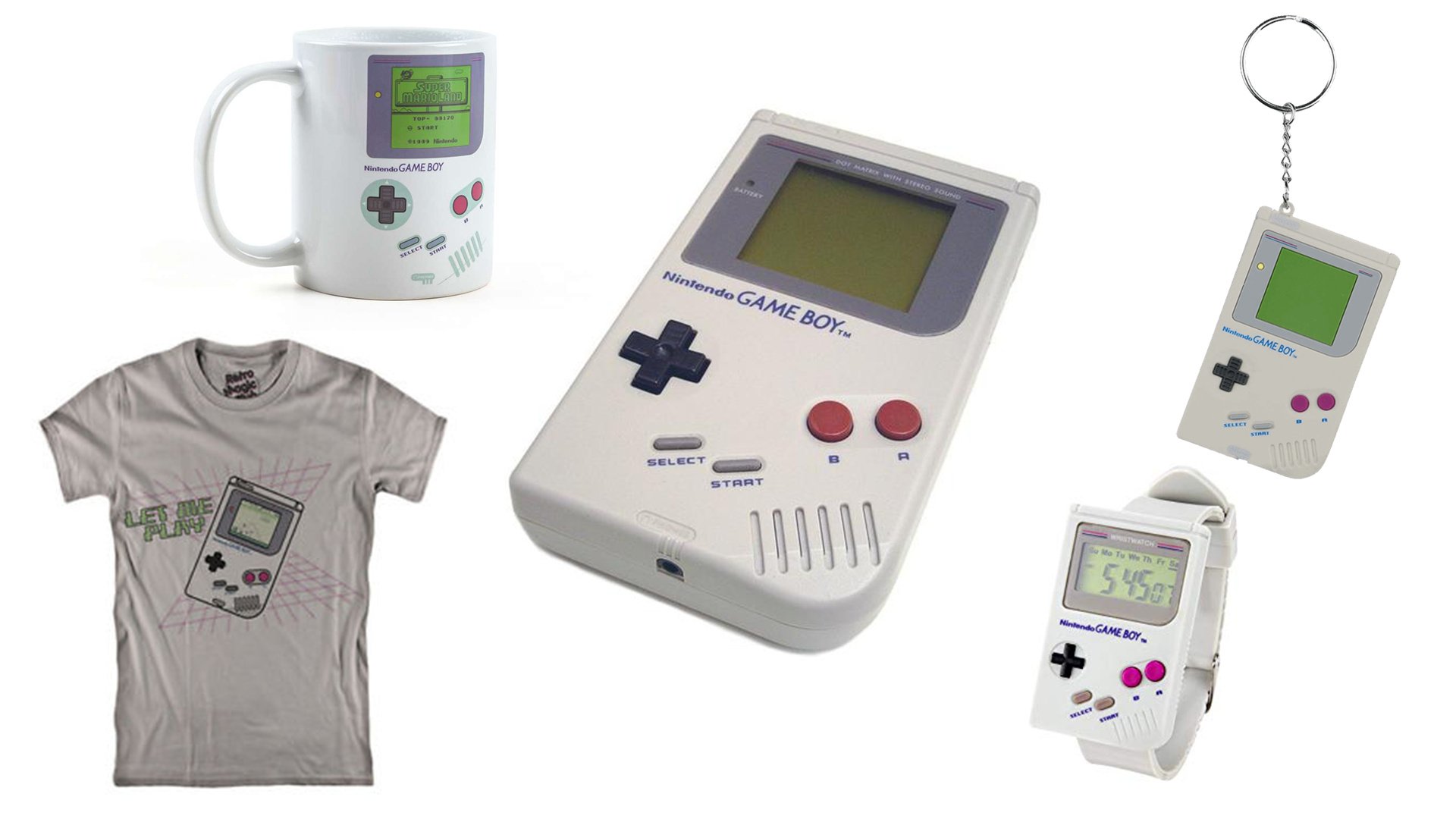
As the humble Game Boy's 30th anniversary approaches, Nintendo's classic handheld has never been cooler. If you want to make a statement about your love for all things Game Boy, then we have rounded up some of our favourite Game Boy related merchandise for your consideration.
Whether you are after a Game Boy themed t-shirt, keyring or alarm clock, fear not – we've got you covered.
Please note that some of the links on this page are affiliate links. If you click them and make a purchase we may receive a small percentage of the sale which helps support the site. Please read our FTC Disclosure for more information.
Used Game Boy Consoles
Of course, any self-respecting Game Boy fan needs an actual Game Boy console. Bonus points if you pick up an original DMG-01 model, but we won't judge you too harshly if you opt for a Game Boy Pocket to cut down on the cost of AA batteries.
Game Boy Clothing
Once you have a Game Boy console in hand, you just need some related clothing to go with it. A t-shirt, a hoodie, a baby romper suit. Anything will do.
Lots More Game Boy ideas
If you want something more subtle to show off your Game Boy love, we've got lots more ideas for you here.
Which Game Boy themed item from our list took your fancy?
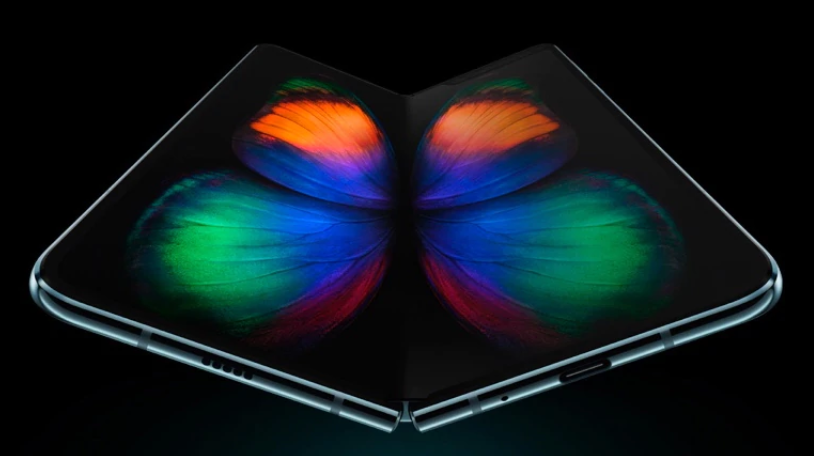
The Galaxy Fold may be far from perfect, but at least Samsung is trying to push the boundaries of what is possible. (Source: Samsung)
Samsung has been copping a lot of flak for the highly publicized issues that some of the Galaxy Fold review units it has in circulation. However, some of these critics fail to adequately credit Samsung for pushing the boundaries of what is possible. Note: The views expressed here represent the views of the author alone and don't necessarily reflect the views of Notebookcheck.
The internet has exploded over the apparent issues Samsung has been experiencing with the displays on a handful of Galaxy Fold review units. Undoubtedly, it is an embarrassing situation for the company to be in. After all, it is a marquee product and one that is meant to be a beacon of the technical expertise and innovation of which only Samsung is capable. Remember, however, it was only in 2017 that Apple launched one of the first “full screen” phones on the market with the iPhone X, but here we are in the first half of 2019 with the first foldable phone from Samsung. This is a major accomplishment that some have been quick to deride as being “not ready” or a “public beta test.”
From the moment it was unveiled some critics were quick to pounce, proclaiming that Samsung was making a foldable smartphone just because it could, not because it was solving any particular problem. Some of these sceptics quickly changed their tune when they got the review units in their hands and admitted that it seemed special and felt like it was the future. It turns out that the ability to be able to have a device that is small enough to be pocketable and can still be used one-handed that then folds out into a display similar in size to a iPad mini was indeed pretty darn cool to experience.
Then came the stunning news that just a day or two after reviewers got the Galaxy Fold in their hands several devices had their displays fail. At least a couple of these were authentic issues that Samsung has vowed to investigate, while at least a few more of these issues were caused by the reviewers themselves inadvertently peeling off a plastic protective layer that is supposed to remain in place to protect the display. It appears that some units had a warning label placed on the screen and some didn’t. Those that peeled it off ended up suffering from major display malfunctions as a result. In response, Samsung issued a public statement on the issues.
In response the Wall Street Journal has published an opinion [sub.req.] that is the journalistic equivalent of shock-jock radio titled “Samsung Galaxy Fold Non-Review: We Are Not Your Beta Testers”. Rather than accept the replacement Galaxy Fold offered by Samsung (after inadvertantly fiddling with the plastic protective layer), the columnist retorts “There is no point in me writing a straightforward review of a product that’s so clearly not ready...Are we beta-testing a prototype here?” The piece concludes with the remarks:
“And if companies are going to ship products with known weaknesses, they shouldn’t just hope we read a user manual – and don’t accidentally peel off some damn plastic.”
The plastic layer that layer referred to is undoubtedly a design compromise. It is isn’t especially well integrated into the display, but it is there because the folding Super AMOLED panel is made from a plastic (not glass) substrate. This means the screen is prone to picking up small dings and indentations as well as scratching under normal use. It is for this reason that Samsung opted for a design that folds inwards, not outwards. However, technology companies have been making design compromises of one sort or another for ages. The question is, as a customer, whether you are prepared to go along with the trade-off. In this case, if you don’t, you simply won’t have a foldable smartphone of the future here right now.
Samsung deserves credit for trying to challenge the smartphone status quo with bleeding-edge technology and to suggest that it is shipping a “prototype” is a little beyond the pale. The company would not be proceeding with the launch if it had concerns about the durability of the display. After all, it has revealed that it has tested that the display can withstand 200,000 folds. It has also made it abundantly clear that the Galaxy Fold is not for everyone and is targeted at tech early adopters. As it is only selling the Galaxy Fold in limited quantities (already sold out), it has justifiably had to inflate the price close to US$2,000 to help offset what would have been a massive investment. However, that price also includes a set of Galaxy Buds that normally retail for US$129 a custom case and Samsung Care that covers users for accidental damage as well as protection from display malfunctions, should they arise.
Whatever you want to say, positive or negative, the Samsung Galaxy Fold is a game changer. The technology will improve over time and the price will eventually come down. As a tech lover, I want to see new technology like this succeed, not fail. Of course, this is not true of the Apple fanboys rushing to condemn Samsung on the blogosphere. They argue that this is a perfect example of why Apple is never quick to adopt new technology. Apple, the argument goes, always arrives late with tech, but when it does, it delivers the best product on the market. The most recent all-new Apple product to launch was the HomePod. It arrived late, but is the worst smart speaker on the market from an AI, voice recognition perspective in my view. Compared to Samsung, Apple has become boring and predictable. The Fold may well be flawed, but it is undoubtedly the future of smartphones and it is here now, thanks to Samsung.
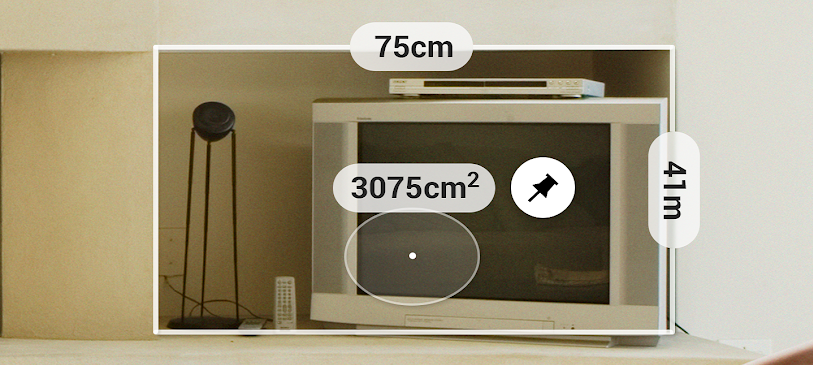
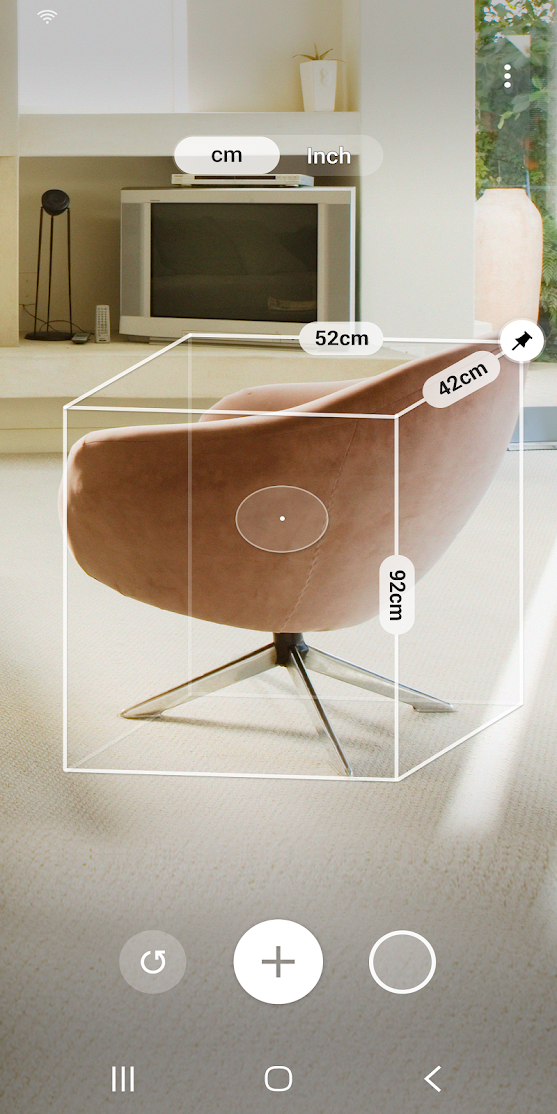
Augmented Reality can serve many purposes: It can help you find your way easily or immerse yourself in Harry Potter's world. Another use for AR is to measure objects around you by simply pointing your phone at them. Google has already developed an AR-based ruler app, which needs to detect flat surfaces to estimate their size. While the concept is appealing, the software is approximate and often fails to identify objects you want to measure. As usual, Samsung wanted to build its own application, which seems to be more accurate than Google's. This makes sense, though, as the Korean company's app uses a time of flight sensor for its calculations. The only drawback here is that out of all current Samsung phones, only the Galaxy S10 5G has a such a sensor, making the app exclusive to the device, at least for the time being.
In addition to calculating the size of an object, Samsung Measure can also estimate its area, length, depth, and distance from you, which makes it far more capable than Google's software. The app can automatically detect objects and provide their measurements when you aim at them, but also lets you manually draw lines between two points to calculate the distance between them. Lastly, you can quickly switch between centimeters and inches with a toggle, sparing you the trouble of converting units.
While I saw Google's app as a gimmick due to its lack of precision, Samsung Measure appears to be more precise. I'm not sure I would fully trust it if I were redecorating, but its measurements should be fairly accurate thanks to its ToF depth sensor. Unfortunately, since only the Galaxy S10 5G has such a sensor, we haven't been able to try it ourselves, but it's a pity Samsung is not allowing other devices to run the app, albeit with less precise calculations.