Selasa, 16 April 2019

More Avengers AR Playmojis arrive just in time for the Endgame [APK Download] - Android Police

The highly anticipated grand finale of Marvel's Avengers series is just around the corner with its US release on April 26, and the hype train is fully deployed. Google has jumped right on it and published new Playmoji characters to hop around in your Pixel camera's viewfinder: War Machine, Thor, Black Widow, Rocket, and Captain Marvel.

These heroes join the existing team of Avengers in Playground's Marvel Endgame pack, available in the Play Store and on APK Mirror. You can place them in your surrounding area like any other Playmoji in your Pixel's camera: Tap "More" there and then "Playground." The characters can be resized and rotated, and will make some signature moves and sounds. For example, Rocket likes to laugh and point at people around him.

We've covered the revamped AR Stickers in depth before when they were rebranded to Playground back in October 2018. Back then, the first round of Avengers was introduced along with some quirky Google-made Playmojis, stickers, and the option to add custom text. Today's addition shows Google's continued commitment to the platform, although it would be interesting to see more movies or fandoms besides Marvel's Avengers here.

Playground: Marvel Studios' Avengers: Endgame
Price: Free
Playground (was AR Stickers)
Price: Free

Let's block ads! (Why?)


https://www.androidpolice.com/2019/04/16/more-avengers-ar-playmojis-arrive-just-in-time-for-the-endgame-apk-download/

2019-04-16 11:55:00Z
CAIiEKCAq__v35QdUK_ShJl3Y2sqFggEKg4IACoGCAowu5gUMNLMAjCOyQQ

Nintendo Switch update adds individual game save transfers - Engadget

Engadget

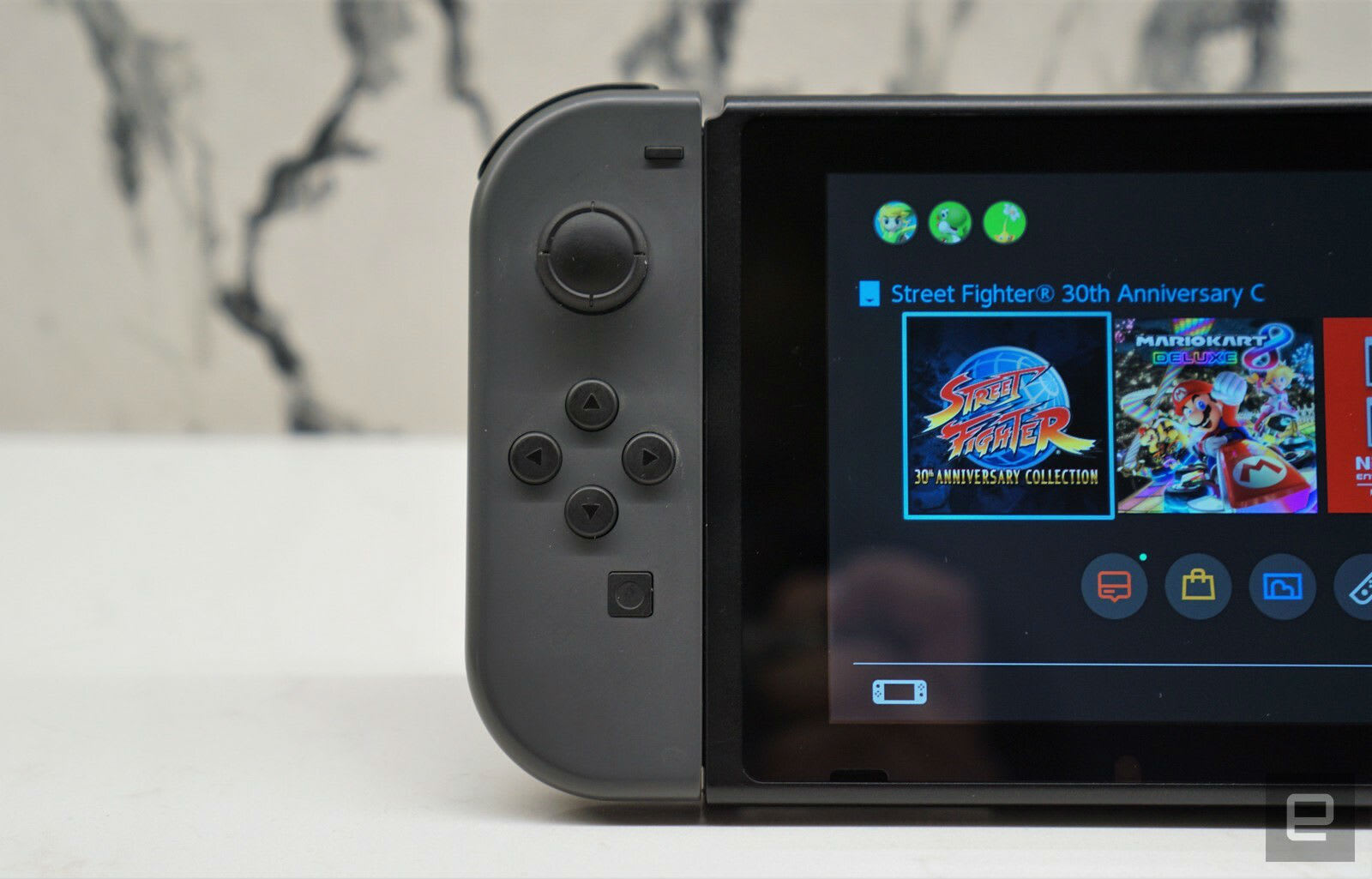
The latest Nintendo Switch update lets you transfer individual game saves between systems. Until now, you only had the option to move all your user and save data between Switch consoles (introduced in update version 4.0.0 in October 2017). But that's useless for console-sharers who didn't bother to create separate profiles.

It also means you can take that Super Mario Odyssey game save with you if you end up buying the new Switch models Nintendo is rumored to be releasing later this year. That's if you think a beefed-up Switch is worth the upgrade, or if you want the cheaper, more portable model (maybe for the kids?). Bear in mind, however, that transferring a game save to a new Switch will wipe it from the source system.

The update, version 8.0.0, also packs 15 new user icons (from Splatoon 2 and Yoshi's Crafted World), the ability to set your region to Hong Kong, Taiwan or South Korea, more ways to sort software (by time last played, total play time, software title, and software publisher), a zoom feature, and restrictions for VR Mode within parental controls. Switch owners should get the update automatically, but you can manually start it via the system settings if not.

Let's block ads! (Why?)


https://www.engadget.com/2019/04/16/switch-update-transfer-game-saves/

2019-04-16 11:20:42Z
52780269747796

More Avengers AR Playmojis arrive just in time for the Endgame [APK Download] - Android Police

The highly anticipated grand finale of Marvel's Avengers series is just around the corner with its US release on April 26, and the hype train is fully deployed. Google has jumped right on it and published new Playmoji characters to hop around in your Pixel camera's viewfinder: War Machine, Thor, Black Widow, Rocket, and Captain Marvel.

These heroes join the existing team of Avengers in Playground's Marvel Endgame pack, available in the Play Store and on APK Mirror. You can place them in your surrounding area like any other Playmoji in your Pixel's camera: Tap "More" there and then "Playground." The characters can be resized and rotated, and will make some signature moves and sounds. For example, Rocket likes to laugh and point at people around him.

We've covered the revamped AR Stickers in depth before when they were rebranded to Playground back in October 2018. Back then, the first round of Avengers was introduced along with some quirky Google-made Playmojis, stickers, and the option to add custom text. Today's addition shows Google's continued commitment to the platform, although it would be interesting to see more movies or fandoms besides Marvel's Avengers here.

Playground: Marvel Studios' Avengers: Endgame
Price: Free
Playground (was AR Stickers)
Price: Free

Let's block ads! (Why?)


https://www.androidpolice.com/2019/04/16/more-avengers-ar-playmojis-arrive-just-in-time-for-the-endgame-apk-download/

2019-04-16 11:09:00Z
52780268894314

Do You Run and Listen to Spotify? This Is the Smartwatch You Should Buy - Gear Patrol

The Samsung Galaxy Watch Active ($200+) is a smaller, lighter, less expensive and more fitness-focused (hence the “active”) version of the company’s smartwatch from last year, the Galaxy Watch ($300+). It’s designed to work best with any of the latest Samsung and Android smartphones, like the new Galaxy S10, and its ecosystem of apps, but you can still use it with an iPhone — which is what I did. I tested the smartwatch for three weeks to see if it could keep up with my lifestyle.

The Galaxy Watch Active was able to track my workouts, walking minutes and stressed out minutes. Samsung is one of a few smartwatch makers with a partnership with Spotify, so, as a Spotify premium subscriber, I could save running playlists directly on the smartwatch and listen to them without an LTE connection or my smartphone nearby. (Right now, only select Garmin and Samsung support Spotify offline listening.) Between that and the new integration with the Calm app, Samsung is throwing elbows to try and be the leader in health-minded smartwatches. And, for the most part, it’s working.

The Good: The Galaxy Watch Active is a lightweight and minimalist smartwatch that I slipped on my wrist a few weeks ago and it hasn’t come off since. It’s comfortable and sweat-resistant. The rose gold face is chic and simple. This minimalism spreads to the software as well. If you workout, there are 15 preloaded workouts like walking, stretching, cycling, running, plus more specific exercises like arm curls, back extensions, jumping jack, lat pulldowns and more. It has pretty good battery life compared to other smartwatches, including the Apple Watch Series 4. Spotify offline listening is a big reason for anybody, Samsung smartphone owner or not, to get this smartwatch. If you have a smartphone running on Android Pie OS, you’re able to try Calm, a meditation app/experience through the Samsung Health app, and then control those meditation sessions on their smartwatch.

Who It’s For: Anybody with a recent Samsung smartphone will get the most out of the Galaxy Watch Active, and that simply comes down to compatibility and knowhow; if you’re not used to Samsung’s apps and interphase, there’s a learning curve. Runners, walkers and gym-goers who like to workout without their phones will find the Spotify integration helpful. You can save your favorite tunes (up to 4 GB) and this makes logging miles or working out without a phone possible. If you hate charging your watch nightly, this one claims to last for up to 90 hours. Depending on how many activities I logged, I found the battery survived for a day and a half typically, which made it possible for me to plug it in during the day when I’m at work or home.

If you’re a Spotify Premium subscriber, you can download Spotify playlists onto the Galaxy Watch Active and listen to them offline.

Watch Out For: If you’re in Samsung’s ecosystem, figuring out the interface will be a smooth process. If you’re a lifelong iPhone owner, like me, it will likely take a few days to get used to the Samsung Galaxy Watch Active. The Spotify integration isn’t as seamless as I would have liked; in order to download playlists, you have to connect to Wi-Fi, find your playlists within the Spotify app, then find the ‘Download’ button, and even though that sounds like it’d be straightforward, it just wasn’t. Connecting my AirPods to smartwatch wasn’t an issue, but after using them with the Galaxy Watch Active, I had some trouble getting them repaired to my iPhone. When listening to music during workouts, be sure to start the music and set the volume before you go; the smartwatch doesn’t have a bezel or crown dial, so it was pretty difficult to raise or lower the volume.

Alternatives: Last year’s model, the Galaxy Watch ($300), is still available with many of the same features, albeit 6mm larger, which takes up a bulk of your wrist. The older models from Samsung’s line that are still available and also work with Spotify include the Gear Fit2 Pro ($200) and the Gear Sport ($280). Garmin makes some of the only other watches that allow you to download Spotify music to your tracker — the Vivoactive 3 Music ($280) is heavier and slightly bigger than the Galaxy. Outside of that, Fitbit’s Versa Lite ($160) is this small, with a rectangular face and has many of the same features — steps, calories, sleep tracking, 24/7 heart rate, waterproof and four-day battery life, but no music storage. An Apple Watch Series 4 ($399+), is a still the best smartwatch for anybody with an iPhone and lives in Apple’s ecosystem.

Review: I’m someone who brings their smartphone on every run. I tend to stuff it in my leggings or have to take off the case to get it to fit in a pair of shorts. I hate feeling it jostle around, admittedly. The thing is that the Spotify integration (for offline listening) is not available on the Apple Watch, so I have to bring my phone with me. With the Galaxy Watch Active, I didn’t have to do this. It was pretty liberating.

Setting up Spotify was a bit frustrating, admittedly, but once I was able to connect to Wi-Fi and downloaded my running playlist, I easily synced the watch to my AirPods and went out for my normal run. The first time I using Spotify offline on this watch, it was a bit finicky, too — the song kept cutting out for the first five minutes, but the longer I used it, the more seamless the music sounded.

The smartwatch proved to be a pretty reliable fitness tracker, and it was a seamless experience from a GPS standpoint. Whether I was logging three miles, ten miles or a track workout, the one button on and off switch was a breeze to tap. While the option was there never to use my phone, I typically carried it with me to check distance via the Nike Running app. On the few occasions that I forgot to log my runs, the app automatically recognized that I was on a run and recorded it anyway.

The big push around Samsung’s new watch is that it features an in-app connection with Calm, the best selling meditation app. You can select Calm’s watch face and it tells you to breathe, where you press on the watch face, hit start and then follow the nudges to breathe in and out. At the end of the six breaths, the watch will let you know if you’re still stressed and if you should sit still for a few more breaths. Over the three weeks, I pretty much always received the ‘you’re pretty stressed’ message and the option to keep breathing. On occasion, I’d see a graph of my stress (on a colored line that goes from blue to orange) and an arrow that points to where my heart rate was before the exercise and after.

The watch face of Samsung’s mediation app looks very similar to the Breath feature on the Apple Watch.

The last thing to hit on is this smartwatch’s sleep tracking ability, which, unfortunately, is where I had the most difficulty. Unlike any Apple Watch, the Galaxy Watch Active’s extended battery life and sleep tracking features encourage you to wear it to bed. To compare against, I had the Withings Sleep Tracking Mat ($100) that lies flat under my mattress to log sleep. When I looked at my sleep data and compared the data from the two devices, frankly, I was disappointed with what I got from the smartwatch. Of the five nights that I wore the Galaxy Watch Active to bed, I only got data for two nights. When researching this issue, I found that many others had experienced something similar. The solution is to make sure you activate ‘Goodnight mode’ before you go to bed, but this starts tracking your sleep right when you initiate the mode and won’t stop until turn it off. Basically, it’s not as automatic as I would’ve liked.

Verdict: If you’re active and have a Samsung or Android smartphone, this is a terrific little smartwatch. It’s also excellent for any Spotify premium subscriber looking for an active smartwatch. It always you to run or workout completely phone-free, undisturbed from calls, texts and Instagram notifications, and that’s a beautiful thing. While Samsung misses the mark on sleep tracking, and the Calm feature won’t feel game-changing for most, the most clutch feature might be the price. At $200, it’s half what the Apple Watch Series 4 is going for.

What Others Are Saying:

• “It’s competent as a running watch, too. During testing, it automatically detected and tracked my runs (it was hit or miss automatically detecting my bike rides, if that matters to you). You can also start a run manually, and although there are only two buttons, the touch screen works well enough with sweaty hands. It wouldn’t be my pick for intervals, as there’s no “lap” feature and the running-specific data fields can disappear and require some touch screen navigation to retrieve, but the auto-pause feature makes the watch perfectly convenient for regular stop-and-go efforts. ” — Dan Roe, Runner’s World

• “The 40mm aluminum case is light. It doesn’t look small on large wrists, or large on small wrists. It’s also easy to forget this watch is sitting on your wrist, which makes sleeping with it quite comfortable (it can track your sleep). It’s thin and will never really get caught on shirt cuffs. The 20mm straps are interchangeable, and the default silicone strap, which feels quite nice, comes with two sizes in the box.” — Julian Chokkattu, Digital Trends

• “Samsung’s Galaxy Watch Active isn’t trying to top the Galaxy Watch, and that’s a good thing, as it probably won’t do so. Not much stands out on the wearable, but it does feature a high-end design, a large display and some new exciting health features. Perhaps the best news, though, is that it comes at a much lower price.” — James Peckham, Techradar

Key Specs
Size: 40mm
OS: Tizen 4.0
Sensors: accelerometer, barometer, gyro sensor, HR sensor, light sensor
Battery: Up to 90 hours
Connectivity: Bluetooth v4.2
Weight: 25g
Compatibility: Android and iOS
Water Resistant: 5ATM and IP68

Samsung provided this product for review.

Read More Gear Patrol Reviews

Hot takes and in-depth reviews on noteworthy, relevant and interesting products. Read the Story
Note: Purchasing products through our links may earn us a portion of the sale, which supports our editorial team’s mission. Learn more here.

Let's block ads! (Why?)


https://gearpatrol.com/2019/04/16/samsung-galaxy-watch-active-smartwatch-review/

2019-04-16 07:45:49Z
52780268443770

Logitech's Harmony Express is a sleek Alexa-powered universal remote - Engadget

Logitech's popular Harmony universal remotes have long been the go-to solution for tech-savvy nerds who want to replace the bounty of ugly rectangles littering their coffee tables with a single, all-powerful option. But universal remotes are still pretty complex on their own, with dozens of buttons and, in some cases, LCD screens. You're basically swapping several remotes for something that looks like it belongs in one of NASA's Mission Control Centers. Now, there's something simpler: the Harmony Express, a compact universal remote that replaces a slew of buttons with Amazon Alexa voice controls.

Logitech Harmony Express

The $249 Express isn't meant to replace the Harmony Elite, which Logitech released back in 2015 and is still one of the best high-end universal remotes around. Instead, the company is aiming for consumers who want to reduce the clutter in their living rooms, but don't want to deal with another complex controller. And of course, it's also significantly more modern since it supports Alexa voice commands (the Elite doesn't even have a microphone). All you need to do is hit the voice button on the remote and say "Play Netflix," and your TV and home theater equipment will start up, head to the right inputs and launch the app.

Like the previous Harmony devices, the Express relies on an infra-red blaster base that sits underneath your TV and spits out control signals to nearby devices. There's also a smaller IR blaster that can sit elsewhere in your home theater to reach gadgets on other shelves. A companion app guides you through the setup process, which involves plugging in your TV and AV receiver models, and confirming other devices in your setup. It automatically detected the Apple TV 4K, PlayStation 4 Pro, Xbox One X, and Denon receiver in my living room, but I had to manually add my Nintendo Switch through a drop down menu.

Logitech Harmony Express

After that, I used the app to place my receiver under the right TV HDMI input, and then dragged the rest of my devices under my receiver's HDMI connections. The entire setup process took around 10 minutes, but it was relatively painless. After connecting the Harmony Express to my Alexa account, I held down the voice button on the remote, said "Turn on Xbox," and my TV and receiver automatically switched to their appropriate inputs. Saying "Play Hulu" switched everything over to my Apple TV 4K and automatically launched the streaming service app.

At first, the Harmony Express felt like everything I'd ever wanted in a modern universal remote, my entire entertainment system at my beck and call. But it wasn't too long before I noticed limitations: It can only launch apps, it can't play a specific movie or TV show. And it's not compatible with any of the Apple TV or Roku's voice commands, which means it can't take advantage of either boxes' voice search. Basically, you'll still need to keep your Apple and Roku remotes around. Logitech says it's working on getting deeper integration with those platforms, but it's unclear when, or if, that will happen.

As a standard remote, the Harmony Express feels comfortable to hold, with a rounded bottom half and smooth plastic finish. It's thicker and chunkier than the Apple TV remote, which means you're less likely to lose it in the couch, but it's also slimmer than Roku's bulbous controller. A circular ring on the top serves as your directional pad, while the center holds your standard "OK" button. Hold that down, and blue LEDs light up, telling you it's ready for voice commands.

The remote has only nine other buttons -- a breath of fresh air when compared to Logitech's previous controllers. On top of the expected volume and playback controls, there are back, home and menu buttons. A few also do double duty, a long press on the mute button turns off everything, while holding down Menu opens up options on some devices. There's a speaker on the back for Alexa's responses, which can get surprisingly loud (you control its volume through the app). Finally, a micro-USB port on the bottom lets you recharge the remote.

The Harmony Express is a serviceable remote for navigating the Apple TV's menus, my LG TV's options, or the Xbox One X's interface. But since it's relying on IR to control everything, there's a slight delay between hitting a button on the remote and the on-screen response. Apple and Roku's remotes are wirelessly connected to their set-top boxes directly, so they'll always be faster. Simply put, the main reason you'd want a Harmony Express is for simple voice controls.

Gallery: Logitech Harmony Express press images | 5 Photos

That being said, it's also a tempting option for anyone already relying on Alexa. The Express has all of the power of Amazon's virtual assistant behind it, so you can just as easily control the smart devices in your home as you can change streaming apps. The Alexa integration also works in reverse -- you can shout the same commands to an Echo in your home to control your TV setup. But it's worth noting that's something the Harmony Elite can already do with its Alexa skills, even though it doesn't have a microphone of its own.

I'll need to spend more time with the Harmony Express before I can fully judge it, but for now it seems lie an intriguing step forward for Logitech. Unfortunately, it's held back by limited integration with Apple and Roku's set-top boxes, something we might never end up seeing. At this point, the Harmony Express seems best suited for Amazon Alexa addicts who've dreamed of controlling TVs with their voices.

Let's block ads! (Why?)


https://www.engadget.com/2019/04/16/logitech-harmony-express-alexa-universal-remote/

2019-04-16 07:01:50Z
52780269897128

Samsung Galaxy Fold hands-on: Bridging the gap between tablet and phone - Android Central

Let's block ads! (Why?)


https://www.youtube.com/watch?v=Fd3zECAG-F4

2019-04-16 05:12:28Z
52780268443770

Logitech’s new $250 Harmony Express remote puts Alexa in control - The Verge

Logitech just announced a new remote control that shakes up what consumers have come to expect from the company’s Harmony lineup. The $249.99 Harmony Express, which starts shipping today, has a revamped, tiny design that gets rid of the touchscreen and many buttons of other Harmony remotes. Instead, Logitech is betting everything on Amazon’s Alexa voice assistant.

Alexa is built right into the remote itself; yes, there’s a microphone in there, along with a speaker so you can hear Alexa’s responses. If Logitech’s other Harmony remotes are aimed at the home theater enthusiast crowd, the Express is meant for casual consumers who want to walk into their living room, turn on the TV, and get to Netflix with voice commands. That sounds great in theory, but my time with the Express so far shows that Alexa might not yet be ready to handle all that responsibility.

Also, why in the world is this thing $250? Plenty of TVs and streaming platforms like Roku and Fire TV already support Alexa. Is Logitech’s ability to control a vast number of living room devices worth such a premium? Voice search is a nice bonus to have on remotes, but making voice the central user experience is taking quite a leap.

For the launch of the Harmony Express, Logitech is starting fresh. The company created an all-new companion app that offers an extremely simple setup process and streamlined interactions thereafter. For now, that app only works with the Express. This remote isn’t compatible with Logitech’s older Harmony app, nor is its hub cross-compatible with older remotes. It charges over Micro USB, but you’ll rarely have to worry about a dead remote battery.

To get started, you power all of your devices on, and then the app scans for them. It successfully recognized my TCL Roku TV and Xbox One; I had to add my PS4 and Vizio soundbar manually. Then, you drag and drop each device onto its respective HDMI port so that the Express knows where to find everything. After this comes the Alexa setup, where you’ll need to link the Harmony Express to your Amazon account.

Once everything’s done, you can say something like “go to Netflix,” and your TV will switch on and load up the app. You can open any number of streaming apps, but can’t tell Alexa to play a specific show. So you’ll find yourself using the circular navigation pad often to actually start watching something. The Express can also tune to specific channels (by channel number or name) on many cable boxes or, in my case, through the antenna plugged into my Roku TV. You can do basically any command your device supports — but it requires talking to the remote instead of tapping a touchscreen or shortcut button as you would on another Harmony.

The remote itself feels nice. I found that my thumb rested naturally on the OK / voice button. It weighs barely anything, and there’s a matte soft-touch finish on the back for added grip. Alexa’s voice comes through the speaker clearly, as well.

And of course, you can always just ask the Express general Alexa questions about things like the weather or sports scores. Logitech designed its Alexa integration to be press-and-hold-to-talk, so it’s not like the remote will constantly be listening for “Alexa” like an Echo speaker might. You can adjust the volume of Alexa’s responses, but the voice can’t be fully turned off.

Logitech includes a hub / IR blaster in the box, which is what connects to Logitech’s server and pulls in all the commands for each of your devices. Once you’ve set up the Express, those smarts extend to your Echo speakers, so you can similarly tell those devices to turn on your TV, for example. Your TV or game console might already support Alexa individually — my TCL TV and Xbox One do (no IR blaster required) — but there’s definitely a convenience in chaining everything together.

However, there’s also opportunity for crossed streams and conflict among Alexa skills. If both your TV and the Harmony Express understand “go to Netflix” as a command, which one wins and actually performs the request? How does Alexa know to use the Logitech Express instead of just controlling your Xbox One with Microsoft’s own skill? Logitech admits this is an area where consumers might get inconsistent results from time to time, and it’s something Amazon also needs to have a hand in solving. If you prefer just using the remote like a remote, the physical buttons on the Express will control whatever app or device you’re using at that time, and they’re all backlit. You can also customize each button to do a different device command with either a short press or long press, which is useful since there aren’t many of them.

I haven’t spent enough time with the Harmony Express to offer a review just yet, but I’m very confused about who this product is for. At $250, wouldn’t home theater power users prefer the customizability and more advanced automation capabilities of the Harmony Elite? Alexa isn’t yet quite reliable enough for that crowd, and having to constantly talk to a remote control can get pretty annoying.

Likewise, I don’t see many casual consumers handing over that much money just for some added Alexa convenience in their lives. For $100? Sure, you could make a much better argument to give the Express a shot. But I don’t think Alexa has evolved enough in the living room for Logitech to be asking this much. As it stands, the Harmony Express isn’t replacing any member of the Harmony lineup. The Harmony Elite still remains the flagship, and there are cheaper options if you prefer a more traditional universal remote.

Let's block ads! (Why?)


https://www.theverge.com/2019/4/16/18311894/logitech-express-alexa-remote-control-announced-features-pricing

2019-04-16 07:01:00Z
52780269897128