Jumat, 12 April 2019

Apple now asks you to confirm App Store subscriptions - Engadget

SIPA USA/PA Images

It's a bit too easy to accidentally pay for a subscription through the Apple App Store if you use TouchID -- all it takes is a misplaced finger on the home screen. Now, the tech giant is finally addressing the issue by adding an extra step to the process. When you hit the subscribe button and authenticate with TouchID or FaceID, you'll now see a pop-up notice asking you to confirm your subscription or to cancel the process if you change your mind. "The subscription will continue unless canceled in Settings at least one day before a subscription period ends," it reads.

App developer David Barnard first noticed the change, and 9to5Mac has confirmed that it's already live. The feature apparently started rolling out last week.

Apple has been refining the App Store subscription process over the past months to keep unscrupulous developers out. In January, the company started banning apps that hide real subscription fees in tiny print to trick you into agreeing to higher amounts than what you're willing to pay.

Let's block ads! (Why?)


https://www.engadget.com/2019/04/12/apple-app-store-subscriptions-confirmation/

2019-04-12 06:45:31Z
52780266613106

Galaxy Fold preorders: More details about the April 15 presale - CNET

Samsung's first phone with a foldable screen, the Galaxy Fold, is nearly here. If you're patiently waiting to buy it, you're in luck. Preorders begin Monday, April 15, but first you have to reserve the foldable phone on Friday, April 12. Better be quick about it, too: Samsung has already warned buyers that supplies will be limited. The Fold officially goes on sale April 26 at select stores. Scroll down for more details.

The Galaxy Fold is a hybrid phone/tablet device that has two screens, a smaller display on the front that looks like a typical smartphone, and another screen on the inside of the phone that's folded in half and opens up to a 7.3-inch display. It's a crazy idea that's going to see competition from device makers like Huawei and Motorola.

How can you buy the Galaxy Fold?

Starting April 12, you can place a reservation for the Galaxy Fold if you register to receive more information from Samsung. Samsung tells us that a "private preorder will begin on Monday, April 15."

Registering for more information doesn't oblige you to buy the Galaxy Fold, a Samsung representative told CNET in an email: "If someone signs up tomorrow to reserve their spot in the private preorder that starts on April 15, they are not committed to purchasing on Monday. It's their choice."

2019-04-11-23-09-07

The registration page.

Screenshot by Jessica Dolcourt/CNET

Didn't register? It's not too late. Visit the Galaxy Fold website and click on Sign Up in the top-right corner, then enter your information. You should then receive an email on April 12 with more information about reserving the upcoming device. (In Australia, click "pre-register now" on this page. The UK site does not yet have a Fold page.)

The Fold will be on display and available to buy in the US starting April 26 in select AT&T, T-Mobile, Best Buy and Samsung Experience Stores. Samsung warns supplies will be limited, so it's a good idea to reserve a Fold instead of trying to get one on launch day.

To give you an idea of the demand for the Fold, CNET was already about 800 people deep in the registration system at 11:15 p.m. PT on Aug. 11.

Now playing: Watch this: Watch Samsung's Galaxy Fold stress test

1:02

Will there be any bundled deals?

T-Mobile announced that it will give Galaxy Fold buyers a pair of wireless Galaxy Buds earbuds and a carbon fiber case for free.

Sales begin online April 25 at 9 p.m. PT and in select T-Mobile stores April 26, and you'll have your choice of one color, Space Silver. T-Mobile suggests you check store availability before you hop in the car.

How much will it cost?

It's not cheap. The Galaxy Fold will cost $1,980 for 512GB of storage and 12GB of RAM. There will be an LTE model and a 5G variant, with the latter presumably costing more than the base model.

What about colors?

Globally, the Galaxy Fold will come in Cosmo Black, Space Silver, Astro Blue and Martian Green. And depending on the color you purchase, you can customize the color of the hinge. Some carriers and stores may limit their color options.

Originally published Feb. 20 at 11:37 a.m. PT and regularly updated.

Let's block ads! (Why?)


https://www.cnet.com/how-to/reserve-the-galaxy-fold-on-april-12-so-you-can-preorder-it-on-april-15/

2019-04-12 06:22:00Z
52780266264475

Kamis, 11 April 2019

Tinder becomes the top-grossing, non-game app in Q1 2019, ending Netflix’s reign - TechCrunch

For the first time in years, Netflix is no longer the top grossing, non-game mobile app. Instead, that title now goes to dating app Tinder. The change in position is not surprising, given Netflix’s decision in December to stop paying the so-called “Apple tax.” That is, it no longer allows new users to sign up and subscribe to its service through its iOS application.

The change was said to cost Apple hundreds of millions in lost revenue per year, given that Netflix’s app had been the world’s top-earning, non-game app since Q4 2016. Now, instead of giving up its 15 to 30 percent cut of subscription revenue, new users have to sign up through Netflix’s website before they can use the app on mobile devices, including both iOS and Android. (Netflix had dropped in-app subscriptions on Android earlier.)

App store intelligence firm Sensor Tower estimated Netflix had earned $853 million in 2018 on the iOS App Store. A 30 percent cut would have been around $256 million. However, after the first year, subscription apps only have to pay out 15 percent to Apple. But Netflix had a special deal, according to John Gruber — it only had to pay 15 percent from the get-go.

In any event, it’s still a large sum. And one large enough to end Netflix’s reign at the top of the revenue charts.

In Q1 2019, Sensor Tower estimates Netflix pulled in $216.3 million globally, across both the Apple App Store and Google Play, down 15 percent quarter-over-quarter from $255.7 million in Q4 2018.

Meanwhile, Tinder’s revenue has climbed. In the first quarter, it saw revenue grow by 42 percent year-over-year, to reach $260.7 million, up from $183 million in Q1 2018.

That put it at the top, according to both Sensor Tower and App Annie’s estimates.

Beyond Tinder, Line, and Line Manga, the rest of the top grossing, non-game apps in Q1 2019 were also focused on streaming, music and video, in Sensor Tower’s analysis. This included Tencent Video (No. 3), iQIYI (No. 4), YouTube (No. 5), Pandora (No. 6), Kwai (No. 7), and Youku (No. 10).

Meanwhile the top downloaded, non-game apps in the quarter were largely those focused on social media, messaging and video. This included, in order: WhatsApp, Messenger, TikTok, Facebook, Instagram, SHAREit, YouTube, LIKE Video, Netflix and Snapchat.

tiktok ios icon

TikTok, notably, has held onto its No. 3 position, having grown its new users 70 percent year-over-year, by adding 188 million in Q1. The growth was driven by India, where 88.6 million new users joined the app, compared with “just” 13.2 million in the U.S. — or 181 percent year-over-year growth.

To date, Sensor Tower has seen the app installed over 1.1 billion times. (But keep in mind that’s not total users — many people install it on multiple devices. Nor is it monthly active users. On that front, the app has 500 million monthly actives, as of the end of its third quarter 2018.)

TikTok also did well on the revenue side thanks to in-app purchases, though not well enough to start ranking in the top charts. User spending was 222 percent higher in Q1 2019 versus Q1 2018, reaching an estimated $18.9 million worldwide.

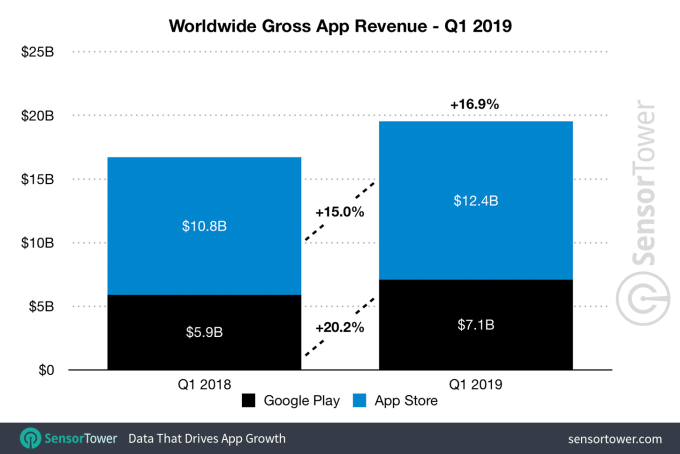
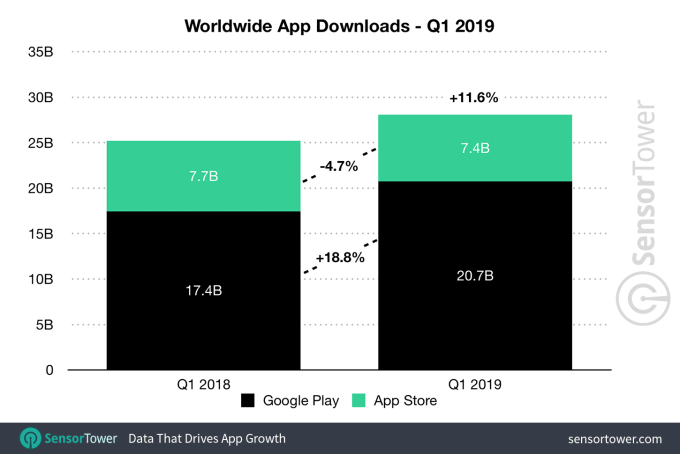
Overall, Apple’s App Store accounted for 64 percent of revenue in Q1, with consumer spending reaching $12.4 billion compared to Google Play’s $7.1 billion. New app downloads slowed on iOS in Q1, decreasing 4.7 percent year-over-year to 7.4 billion, while Google Play downloads grew 18.8 percent to 20.7 billion.

Let's block ads! (Why?)


https://techcrunch.com/2019/04/11/tinder-becomes-the-top-grossing-non-game-app-in-q1-2019-ending-netflixs-reign/

2019-04-11 17:44:22Z
52780266613106

Some GeForce GTX graphics cards now support ray tracing - TechRadar

Nvidia has released a new set of drivers that allow owners of GTX graphics cards to enjoy ray tracing with games that support these added visual bells and whistles.

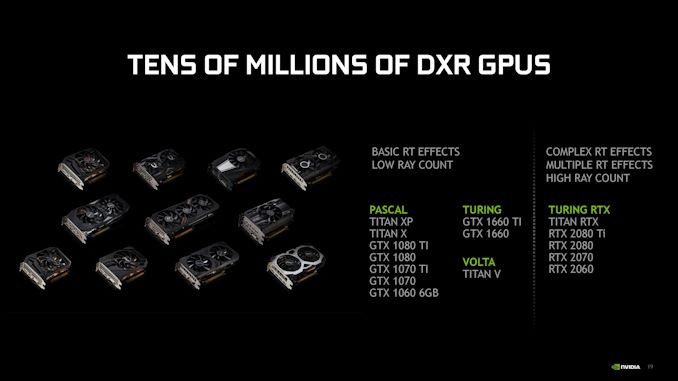
Previously, this was exclusively the domain of RTX cards, but in March, Nvidia promised us broader support for ray tracing to include GTX cards, and not just Turing models (like the GTX 1660) but previous-generation 10-series cards.

Indeed, the new 425.31 GeForce Game Ready Drivers support ray tracing via DirectX Raytracing (DXR) on the GeForce GTX 1660 Ti and GTX 1660, along with the GTX 1080 Ti, GTX 1080, GTX 1070 Ti, GTX 1070, and GTX 1060 (6GB).

The Titan X and Titan Xp are also supported.

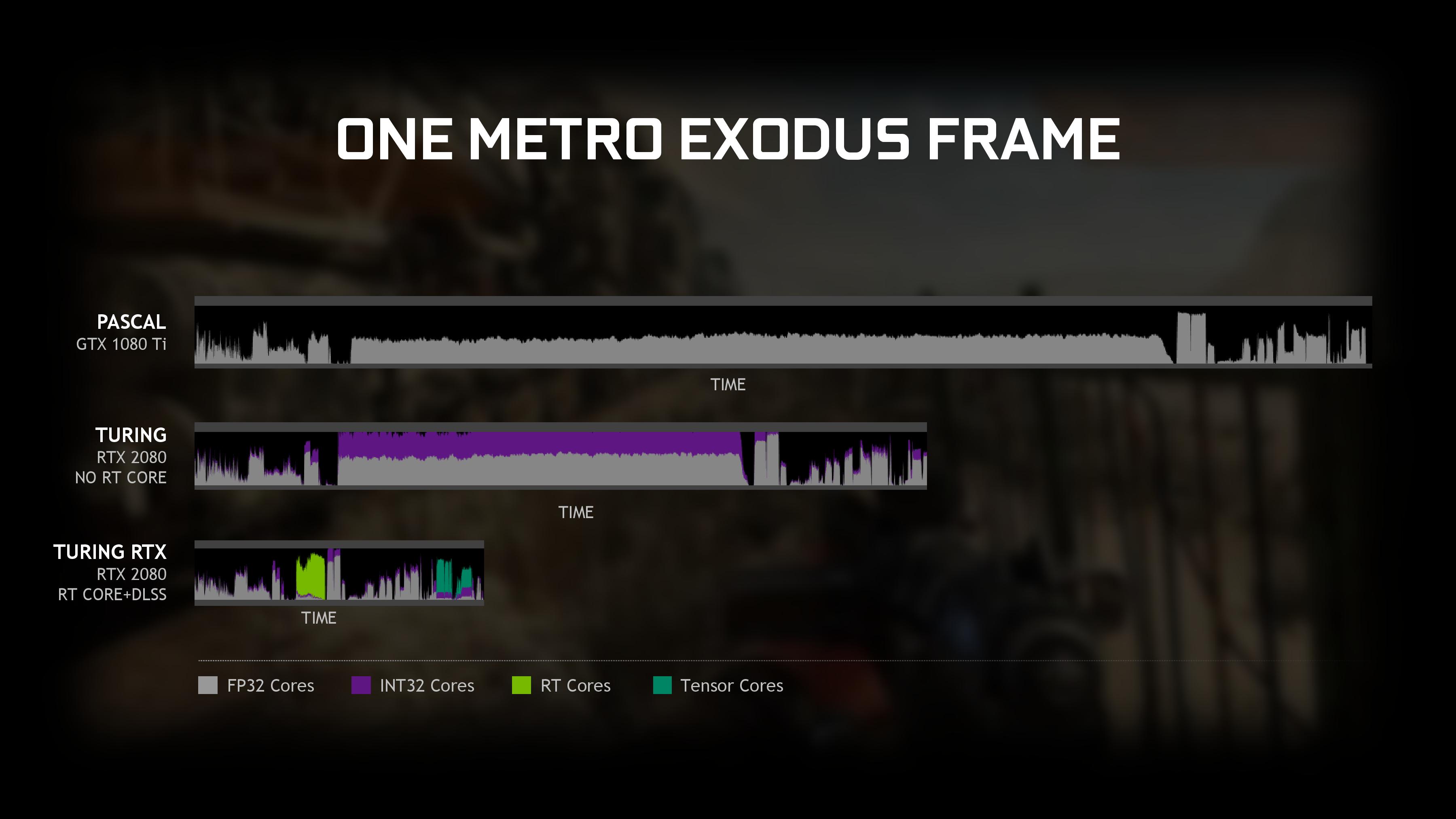
Naturally, you have to bear in mind that the performance hit on GTX cards may be a tough blow to take, given that they don’t have the fancy on-board tech and dedicated RT cores that really help with rendering scenes with ray tracing (which is an intensive task even for an RTX GPU, after all).

When it first revealed this capability was coming to GTX graphics cards, Nvidia made it clear that we should only expect basic ray tracing effects and a low ray count, and that these GPUs wouldn’t be able to handle anything complex.

And with the release of these new drivers, Nvidia has provided some handy benchmarks to give us an idea of the sort of ray tracing performance we can expect from GTX models.

It’s no real surprise that Metro Exodus, a very taxing title, will only limp along to the tune of 16.4 frames per second (fps) on a GTX 1080 Ti at 1440p resolution with ray tracing set to ‘ultra’ details. Whereas with DLSS, the RTX 2080 Ti will hit a smooth 65.7 fps, and indeed the RTX 2080 manages 52.7fps. (DLSS helps to boost frame rates, as well as image quality, and isn't one of the additional benefits coming to the GTX GPUs).

Shadow of the Tomb Raider, also at 1440p but with ‘high’ details, saw the GTX 1080 Ti rack up 34fps, which is at least just about palatable – but the RTX 2080 Ti hit 84fps, and the RTX 2080 achieved 64 fps (again, with the RTX models using DLSS).

Turing GTX?

What about the GTX 1660 Ti? That managed 8.5fps in Metro Exodus and 24fps in Tomb Raider – the latter almost matching the GTX 1080’s 25fps – but overall, these figures will hardly bowl you over. However, remember that these benchmark tests were running ultra and high DXR, and as we already mentioned, Nvidia did tell us that we should only expect basic effects, ie low DXR.

Oddly, though, Nvidia didn’t provide any benchmarks for low settings, but it did include results for Battlefield V running medium DXR. Here, at 1440p resolution, the GTX 1080 Ti hit a more impressive 50.6 fps, with the GTX 1660 Ti on 36.8fps, naturally considerably behind the RTX cards like the vanilla 2080 which managed 72.8 fps (with DLSS).

Dropping down to Full HD with medium settings, the GTX 1080 Ti managed 64.1 fps, and the GTX 1080 recorded 53.1fps, with the GTX 1660 Ti not far behind that on 49.8fps. So dropping to low might get you something a little smoother on the more demanding ray tracing games.

All in all, given the benchmarks shown, it feels a little like Nvidia is trying to stress the power of RTX cards here, as opposed to the ability for GTX cards to capably manage some kind of decent ray tracing performance.

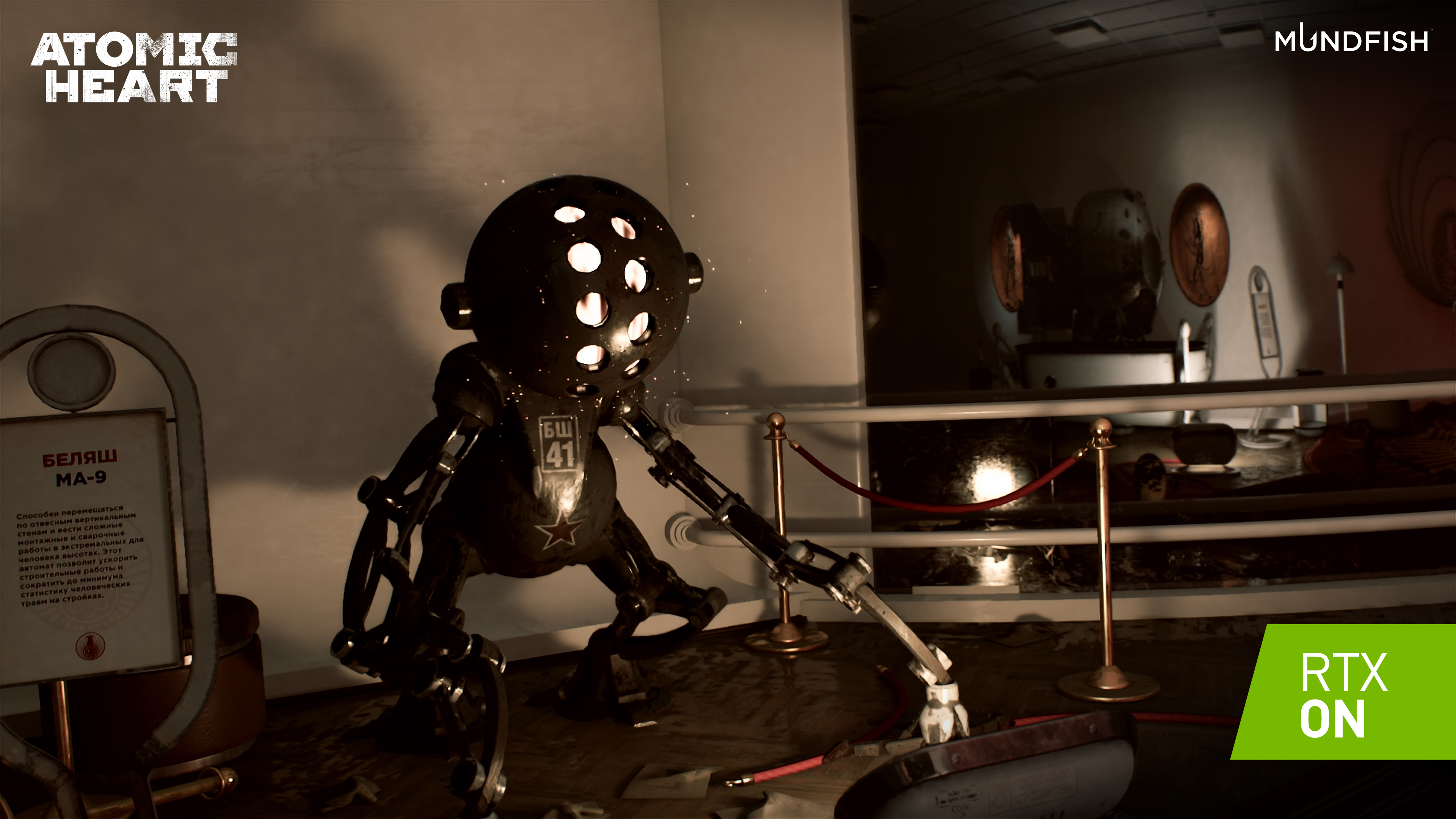
Nvidia has also pushed out three tech demos that show off ray tracing tech further: Atomic Heart, Justice, and Reflections, the latter of which was created by Epic Games.

The new 425.31 drivers also provide optimizations for Anno 1800, and fixes for some game crashing bugs, including random crashes in ARK: Survival Evolved with GeForce RTX 20-series graphics cards.

Via Windows Central

Let's block ads! (Why?)


https://www.techradar.com/news/some-geforce-gtx-graphics-cards-now-support-ray-tracing

2019-04-11 16:02:00Z
52780266494158

You can reserve your chance to preorder the Samsung Galaxy Fold tomorrow - The Verge

Samsung’s Galaxy Fold won’t be released until April 26th, but Samsung is taking reservations for preorders (pre-preorders, if you will) starting tomorrow. To earn yourself a place in line to preorder an unlocked version of Samsung’s anticipated foldable phone, you’ll need to visit Samsung’s website early tomorrow morning.

You won’t need to put money down to reserve your preorder, which means that you have a little more time to save up for its $1,980 price tag. Aside from having two screens and being one of the first foldable phones available, part of the Galaxy Fold’s extra cost can be attributed to the truly wireless Samsung Galaxy Buds headphones that are included in the box. But even without them included, it’s still really expensive.

Committing to a phone payment plan with a carrier is a good option if you don’t want to shell out that much on a first-gen foldable in one payment. T-Mobile has announced that it will carry the Galaxy Fold starting on April 26th, and we’ve reaching out to it and other carriers for monthly pricing.

The Galaxy Fold is both a big and a small phone, depending on how you use it. It can reach up to 7.3 inches in size when you unfold it, though when it’s folded up, its 4.6-inch exterior display should fit easily in your pocket or bag. The Fold will launch with 512GB of fast eUFS storage by default, and it also includes 12GB of RAM.

Let's block ads! (Why?)


https://www.theverge.com/2019/4/11/18306037/samsung-galaxy-fold-preorder-reserve-spot-date-price

2019-04-11 14:47:43Z
52780265349826

Samsung's Galaxy Fold and Galaxy S10 5G go up for pre-order tomorrow - Engadget

There's not much new to say about the Galaxy Fold at this point. It's a phone. That folds. It's expensive. And it may or may not have a significant design flaw, depending on how you look at it. The only remaining question was: When can people buy one? The answer is tomorrow. Samsung just issued a brief saying that customers in the US can pre-order the Fold starting Friday. The 5G version of the Galaxy S10 will open for pre-orders at the same time. We already knew that the Fold would go on sale in the US on April 26th, and a press release from T-Mobile, for one, confirms that's still true. In its statement, Samsung added that the Galaxy S10 5G will ship here in the states sometime in May.

When we say expensive, by the way, we're talking $1,980 for the Fold. As a refresher, the device has a 4.6-inch AMOLED display on the outside, along with a flexible 7.3-inch AMOLED screen when the device is unfolded. You're also getting six cameras and Samsung's Wireless Powershare technology for wirelessly charging other devices. Not bad, but then again: This is an experimental first-generation device that not even us reviewers have gotten to play with.

As for the 5G Galaxy S10, Samsung somehow still hasn't mentioned a price, which is weird given the company is apparently hoping people will buy one as soon as tomorrow. For now, think of it as a higher-spec Galaxy S10, with a larger battery and a more advanced camera setup. Keeping in mind that the S10 itself starts at $900, that should at least put us in the correct ballpark.

All products recommended by Engadget were selected by our editorial team, independent of our parent company, Verizon Media. If you buy something through one of our links, we may earn an affiliate commission.

Let's block ads! (Why?)


https://www.engadget.com/2019/04/11/samsung-galaxy-fold-galaxy-s10-5g-preorder-availability/

2019-04-11 14:13:13Z
52780265349826

NVIDIA Releases DirectX Raytracing Driver for GTX Cards; Posts Trio of DXR Demos - AnandTech

Last month at GDC 2019, NVIDIA revealed that they would finally be enabling public support for DirectX Raytracing on non-RTX cards. Long baked into the DXR specification itself – which is designed encourage ray tracing hardware development while also allowing it to be implemented via traditional compute shaders – the addition of DXR support in cards without hardware support for it is a small but important step in the deployment of the API and its underlying technology. At the time of their announcement, NVIDIA announced that this driver would be released in April, and now this morning, NVIDIA is releasing the new driver.

As we covered in last month’s initial announcement of the driver, this has been something of a long time coming for NVIDIA. The initial development of DXR and the first DXR demos (including the Star Wars Reflections demo) were all handled on cards without hardware RT acceleration; in particular NVIDIA Volta-based video cards. Microsoft used their own fallback layer for a time, but for the public release it was going to be up to GPU manufacturers to provide support, including their own fallback layer. So we have been expecting the release of this driver in some form for quite some time.

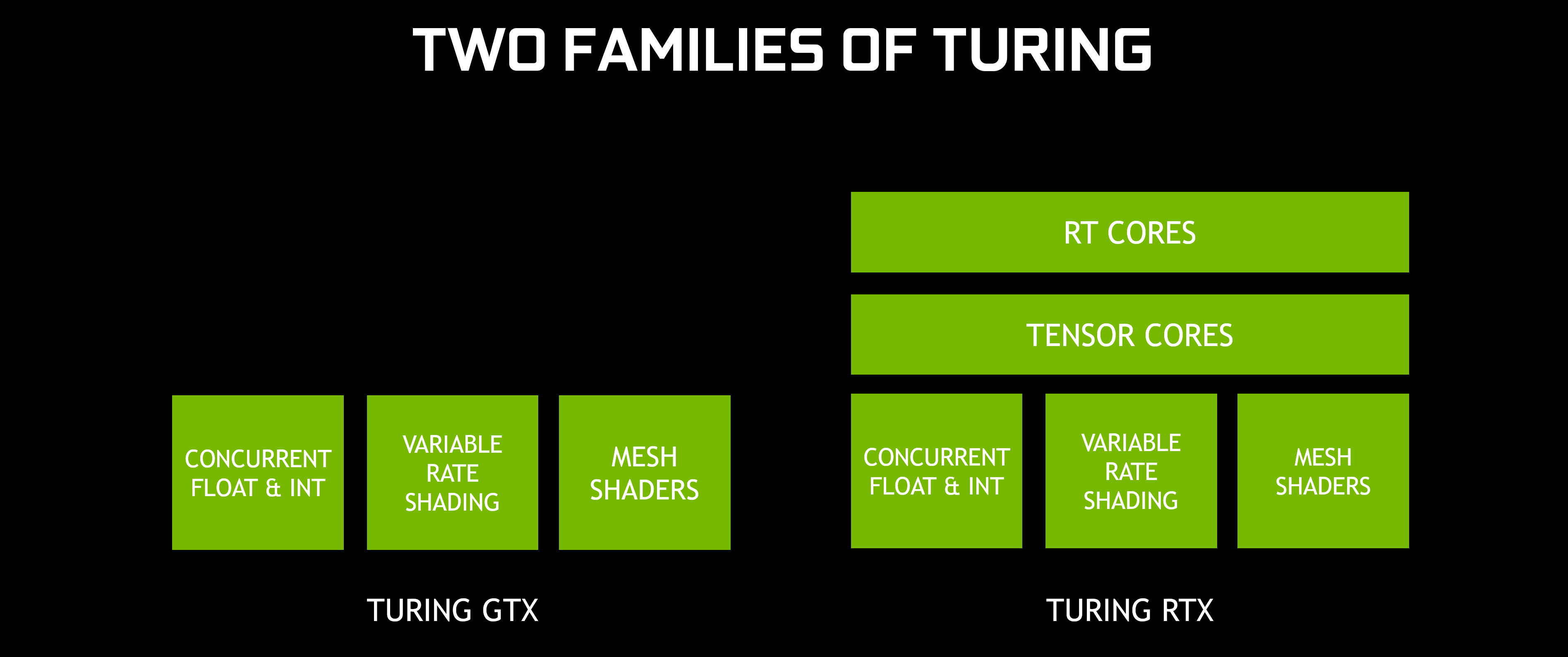
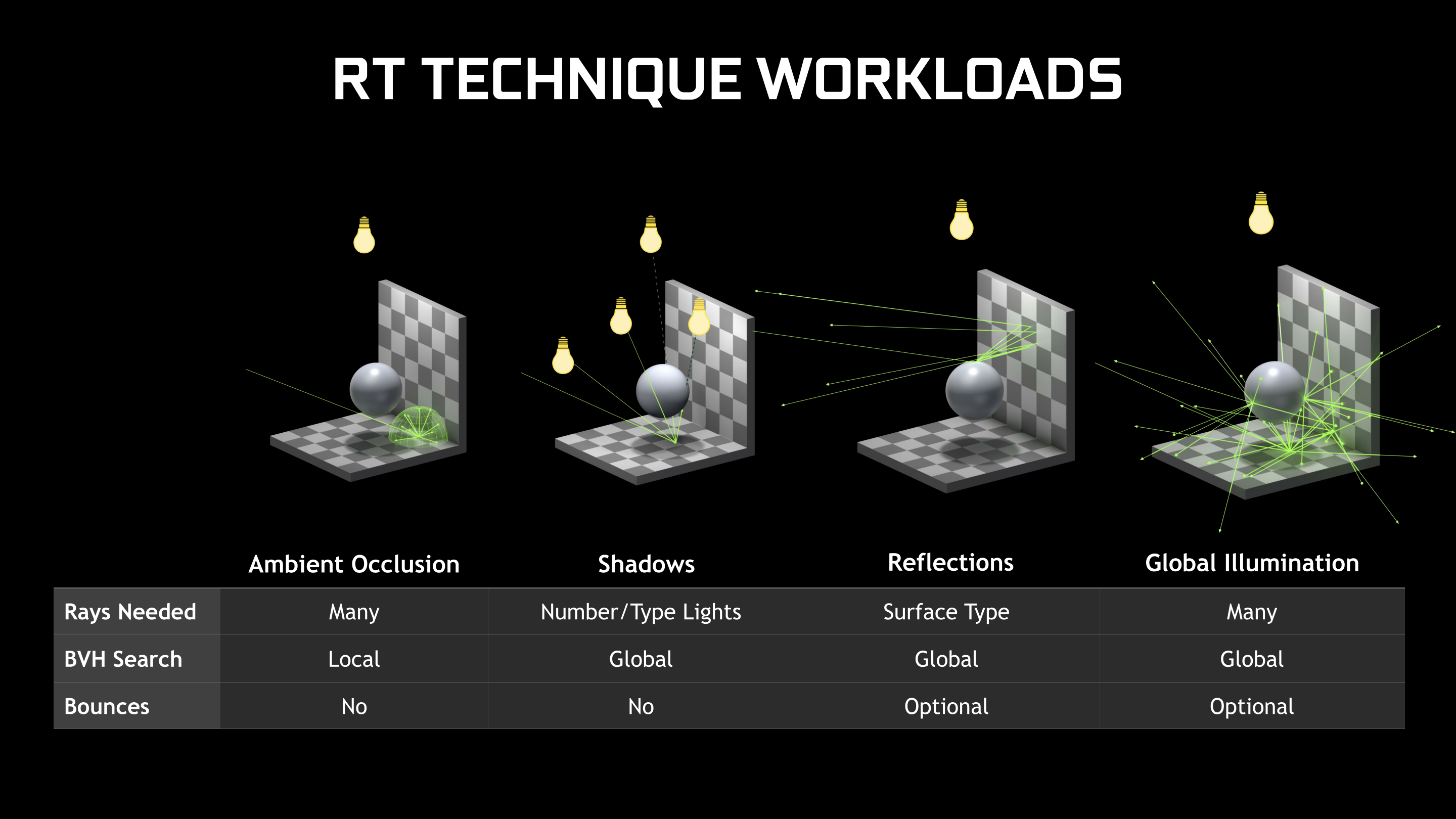
Of course, the elephant in the room in enabling DXR on cards without RT hardware is what it will do for performance – or perhaps the lack thereof. High-quality RT features already bog down NVIDIA’s best RTX cards that do have the hardware for the task, never mind their non-RTX cards, which are all either older (GeForce 10 series) or lower-tier (GeForce 16 series) than the flagship GeForce 20 series cards. This actually has NVIDIA a bit worried – they don’t want someone with a GTX 1060 turning on Ultra mode in Battlefield V and wondering why it’s taking seconds per frame – so the company has been on a campaign both at GDC and ahead of the driver’s launch to better explain the different types of common RT effects, and why some RT effects are more expensive than others.

The long and short of it being that simple reflections and shadows can be had without terrible performance drops on cards that lack RT hardware, however the more rays an effect requires, the worse the performance hit gets (or perhaps, the better an RTX card would look). So particularly impressive effects like RT global illumination and accurate ambient occlusion are out, however cheap reflections (which are always a crowd pleaser) are more attainable.

This all varies with the game and the settings used, of course. NVIDIA’s been working with partners to improve their DXR effect implementations – an effort that’s actually been fairly successful over the last half-year, going by some of the earliest games – but it’s still a matter of tradeoffs depending on the game and video card used. Much to my own surprise however, NVIDIA says that they aren’t expecting to see game developers release patches to take into account DXR support on cards without RT hardware; this of course isn’t required since DXR abstracts away the hardware difference, however it’s up to developers to account for the performance difference. In this case, it sounds like game devs are satisfied that they’ve provided enough DXR quality settings that users will be able to dial things down for slower cards. But as always, the proof is in the results, which everyone will be able to see first-hand soon enough.

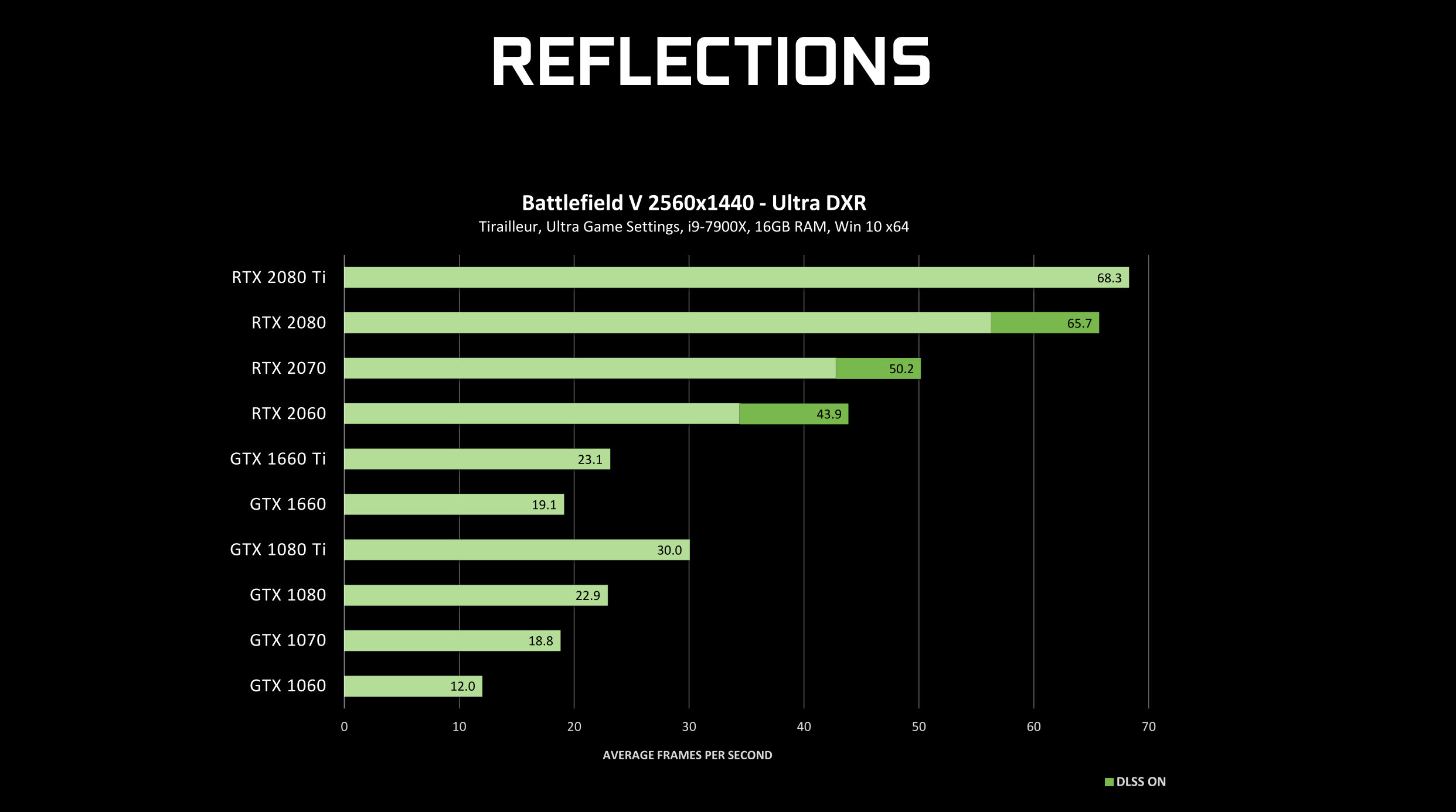
Ahead of this driver release, NVIDIA has put out some of their own performance numbers. And while they’re harmless enough, they are all done at 1440p with everything cranked up to Ultra quality, so they do present a sort of worst case scenario for cards without RT hardware. The RT quality settings GTX card owners will want to use will be much lower than what NVIDIA does here.

As a reminder, while NVIDIA’s DXR fallback layer is meant to target Pascal and Turing cards that lack RT hardware, not all of these cards are supported. Specifically, the low-end Pascal family isn’t included, so support starts with the GeForce GTX 1060 6GB, as well as NVIDIA’s (thus far) two GTX 16 series cards, the GTX 1660 and GTX 1660 Ti.

Overall the new driver is being released this morning at the same time as this news post goes up – 9am ET. And while NVIDIA hasn’t confirmed the driver build number or given the press an advanced look at the driver, this driver should be the first public driver in NVIDIA’s new Release 430(?) driver branch. In which case there’s going to be a lot more going on with this driver than just adding DXR support for more cards; NVIDIA’s support schedule calls for Mobile Kepler to be moved to legacy status this month, so I’m expecting that this will be the first driver to omit support for those parts. New driver branches are some of the most interesting driver releases from NVIDIA since these are normally the break points where they introduce new features under the hood, so I’m eager to see what they have been up to since R415/R418 was first released back in October.

DXR Tech Demo Releases: Reflections, Justice, and Atomic Heart

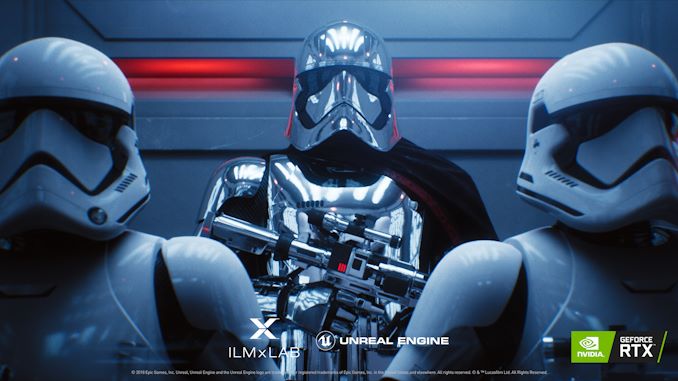
Along with today’s driver release, NVIDIA and its partners are also releasing a trio of previously announced/demonstrated DXR tech demos. These include the Star Wars Reflections demo, Justice, and Atomic Heart.

These demos have been screened extensively by NVIDIA, Epic, and others, so admittedly there’s nothing new to see that you wouldn’t have already seen in their respective YouTube videos. However as an aficionado for proper tech demo public binary releases – something that’s become increasingly rare these days (Tim, I need Troll!) – it’s great to see these demos finally released to the public. After all, seeing is believing; and seeing something rendered in real time is a lot more interesting than seeing a recoded video of it.

Anyhow, all three demos are going to be released through NVIDIA today. What I’m being told is that Reflections and Justice will be hosted directly by NVIDIA, whereas Atomic Heart will be hosted off-site, for anyone keeping the score. For NVIDIA of course it’s in their own best interests to put their best foot forward with RT, and to have something a bit more curated/forward-looking than the current crop of games; though I don’t imagine it hurts either that these demos should bring any GTX card to its knees rather quickly.

Let's block ads! (Why?)


https://www.anandtech.com/show/14203/nvidia-releases-dxr-driver-for-gtx-cards

2019-04-11 13:35:38Z
52780266494158