Selasa, 09 April 2019

LG G8 ThinQ review: many gimmicks, not enough progress - The Verge

If you’re looking for a new phone in 2019 that has a bunch of features, the LG G8 ThinQ should be on your shortlist. Compared to something like the Google Pixel 3, a purposefully plain phone, the LG G8 is on the opposite side of the spectrum. It’s vibrant and chock-full of experimental software tweaks and fan-favorite hardware features. It’s refreshing to use a phone that’s capable of so much. LG places no walls around you; you can use as much or as little as it offers.

At its core, the G8 is a competent Android 9 Pie phone with the latest Snapdragon 855 processor and 6GB of RAM. It has a sharp 6.1-inch OLED display, a screen-rattling loudspeaker, and a headphone jack bolstered by a Quad DAC that sounds incredible with wired headphones. The G8 also offers wireless charging, supports microSD storage, and has an IP68 rating against water and dust ingress.

Most of what I just listed describes what you’ll also get in 2018’s LG G7 ThinQ, which you can find for roughly half the cost of the $840 G8. In fact, the G8’s design is mostly a rehash, with its 19.5:9 screen aspect ratio and wide notch to match, though the G8’s notch is a little different. Populated by a new Z Camera multisensor system, it can unlock the phone securely using your face or your hand’s vein structure. Z Camera also allows for the phone’s other big feature, Air Motion, which lets you use hand gestures to, say, raise the volume or pause a song in Spotify, without touching the G8.

6.5 Verge Score

Good Stuff

  • Comfortable to hold
  • Quad DAC yields great sound quality
  • Face Unlock is fast and easy
  • Improved battery capacity

Bad Stuff

  • Piezoelectric earpiece replacement isn’t loud enough
  • May not receive timely software updates
  • Hand ID and Air Motion are gimmicky and don’t always work

Digging deeper into the G8’s unique features, its notch houses an 8-megapixel selfie camera, a Time of Flight (ToF) sensor, and an infrared emitter. Once the object or person in the frame is covered in infrared light, the ToF sensor can detect its depth, which is critical for LG’s new features, Face Unlock and Hand ID. Face Unlock, as you might expect, gathers a 3D scan of your face angled in different ways, and it won’t unlock with a 2D image. I tried to fool it with a picture and a video recorded on a different phone, but I didn’t have any success. A good failure. Face Unlock is definitely fast and convenient enough that I rarely used the fingerprint sensor located on the phone’s back. However, I can’t say such positive things about Hand ID.

Hand ID unlocks your phone when it authenticates the unique vein layout in your palm above the Z Camera, and LG notes that this is a less secure method of protecting your phone. Hand ID is an interesting idea, but in practice, it’s slow to detect a match, often failing to read my hand accurately. Even when it’s successful, sometimes it asks for a secondary method of authentication. Hand ID is more of a roadblock than it is a viable way to gain access to the G8.

LG’s marketing loudly trumpets these new features, but when you pick up the phone, the device itself doesn’t make much of an effort to convince you to use them. That’s a shame because Face Unlock is one of my favorite features on the G8. But as for Hand ID and Air Motion, which we dig into below, they don’t rise above the status of party tricks that may delight but probably won’t convert onlookers (or even the person using the G8). The unique features are cool when they work. Even when they do, the Z Camera’s additions don’t enrich my experience to the extent that I’d pay a premium for them.

Some retailers are offering the G8 for $699 unlocked for use with any GSM or CDMA carrier, and if you’re able to find it for this price, you’ll get a lot of phone for your money. But my feelings about its highlight features aside, there’s the lingering issue of software updates. The most damning thing about every new LG phone that hits the market is that timely software updates are not forthcoming. Here’s a familiar refrain: LG has done too little to assure prospective buyers that this year’s flagship phone will be kept up to date.

In my colleague Chris Welch’s review of the G7 ThinQ in 2018, he said LG “promised to make a better, honest-to-goodness real effort at delivering future software updates at a timely pace.” That didn’t work out as planned. Android 9 Pie first launched in August 2018, though some G7 users are still waiting for the update. Things may change, eventually, but I don’t think that they’ll be any different for the G8. You’re buying an Android Pie phone that might be stuck on Pie for a long time after the release of its successor. Surprise me, LG.

Relative to the 2018 LG G7, the G8 feels more weighty and substantial, but unless you’re picking apart a spec sheet, you might not notice any differences. The nicest upgrade is the fact that the rear cameras now sit under the same piece of glass covering the rear of the phone, generating no camera bump or disturbance at all. Compared to its Android contemporaries, the G8 is one of the smaller flagships on the market, and it should appeal to people who find the Plus models from other manufacturers to be too big to handle.

On the inside, the G8 features the Snapdragon 855 processor that’s Qualcomm’s current best chip for Android phones, and the phone’s 6GB of RAM makes for a smooth experience. Switching through apps, scrolling around mindlessly, and putting the G8’s camera features to the test didn’t cause any noticeable hiccups. The 3,500mAh battery is a sizeable increase over the G7’s 3,000mAh, and it’s more than you’ll find in the Samsung Galaxy S10 or S10E. I didn’t have to worry about the G8 running out of battery on a typical busy day of taking pictures outside and chatting with friends on Snapchat, but it needed a refill every evening.

LG opted to swap the bright IPS LCD used in the G7 for an OLED display, which gives it deeper blacks and better contrast. The company also got rid of the earpiece, instead utilizing a piezoelectric speaker behind the screen to create sound with vibrations from the phone’s frame. This works well in quiet settings, and when paired with its loudspeaker, it creates a somewhat convincing stereo effect. But if you take a call on a windy day or in a busy restaurant, it is far too weak to hear clearly.

LG also uses the Z Camera to add bokeh to selfie portraits, but that really isn’t much of an improvement. Even the Google Pixel 2’s single-lens computational bokeh worked more effectively than LG’s bespoke hardware. Speaking of the camera performance, I’ve always felt that LG’s optics are on the edge of something great, but they remain a step behind the competition. Easy shots with generous amounts of natural light are decent, but they usually come out fuzzy around the edges and have a cooler color temperature than I like. Good shots are possible even at night, though LG’s Night view doesn’t hold a candle to the Huawei P30 Pro’s low-light capabilities or the Pixel’s Night Sight. Like last year’s phone, the G8 is still slow to capture, which leads to lots of blurry photos. Additionally, it has a hard time getting skin tones right, portrait shots have inconsistent bokeh, and the auto-exposure can be all over the place.

LG was able to patch previous phones with AI features that were said to enhance low-light performance, so I’m interested to see if LG could improve the state of things here. But when it comes to LG and delivering software when a device needs it the most, I’m not hopeful.

Despite its limitations, I think that this is the closest that an LG camera has come to producing photos that I’m happy posting to social media without retouching. If auto mode isn’t getting the job done, you can get good results with the manual mode, which lets you seize control over the usual variables like shutter speed and ISO, and the ultra wide angle shots are always fun to snap.

The Z Camera can do another interesting trick called Air Motion. It’s a feature that lets you control a few tasks with hand gestures. What it actually lets you do differs slightly depending on the app you’re using, though the procedure to initiate it is the same: hold your hand near the phone’s front-facing sensors, and wait until you see a stripe of blue light beneath the notch. Then, a small window will show your hand as viewed through the infrared camera. While using Spotify, for instance, you can tweak the volume by making a knob-turning motion or pause a song by moving your hand left or right of center. The controls are similar for other multimedia apps that you download on the G8, like YouTube, Amazon Music, and the preinstalled music and video apps. For practically any other app, the default Air Motion gesture is a pinch to capture a screenshot. Then you can set a custom shortcut to open any app that you have downloaded by moving your hand left or right of center.

I’m sure that Air Motion will appeal to some, but the only valid use case for the feature that I could dream up was if you need to turn up the volume or pause the music while you’re handling delicate pastry or painting a room. The feature isn’t fleshed out or anywhere near responsive enough to be a useful accessibility tool. In my experience, asking Google Assistant for help gets most jobs done faster, even though Assistant can’t take screenshots. To summon the voice assistant, you can push the dedicated side button on the G8, or just say, “Hey, Google.”

Outside of LG’s own sphere of design, other phones are going all in on new hardware features like hole-punch cameras and in-display fingerprint sensors. It’s not a big strike against the G8 that it doesn’t have these novelties, especially since we found the in-display fingerprint sensor in the Samsung Galaxy S10 Plus to be slow compared to traditional fingerprint sensors. But by comparison, the G8’s design is basically a repeat of last year’s LG G7 ThinQ, and sitting still in the smartphone market makes it an even harder sell.

Of course, some mainstays from past LG phones are a good thing. Its best-in-class haptics motor, for example, is always welcome to the party. More phones are beginning to take haptic feedback seriously, providing more nuanced vibrations than bleary buzzes, and LG still leads the pack of Android phone makers. The haptics almost purr when you navigate the G8. Whether you’re running through basic tasks, like texting, or scrolling through your list of opened apps using Android 9 Pie’s pill-shaped home button, expressive haptics make bland tasks a little more fun.

Another feature I’m always happy to see is the headphone jack. And since it’s in an LG flagship phone, it’s not just any headphone jack. There’s a Quad DAC built in that dramatically improves the sound quality with wired headphones. It’s not activated by default, but when I switch on the Quad DAC, music occupies a more expansive soundstage, with each instrument and layer of the track coming through clearer. The additional DTS: X virtual surround sound effect adds a bit more attack to your tracks if you want a fuller, bass-heavy sound. To achieve similar results with other phones, you’ll have to get a portable DAC or stick to using it at home with a desk-bound DAC. Either option is an added expense and quite a bit more cumbersome than what LG provides.

The G8 continues LG’s dead sprint to innovate. Most times, it seems, just for the sake of saying that it tried. The byproduct is an improvement, in the most inconsequential of ways, over the G7 ThinQ. Ultimately, it’s an incremental upgrade that offers better battery life, a better screen, a faster processor, and more RAM. This year’s phone places emphasis on the new Z Camera that enables Hand ID and Air Motion, and while interesting, I don’t think that they’re selling points that you should care about. Without those features, this year’s phone doesn’t move the bar.

LG usually overhauls its G-series each year, but comparing it to Apple’s smartphone naming conventions, the G8 is more of an “S” upgrade to the G7 ThinQ. Many things about it are the same, but there are a few improvements that might interest you. Most S-year phones are worth checking out because, as Dieter Bohn said in his review of the Pixel 3, “It’s better to be on the S-cycle: you get a faster phone, better camera, and the fixes that come after a year with the original design.” But aside from improved specs, the things that changed in the G8 ThinQ are things that I think most users can carry on without.

Vox Media has affiliate partnerships. These do not influence editorial content, though Vox Media may earn commissions for products purchased via affiliate links. For more information, see our ethics policy.

Let's block ads! (Why?)


https://www.theverge.com/2019/4/9/18301982/lg-g8-thinq-review-android-phone-snapdragon-855-6-gb-ram-z-camera-sensor

2019-04-09 16:00:00Z
52780265113876

Slack is now easier to use with Microsoft’s Office 365 apps - The Verge

Slack is integrating Microsoft’s Office 365 services today. While apps like OneDrive and Azure Active Directory have previously been available on Slack, the messaging service will now have far deeper integration with Office apps and files, including a new Outlook calendar and mail app, an updated OneDrive app, and the ability to preview Office files directly in Slack.

The new Outlook calendar app for Slack is designed to bring all of your meetings and calendar invites into the messaging service. It will message you when a meeting invite arrives, allowing you to respond with a single click. It will also include reminders to join Skype, Webex, or Zoom meetings. The Outlook calendar app will even set your Slack status automatically based on your calendar, and it will add “out of office” to a status if you’ve enabled it in Outlook.

Slack is also adding Outlook mail integration, with the ability to bring emails straight into Slack channels. Previously, you needed a third-party solution to enable this. You’ll be able to forward emails from Outlook directly into a Slack channel or direct message alongside adding a note and even including mail attachments. Similar email functionality already exists for Gmail, and the Outlook add-in will be available today.

Slack’s OneDrive app is also getting updated to allow users to quickly import files from Microsoft’s cloud storage service. Much like the existing Dropbox and Google Drive integration, OneDrive users will be able to click the + icon to browse files and add them into a channel or direct message.

Alongside these OneDrive improvements, Slack is also enabling full previews of Office files like PowerPoint slides, Word documents, and Excel spreadsheets. You’ll be able to preview Office files without even opening them, and Slack is aiming to bring similar functionality to OneDrive files, too.

All of these app improvements will be welcome additions for any businesses or teams that rely on a mix of services. Both Slack and Microsoft Teams have been going head-to-head to try to win over businesses that are interested in using chat services, but it’s clearly better for their mutual customers for the companies to integrate instead of fighting it out.

Microsoft has shown in the past that it’s willing to partner with rivals like Dropbox, but Slack’s Office 365 integration was created using public APIs and with no special help from Microsoft. This Slack integration comes just months after Microsoft launched its free version of Teams to rival Slack, just weeks after the company unveiled creative new conference call features for its Slack competitor.

Let's block ads! (Why?)


https://www.theverge.com/2019/4/9/18301736/slack-microsoft-office-365-apps-integration-outlook-calendar-onedrive-features

2019-04-09 15:00:00Z
52780265081929

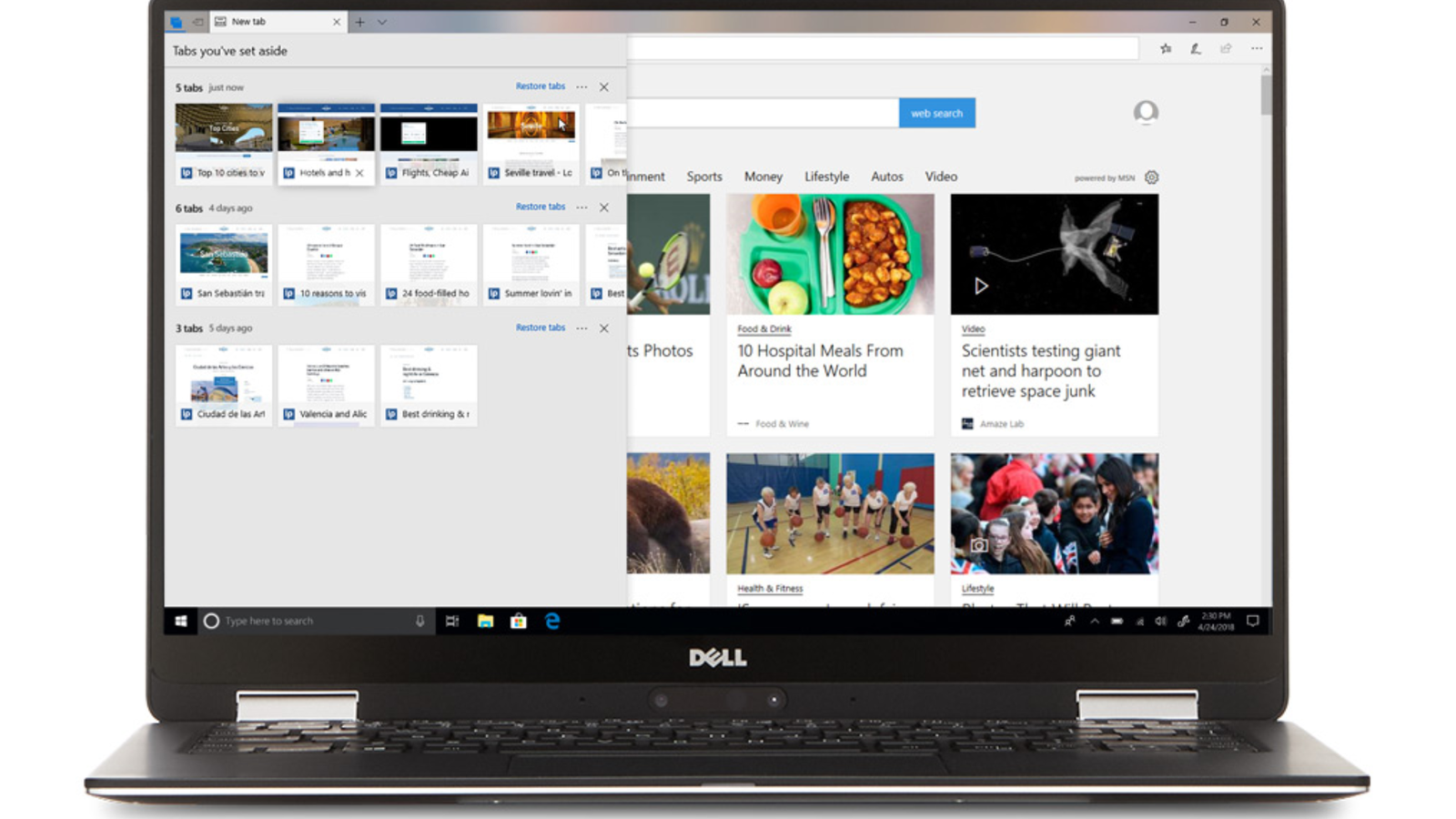
How to Beta Test Microsoft’s New Chromium-Based Edge Browser - Lifehacker

Microsoft has launched public testing for the newest version of its Edge web browser, which it built on top of Google’s “Chromium” open-source framework. Not only does this mean that Edge should (supposedly) work better with sites designed to modern web standards, but it also means that you’ll be able to run Chrome extensions in Edge—making the browser much more bearable than previous incarnations.

According to Microsoft, the new Edge will look pretty similar for existing users, though there are a few fun additions (support for synchronizing data across Edge instances, as well as the aforementioned extensions). Also, expect to encounter some bugs and other technical issues, as the new iteration of Edge is only available through two of Microsoft’s three beta build branches: “Dev,” which receives weekly updates, and “Canary,” which receives daily updates.

Advertisement

If you’re willing to ride the beta wave and give the new versions of Edge a try, you can download them through the Microsoft Edge Insider site. Click the button next to your desired build and download it. At the moment, the Chromium-Edge beta is only available on Windows 10 for now, though versions for Windows 7, 8, and 8.1 are “coming soon,” as is a version for macOS. You can sign up at Microsoft Edge Insider to get a reminder when your preferred version of the beta goes live.

If either build sounds too glitchy for your tastes, Microsoft says that more stable branches—including a “beta” version that receives updates every six weeks and an even less temperamental “Stable” branch—will be coming soon.

Advertisement

Let's block ads! (Why?)


https://lifehacker.com/how-to-beta-test-microsoft-s-new-chromium-based-edge-br-1833889177

2019-04-09 13:00:00Z
52780263924158

The Morning After: The ISS is filthy - Engadget

Hey, good morning! You look fabulous.

It's time to get up to speed on an intriguing 5G rumor and an expensive way for you to watch movies at home while they're still in theaters. Also, we've got some grimy news about the ISS and a fold-up bike that you might want to check out.


It's nice to want things.Huawei is 'open' to selling its 5G modems, but only to Apple

A source with knowledge of the situation has confirmed to Engadget that Huawei is now "open" to selling its 5G Balong 5000 chipsets, but only to one company: Apple. That would be a major change for the Chinese company, but the surprising change of heart only really matters because Apple appears to be in a tough spot with its sole modem supplier, Intel. Recent reports have suggested issues with the chipmaker could keep Apple from launching a 5G iPhone next year.


Yes, there's a dark mode.Microsoft releases first test builds of its Chromium-based Edge browser

Microsoft has released the first test versions of its new-look, Chromium-powered Edge browser on Windows 10. Edge also supports Chrome extensions and those from Microsoft's own extensions store.


With a little practice, Nick Summers transformed it in under 15 seconds.Gocycle's GX is a head-turning e-bike that folds in a flash

Gocycle has redesigned the folding mechanism and claims the GX can be broken down in under 10 seconds. Unlike the company's previous models, you don't have to take the wheels off. You merely flip the switch and fold the frame in half so both wheels are facing each other. Drop the handlebars down, and boom -- you can roll it along like a suitcase.


If you have to ask "how much" then you can't afford it.Bang and Olufsen's gorgeous OLED TV has 'wing' speakers that fold out

Samsung and Huawei's folding smartphones can't have all the fun. Bang and Olufsen's Beovision Harmony is its latest high-end TV design that uses a 77-inch LG OLED TV (nice choice, right there), wrapped in a very stylish frame and audio package that feels somewhere between a pop-up book mechanism and a butterfly wing.


Shout out to Staphylococcus aureus and Enterobacter.The ISS is crawling with nasty bacteria

"The ISS is a hermetically sealed closed system, subjected to microgravity, radiation, elevated carbon dioxide and the recirculation of air through HEPA filters, and is considered an 'extreme environment,'" said Dr Kasthuri Venkateswaran, a senior research scientist at the NASA Jet Propulsion Laboratory. That's the kind of place where bacteria thrive, and surprise, a new study found the ISS is home to pathogens just like the ones crawling around your local gym.

But wait, there's more...


The Morning After is a new daily newsletter from Engadget designed to help you fight off FOMO. Who knows what you'll miss if you don't Subscribe.

Craving even more? Like us on Facebook or Follow us on Twitter.

Have a suggestion on how we can improve The Morning After? Send us a note.

Let's block ads! (Why?)


https://www.engadget.com/2019/04/09/the-morning-after/

2019-04-09 10:30:26Z
52780264183508

Microsoft says FCC data on improved broadband coverage is misleading - Engadget

undefined via Getty Images

It's a well-known fact that large swathes of the US remain without broadband connectivity -- indeed, some $22 billion has been poured into closing this gap over the past five years. However, exactly how many Americans are going without is up for debate. As a new blog post by Microsoft explains, "official" data from the Federal Communications Commission (FCC) can't be trusted.

According to the FCC, some 25 million people don't have access to broadband. In leveraging data from its various online services, however, Microsoft says that some 163 million people "do not use the internet at broadband speeds." Evidently, not having access to broadband and not using the internet at broadband speeds are not the same thing, but such huge discrepancies in the numbers -- because you'd expect those with broadband to at least use it occasionally -- prompted Microsoft to dig a little deeper.

FCC broadband data vs Microsoft broadband data

The company cites Washington as a case study. "FCC data indicates that 100 percent of Ferry County residents have access to broadband. When we spoke to local officials, they indicated that very few residents in this rural county had access and those that did were using broadband in business. Our data bears this out, showing that only two percent of Ferry County is using broadband."

A raft of other places, rural and urban, produce similar data. So what's going on? According to Microsoft's chief analytics officer, John Kahan, this mismatch "across nearly all counties in all 50 states indicates there is a problem with the accuracy of the access data reported by the FCC."

As Microsoft explains, this data is not independently checked by the FCC, but merely reported to the FCC by internet providers, which the FCC simply declares. Providers report their coverage via Form 477, where genuine mistakes (such as a few extra 0s) can happen and, and where large providers exaggerate their coverage so they don't have to fork out the cost of filing in blank spaces.

This isn't a new problem, and even FCC officials have expressed concern with the way the data is obtained. Microsoft has suggested to Members of Congress ways for the system to be tweaked, making it harder for ISPs to both make "errors" and falsehoods on their coverage reports. It's this ongoing pressure that will hopefully lead to a more accurate way of identifying true broadband coverage, which will make sure it eventually finds its way to those who still need it.

Let's block ads! (Why?)


https://www.engadget.com/2019/04/09/microsoft-says-fcc-data-on-improved-broadband-coverage-is-mislea/

2019-04-09 09:48:28Z
CAIiEFEjdbCi_2OBIDp3M8MqZNcqGAgEKg8IACoHCAowwOjjAjDp3xswicOyAw

Microsoft Finally Admit You Don't Really Need To 'Safely Remove' USB Flash Drives Anymore - UNILAD

For anyone who grew up in the late nineties/early noughties, you’ll no doubt remember the whole ‘safely remove your USB’ saga.

Throughout school, you couldn’t even turn on a computer without your teacher or resident IT expert telling you how vital it was to eject a flash drive before removing it.

And don’t even get me started on the panic that ensued if you ever accidentally removed the USB or shut your computer down without ejecting it first; although that was unlikely to ever happen because you’d had the fear of God put in you beforehand.

Those days are now officially over though, as Microsoft themselves have confirmed you really don’t need to safely remove your hardware anymore. Hallelujah!

Admittedly, most of us probably stopped doing it as soon as we left school because we didn’t have anyone constantly reminding us, but hey ho.

The technology giant have confirmed once and for all it’s no longer a thing we need to worry about, introducing a new feature in Windows 10 called ‘quick removal’ that allows you to remove a USB at any time.

As long as you’re not actively writing files to it, the drive can be quickly and effectively pulled out of your computer without having to worry about losing important files.

As per Microsoft’s own support guidance, this new ‘quick removal’ policy has replaced their previous default setting, ‘better performance,’ in which you had to safely remove the hardware to prevent you from losing any data.

Their guidance states:

Quick removal. This policy manages storage operations in a manner that keeps the device ready to remove at any time. You can remove the device without using the Safely Remove Hardware process. However, to do this, Windows cannot cache disk write operations. This may degrade system performance.

According to The Verge, this came into effect in October when version 1809 of Windows 10 first began rolling out. So some of you may already know this.

If you didn’t though, then let me bless your Tuesday with the knowledge that never again do you have to be haunted by the ‘safely eject’ icon again. Because I’m sure that’s all you’ve been thinking about for the past 10 years…

So, there you have it. The days of descending into a major panic after accidentally yanking your USB out of the computer are officially over.

Happy days.

If you have a story you want to tell, send it to [email protected]


Lucy Connolly

Lucy Connolly

A Broadcast Journalism Masters graduate who went on to achieve an NCTJ level 3 Diploma in Journalism, Lucy has done stints at ITV, BBC Inside Out and Key 103. While working as a journalist for UNILAD, Lucy has reported on breaking news stories while also writing features about mental health, cervical screening awareness, and Little Mix (who she is unapologetically obsessed with).

Let's block ads! (Why?)


https://www.unilad.co.uk/technology/microsoft-finally-admit-you-dont-really-need-to-safely-remove-usb-flash-drives-anymore/

2019-04-09 06:45:08Z
52780263219661

Digital music may not have saved the environment after all - Engadget

Chesnot/Getty Images

Logic would suggest that music downloads and streaming are good for the environment. You're not buying physical copies, right? Not so fast -- there's a chance things could be worse. Researchers have published a study suggesting that greenhouse gas emissions are higher now than they were when physical media was all the rage. While going digital has reduced the amount of plastic, the combination of extra power demands and the sheer popularity of music (you can listen to virtually anything for $10 per month, after all) may have offset other gains. Where vinyl produced 346 million pounds of greenhouse gasses at its height in 1977, downloads and streaming are estimated to pump out 441 million to 772 million pounds.

The publicly available data leaves some questions. It's not clear that the findings account for savings from reduced transportation costs, packaging and other savings that come when the music doesn't have to physically travel somewhere. This also doesn't account for multitasking. If you're listening to music while you're already at your computer, for instance, you're not really using significantly more power than you would otherwise.

As it stands, the researchers aren't calling for people to go back to spinning records. Rather, they want you to think about your power use and choose services that minimize their effect on the planet. They also hope this could foster alternatives that are more sustainable without sacrificing the convenience you expect from on-demand tunes.

Let's block ads! (Why?)


https://www.engadget.com/2019/04/08/study-on-digital-music-and-greenhouse-gases/

2019-04-09 04:36:58Z
CAIiEPKBcGW26gYTiNjQxdwlDTUqGAgEKg8IACoHCAowwOjjAjDp3xswpuqvAw