Senin, 08 April 2019

How is Microsoft's Chromium-based Edge really different from Chrome? - ZDNet

edgeservicesturnedoff.jpg
Credit: Microsoft (via @h0x0d)

When Microsoft announced late last year it was reworking its Edge browser to be based on Chromium, many wondered how different the new Edge would be from Chrome and other Chromium-based browsers. Microsoft execs said they'd be adding some value-add in areas like smooth scrolling and accessibility, but didn't get too detailed beyond that. But there are a number of ways the new Edge will differ from Chrome, especially under the covers, as a Microsoft presentation slated for BlinkOn this week will detail.

Today, Microsoft released its first preview builds of the new Chromium-based Edge. I've seen some Edge users lamenting that these previews look more like Chrome than the current non-Chromium-based Edge. (To be fair, Microsoft officials have said the UI fit and finish work has yet to come with the new Chromium.) Still, is the new Edge really going to be just Chrome in Edge clothing?

Seemingly, the answer is no. Thanks to @h0x0d (The WalkingCat on Twitter), a slide deck that Microsoft plans to present at BlinkOn on April 9 has gone public. During the event, Christian Fortini, a Distinguished Engineer at Microsoft who works on Edge will be presenting a talk entitled "Microsoft Edge: Adopting and contributing to Chromium."

Microsoft is replacing or turning off more than 50 Chromium services with Edge. (The list of services being replaced or shut off is listed in the slide embedded in this post above.) Some of these are no-brainers, such as Google-specific services like Google Now, Google Pay, Google Cloud Messaging, Chrome OS device management and Chrome Cleanup. Others are a bit more surprising/interesting, such as ad blocking, Spellcheck, Speech input; Android app password sync.

"Our users expect Edge to be only communicating with Microsoft services," Fortini says in his notes. As part of this, Microsoft is making sure the new Edge supports MSA (Microsoft Accounts) and Azure Active Directory identities for authentication/single sign-in. 

There are a number of other services of its own Microsoft is integrating into Chromium-based Edge, as detailed in this April 8 article by the Edge team. Among them: Bing Search, which is what is turned on by default for the built-in search and address bar; Windows Defender SmartScreen for phishing and malware protection; Microsoft Activity Feed Service for synchronizing data across Edge prview builds and across Edge on iOS and Android; and Microsoft News.

At BlinkOn, Fortini will reiterate that Microsoft has a handful of areas of focus with Chromium-based Edge, including accessibility, ARM64 support and more. He also plans to mention that Microsoft has contributed more than 300 commits in Chromium so far and is merging about 450 changes from upstream Chromium daily in building the new Edge. Microsoft has built a new Edge reporting service on top of the Chromium reporting service that will send telemetry data through 1DS (1 Data Strategy) to Microsoft.

Microsoft has identified a number of "other areas we would like to help with" in the Chromium space and is actively working on PDF enhancements, battery life improvements, smooth scrolling, editing, layout, dev tools and web authentication, according to his slides.

"PDF is an area where existing Edge received some praise for its accessibility, smooth scrolling and some of its features," Fortini says in his slide notes. "Though we have made a decision to build our PDF support on Chromium and PDFium moving forward, we would like to get back to parity with previous versions of Edge on these things."

On the list of Edge features on the roadmap, Fortini lists PlayReady DRM support; services integration and single sign-on. Edge supports both PlayReady and Widewine -- the only Chromium-based browser to do so, he says. PlayReady is there for 4K streaming of DRM-protected content like Netflix; hardware decryption/decoding and software decryption in protected process, his slides note. 

Let's block ads! (Why?)


https://www.zdnet.com/article/how-is-microsofts-chromium-based-edge-really-different-from-chrome/

2019-04-08 19:26:00Z
52780263924158

Samsung might offer Galaxy Note 10 in two different screen sizes - The Verge

After the launch of four separate Galaxy S10 phones with different sized screens, maybe it shouldn’t come as a surprise that Samsung is considering more than one display size for the upcoming Galaxy Note 10. ETNews reports that the Note 10 will be offered at two different sizes — both with LTE — and that there will also be a version with 5G.

According to the report, the Note 10 will come in 6.28-inch and 6.75-inch sizes. That might not sound like a huge difference, but it suggests that Samsung is trying to go about as big as it can without making a straight-up tablet phone.

The smaller device’s 6.28-inch display would put it between the 6.1-inch Galaxy S10 and 6.4-inch Galaxy S10 Plus; the larger 6.75-inch variant would be closer in line with the Galaxy S10 5G — rumored to be going up for preorders very soon — and its monstrous 6.7-inch screen.

ETNews says that Samsung might offer both of these sizes with standard LTE and 5G, meaning there could be four total versions of the Note 10 — and that’s before you even get to different storage options. The report claims the 5G model might have four rear cameras. If so, it’s very likely the fourth one will be the same time-of-flight sensor that’s on the S10 5G.

It seems unlike Samsung to shake up the Note in this way and put out two different display choices. But if you’ve been clamoring for even more screen real estate than what the Note 9 can offer, maybe a 6.75-inch Note 10 can up your productivity game even more. If history is any indication, Samsung will announce the Galaxy Note 10 sometime this August.

Let's block ads! (Why?)


https://www.theverge.com/2019/4/8/18300566/samsung-note-10-rumor-two-screen-sizes-5g

2019-04-08 16:55:17Z
52780263058180

Hands-on: First public previews of Chromium-based Edge are now out - Ars Technica

There's really no difference between how the Ars front page looks in Edge and Chrome.
Enlarge / There's really no difference between how the Ars front page looks in Edge and Chrome.

Microsoft's switch to using the Chromium engine to power its Edge browser was announced in December last year, and the first public preview build is out now. Canary builds, updated daily, and Dev builds, updated weekly, are available for Windows 10. Versions for other operating systems and a beta that's updated every six weeks are promised to be coming soon.

Chromium is the open source browser project run by Google. It includes the Blink rendering engine (Google's fork of Apple's WebKit), V8 JavaScript engine, Google's software-based sandboxing, and the browser user interface. Google builds on Chromium for its Chrome browser, and a number of third-party browsers, including Opera, Vivaldi, and Brave, also use Chromium.

As a result, every Chromium browser offers more or less the same performance and Web compatibility. Indeed, this is a big part of why Microsoft made the switch: the company had grown tired of updating its own EdgeHTML engine to ensure it behaved identically to Chrome and is now offering Chrome-equivalent behavior in the most direct way possible. I've been using a version 74 build (which is a little out of date at this point) for the last week, and I have yet to see any difference between Edge and Chromium Dev when it comes to displaying Web pages. In principle, a page could treat Edge differently (it reports its identity as a rather ugly "Edg/74.1.96.14"; I'm presuming the misspelling is an attempt to ensure it isn't identified as a variation of the current Edge browser), but in general there's little reason to do so.

Microsoft has been working on the open source Chromium project to improve areas that are important to the company: ARM64 compatibility, integration with Windows' accessibility features to improve support for screen readers and other assistive technology, and touch and scroll performance. So far, there's little to actually see from this work. The differences we do see are in various user interface elements and in some of the service plumbing.

Edge's tabs are a little squarer than Chrome's, for example, though they're still not the square tabs used in the traditional Edge browser, and they're currently lacking Fluent features such as translucency, mouse hover effects, and thumbnail previews. Edge's icons are also a little finer. The settings pages in particular have been reorganized to give them a feel that's closer to Windows 10 than it is to Google. The Extensions page has been similarly redesigned, with Microsoft offering both its own extension store and supporting the use of the Chrome extension store.

Top: Chrome's tabs and toolbar. Bottom: Edge's tabs and toolbar. Slightly squarer, slightly finer lines used for icons, and slightly larger type. But much more similar than they are different.
Enlarge / Top: Chrome's tabs and toolbar. Bottom: Edge's tabs and toolbar. Slightly squarer, slightly finer lines used for icons, and slightly larger type. But much more similar than they are different.

The service integration remains very much a work in progress. With old Edge, Microsoft had just started to build rich syncing between devices to ensure that your browser history, saved usernames and passwords, extensions, and so on, roamed between devices and machines. The weakness in this area was arguably one of the browser's biggest shortcomings relative to Chrome or Firefox. For now, this remains the case in new Edge. Microsoft has plans to offer account integration and rich syncing comparable to that of Chrome, but it's not done yet, so all we have now is some basic history sharing. Other integration work is more complete: Edge uses Microsoft's SmartScreen service to block sites known to distribute malware, for example, and searching is handled by Bing rather than Chrome.

This includes integration with Microsoft's PlayReady DRM system, in addition to the WideVine DRM supported by Chrome. Currently, Edge is the only browser permitted to stream 4K video from Netflix, and it's possible that this limitation will remain true even once stable builds of new Edge are available. If so, this would be one of the very few areas of functional difference between Edge and Chromium.

These changes aside, it's really striking just how much of Chromium Microsoft is depending on. This extends to the development process; the Canary/Dev/Beta channels are lifted wholesale from Google's process, and even the compiler isn't Microsoft's own. While Chrome on Windows was originally compiled using Microsoft's own C++ compiler, Google switched to the Clang/LLVM toolchain last year to simplify development—it meant the company had to support only one set of compiler bugs and foibles rather than two—and dropped support for Microsoft's compiler. That remains the case today, and accordingly, while virtually everything else Microsoft develops is built using Microsoft's own developer tools, Edge is now compiled with Clang.

Let's block ads! (Why?)


https://arstechnica.com/gadgets/2019/04/hands-on-first-public-previews-of-chromium-based-edge-are-now-out/

2019-04-08 16:25:00Z
52780263924158

Microsoft makes Edge Chromium Insider preview available for download, get Dev or Canary channel builds now! - OnMSFT

It’s here! Or rather, they’re here. Thanks to a tweet from WalkingCat, we can tell you that the much anticipated official release of Chromium Edge is now upon us:

Microsoft is making Edge Insider available in three channels: Beta, which is not yet available but will be updated every 6 weeks, Dev, updated weekly, and Canary, a nightly build channel. Emails have gone out to those of us who signed up for information on the new Edge, leading to this page: https://www.microsoftedgeinsider.com/en-us/?form=MD18G6&OCID=MD18G6 – we’re sure we’ll have lots more info soon, but for now get to downloading!

Share This
Further reading: , , , ,

Let's block ads! (Why?)


https://www.onmsft.com/news/microsoft-makes-edge-chromium-insider-preview-available-for-download-get-dev-or-canary-channel-builds-now

2019-04-08 15:51:25Z
52780263924158

Here's the latest on what to expect from Apple's new iPhones - CNBC

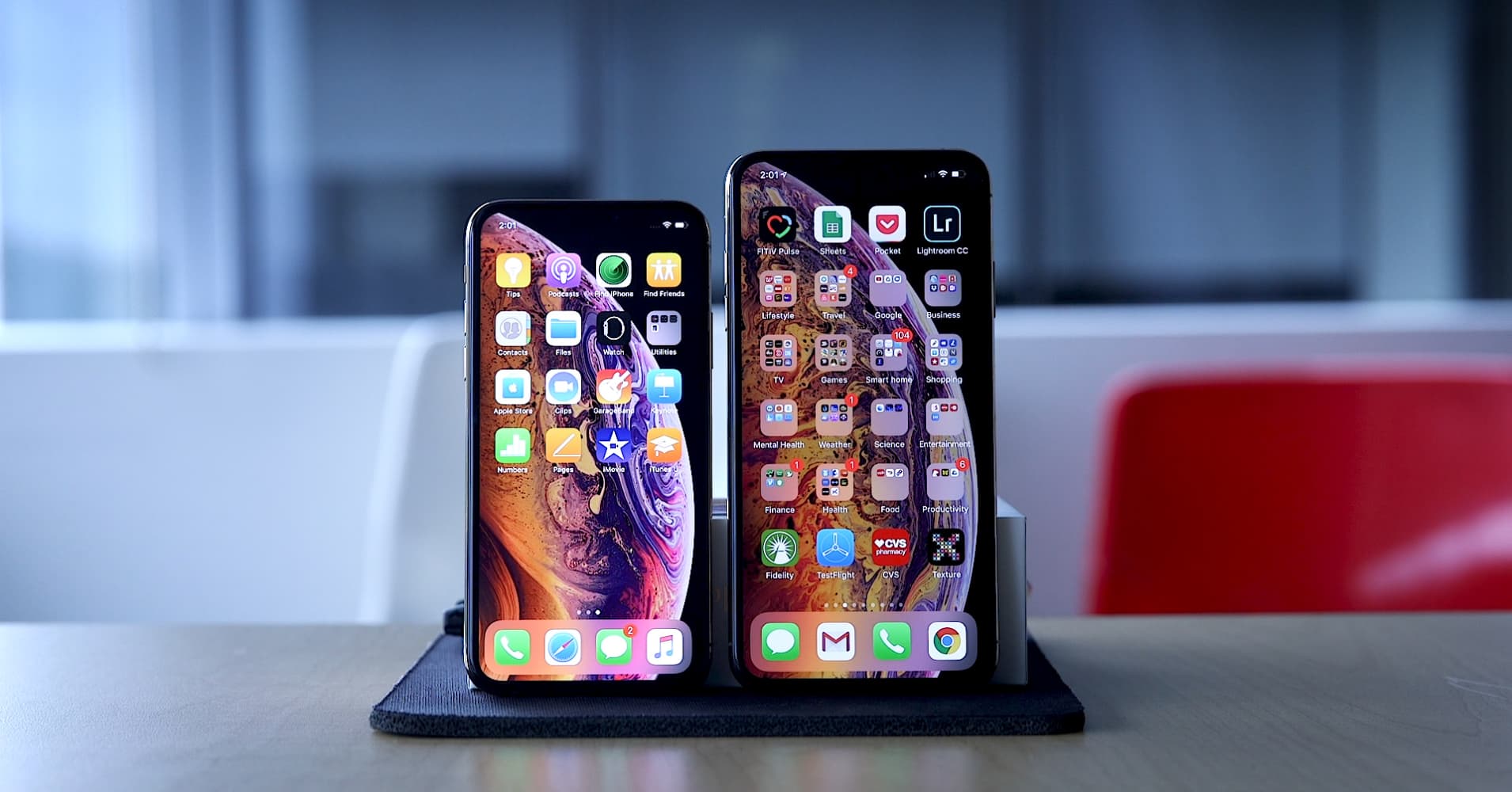
Apple's 2019 iPhones will have fancy new camera capabilities and wireless charging that lets you juice up other gadgets, according to a report published Monday from Macotakara, a trusted Apple blog.

Macotakara said Apple will continue to sell two iPhones with high-end OLED screens, but it will increase the size of its smallest iPhone — currently the iPhone XS — from 5.8 inches to 6.1 inches, the same size of the iPhone XR. It will also continue to sell a 6.5-inch Max-sized device.

The website echoed a report from The Wall Street Journal in January and said that Apple will add a third camera sensor to the back of its new iPhones. Macotakara didn't say what the third camera will be used for, but Bloomberg said in January that it will enable new 3D augmented reality applications.

Macotakara also suggested a couple of other important changes, namely that Apple may switch to USB-C from Lightning on the iPhone. USB-C is a universal connector that works on all kinds of gadgets, including Android phones and Windows PCs. Apple now uses USB-C on its latest iPad Pro models and the MacBook, but hasn't yet switched over to the standard for iPhones. It could allow for faster charging and data rates that are otherwise limited by Apple's proprietary Lightning port.

The iPhones are also expected to adopt a feature that's available on Samsung's latest Galaxy S10 phones. Like top Apple analyst Ming-Chi Kuo of TF International Securitiesreported, Macotakara said the devices will be able to wirelessly charge other products, like the Apple Watch and AirPods, using reverse wireless charging. The Apple Watch doesn't support the Qi wireless charging standard like new AirPods, however, so this may not work with older Apple Watch models. Kuo also said last week that the phones will have significantly larger batteries.

Apple typically introduces its new iPhones in September. A company spokesperson was not immediately available to comment.

Read more on Macotakara.

Let's block ads! (Why?)


https://www.cnbc.com/2019/04/08/apples-new-iphones-have-better-cameras-better-charging-says-report.html

2019-04-08 13:47:11Z
52780263847536

Sonos and Ikea Just Announced a Table Lamp that Looks Fantastic - Gear Patrol

Sonos and Ikea just announced the Symfonisk table lamp ($179), which is one part lamp and one part Sonos-powered speaker. It’ll work just like a Sonos speaker, so you can stream music directly to it or pair it with your existing Sonos speakers, and it’ll also function as a traditional table lamp; there’s a knob on the side of the speaker to manually turn the speaker on and adjust brightness. According to the press release, it’s “the loudest table lamp ever.”

The Symfonisk table lamp joins just-announced bookshelf speaker ($100) in the two companies’ Symfonisk line. It shares a similar aesthetic to the Symfonisk bookshelf speaker, too, which just won a 2019 RED Dot award for its product design.

There isn’t much competition in the “sonic lamps” category, admittedly, with the GE Sol Smart Light ($50+) being one of the only alternatives that come to mind. That said, this new creation by Sonos and Ikea definitely wins in the looks department; the gray model, in particular, looks fantastic.

An important differentiation to make is that unlike the GE Sol, the Symfonisk table lamp isn’t a smart light you can control with voice. As of writing, we don’t think it’s compatible with any smart assistants. In addition to manually adjusting the light, its brightness can also be controlled using the Tradfri app.

As far as price and availability, the Symfonisk table lamp will cost $179, which is slightly less expensive than Sonos’s One smart speaker ($199) and slightly more than its entry-level Play:1 speaker ($149). No release date has been announced for either the Symfonisk table lamp or bookshelf speaker, but both will be available in white or gray colors.

We still don’t know if the Symfonisk will support Sonos’s special speaker tuning technology, TruePlay, or exactly how loud it gets. We will update the post when we know more…developing.

Gear Patrol also recommends:
GE Sol Smart Light ($50+)
Symfonisk Bookshelf Speaker ($100)
Sonos One ($199)

Let's block ads! (Why?)


https://gearpatrol.com/2019/04/08/sonos-ikea-symfonisk-table-lamp/

2019-04-08 15:00:21Z
52780264214439

Ikea will sell its custom Sonos speakers starting in August - The Verge

Sonos and Ikea have fully unveiled the pair of speakers that the two companies have collaborated on for years. The Symfonisk table lamp ($179) and bookshelf speaker ($99) will both ship this August, and you’ll be able to control them with Sonos’ app, allowing each speaker to be fully integrated as part of a multiroom audio setup.

“The products will deliver something that both companies are super proud of,” Sonos CEO Patrick Spence said in a recent interview with The Verge, which also included Ikea’s global business leader Björn Block. “We’ve given it our utter most and utter best from the IKEA side and Sonos has done exactly the same from their end,” said Block.

Spence suggested that the lamp’s audio performance should be similar to — if maybe a rung or two below — that of the $199 Sonos One. It has a dial on the lamp body to control volume, and there are track control buttons on the base plate portion. (They’re out of view in these promotional images.) The lamp does not include a smart bulb out of the box, so you’ll have to buy one separately.

Block said that, eventually, Ikea’s smart home app will integrate music controls for the speakers, allowing customers to build scenes that factor in the lamp, Ikea’s smart blinds, and any bulbs you own. (Sonos speakers can already be controlled entirely within Spotify, iHeartRadio, and other apps, so to see that extending to Ikea isn’t a surprise, given the significance of this partnership.) Who needs an alarm clock when your bedroom lamp can blast some music and switch on the light come morning?

The bookshelf speaker is the smallest speaker that Sonos has ever made (and it’s smaller than what you might expect based on its name), so I’m not very hopeful that it’s going to offer blow-away sound. Spence more or less confirmed that the bookshelf speaker won’t pack quite the same bass punch as the company’s regular lineup.

But he also said that Sonos’ TruePlay feature, which tunes a speaker’s audio output based on its position in a room, makes a big difference in improving sound quality for both the lamp and bookshelf products. Spence expressed confidence that both speakers will sound better than anything else at their respective price points. I wish the bookshelf speaker had a rechargeable battery inside — it seems like a good size to take outside during a party — but that’s not the case. Either way, like most things Ikea, I think the goal here was to make something good enough for the masses.

As for tech specs, this is about as much information as Sonos is willing to give:

Lamp:

  • Two class-D digital amplifiers
  • One tweeter
  • One mid-woofer
  • Sealed Enclosure

Bookshelf speaker:

  • Two class-D digital amplifiers
  • One tweeter
  • One mid-woofer
  • Ported Enclosure

Obviously, the sizes of those components will differ in each product even if the internal layout sounds similar.

The lamp and bookshelf speakers will be full-fledged members of the Sonos ecosystem. They can join an existing setup or serve as your entry into multiroom audio. If you buy two of each, you can stereo pair them or even use them as the rears in a 5.1 audio setup, assuming you already own a Playbase, Playbar, or Sonos Beam. (How many 5.1 systems do you know of that include lamps as rear speakers?) Both speakers also support Apple’s AirPlay 2 for playing music from a slew of apps or with voice commands via Siri.

If you’re wondering who’s in charge of what on the manufacturing end, it sounds like a two-way effort. “It’s jointly developed,” Spence told The Verge. “There’s certain aspects which we build on the board and then give to Ikea, and they assemble as well.” The two Symfonisk speakers share some chips with the Sonos One, but there’s no microphone built into either device. Also, both have traditional, physical buttons for music controls versus the touch-sensitive buttons on Sonos speakers. Both Ikea and Sonos are saying this is only the first phase of their partnership, so future speakers might very well offer Alexa support.

Ikea’s Block said that the home retailer’s research shows that 59 percent of customers surveyed cite music as the number one factor of a “great atmosphere.” The company dabbles in inexpensive Bluetooth speakers, but Block said that Ikea has lacked the expertise to really build and get behind a great-sounding speaker. That’s where Sonos came in. According to Spence, Ikea’s designs — and the mere idea of outfitting a lamp with a speaker — forced Sonos to get creative and approach these products differently.

Is it possible that some people will choose one of these new products over a standard Sonos speaker? Certainly. But Spence doesn’t seem particularly bothered by that notion. “We thought a lot about that as we went through it,” he said, pointing out that the Symfonisk speakers will help Sonos reach a lower price point and a range of costumers that the company might not have pursued on its own. (The old Play:1 is $149 and thus less expensive than the lamp, but Sonos doesn’t really consider that part of its modern lineup at this point.)

“If that’s the direction that customers ultimately want to go, and we really find a spark around furniture and sound integrated, then we’ll pour gas on that fire.”

Let's block ads! (Why?)


https://www.theverge.com/2019/4/8/18300153/sonos-ikea-symfonisk-lamp-bookshelf-speakers-features-pricing-release-date

2019-04-08 15:00:00Z
52780264214439